For Educators | Competency + Readiness
Competency Doesn’t Always Mean Ready.
Demonstrating a skill is important. Independent practice requires more.
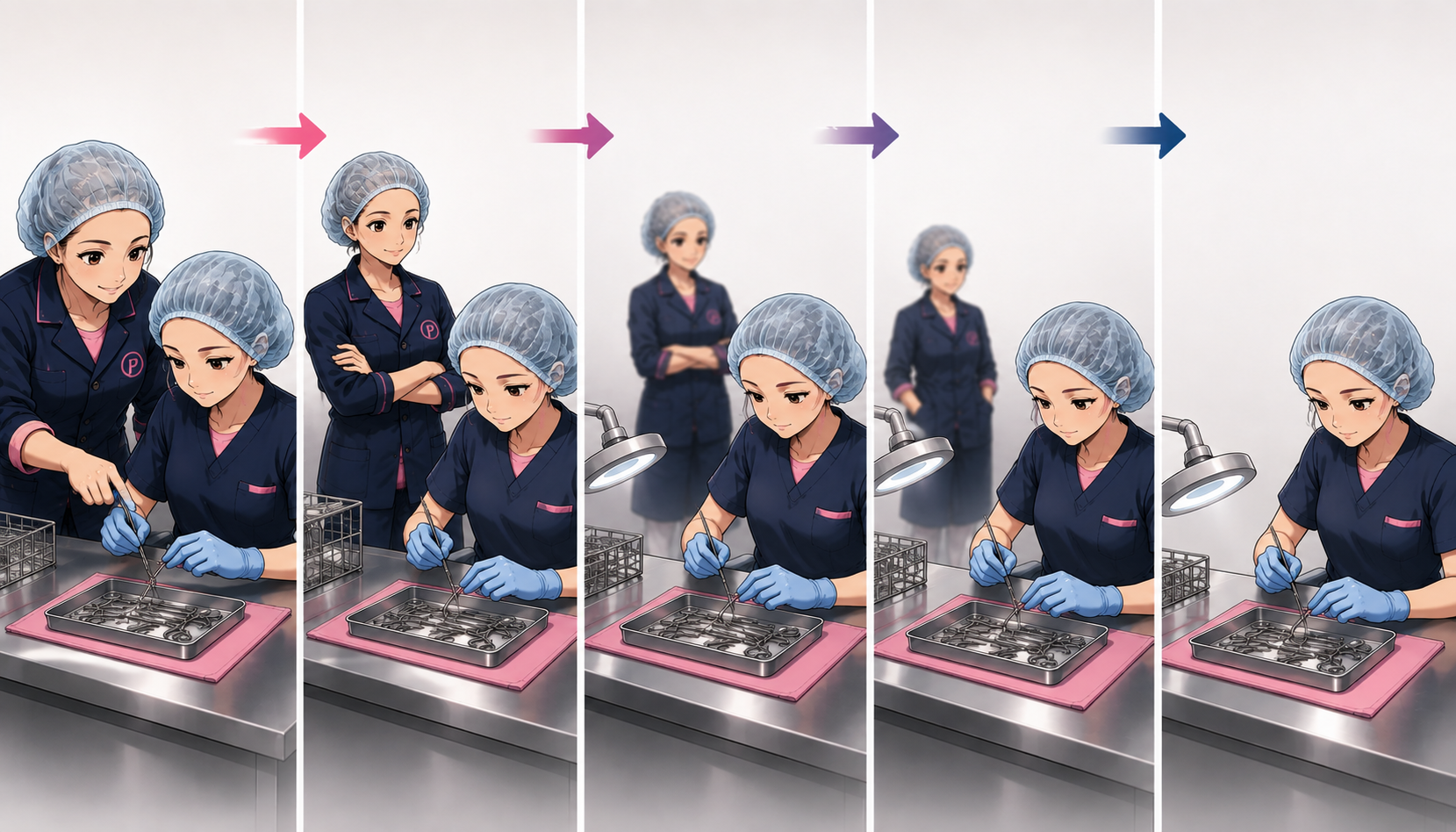
A learner may be able to perform a process correctly during training and still need guidance when priorities shift, something unexpected happens, or the answer isn’t obvious.
Understanding the difference between competency and readiness helps educators make better decisions about when someone is prepared to practice independently.
SEE THE DIFFERENCE ↓
Start with the distinction
They’re related. They aren’t the same.
Competency
Can the learner perform the defined skill or process correctly?
Competency focuses on demonstrated performance against established expectations.
Think:
Knowledge
Do they understand what they’re doing?
Skill
Can they perform the task correctly?
Criteria
Does their performance meet the defined standard?
Readiness
Can the learner apply what they know with appropriate independence?
Readiness looks beyond an isolated demonstration and considers whether performance holds up in actual practice.
Think:
Consistency
Can they do it correctly over time?
Judgment
Can they respond appropriately when the situation changes?
Independence
Can they work without inappropriate reliance on the trainer?
COMPETENCY DEMONSTRATES CAPABILITY.
READINESS SUPPORTS THE DECISION TO STEP BACK.
From learning to independence
Readiness Develops over time.
01
LEARN
Understand the process.
MORE GUIDANCE ←
02
PRACTICE
Perform with guidance.
03
DEMONSTRATE
Meet defined competency criteria.
04
APPLY
Perform across situations with decreasing support.
05
OWN
Manage the work with appropriate independence.
→ Less Guidance
Validating a competency may happen at one point in this progression. Readiness is informed by what happens around it.
Can they handle the work when it stops being perfect?
Look Beyond task completion
Consistency
Performance remains reliable across repeated opportunities.
Judgment
The learner recognizes when the normal process does - or does not - fit the situation.
Prioritization
They can determine what deserves attention when multiple demands compete.
Risk Recognition
They identify conditions that could compromise the device, process, or patient.
Appropriate Escalation
They know when to proceed independently - and when to stop and ask for help.
Independence doesn’t mean never asking for help.
It means knowing when help is needed.
Try the distinction
Competent… But ready?
A new technician correctly demonstrates instrument inspection during a competency observation. The following week, while working with less direct supervision, they encounter an unfamiliar instrument with a feature they are unsure how to inspect.
Rather than guessing, they stop, locate the appropriate information, and ask for assistance before proceeding.
Does asking for help suggest the technician isn’t ready for independent practice?
-
Not necessarily.
Readiness does not require a technician to know every answer or handle every unfamiliar situation alone.
Recognizing uncertainty, stopping appropriately, locating reliable information, and escalating when needed can demonstrate professional judgment and risk recognition.
The important question isn’t: “Did they need help?”
It’s: “Did they recognize when independent action was no longer appropriate?”
COMPETENCY → Can perform the process
READINESS → Can manager their own limits
A checkmark doesn’t make someone competent.
Don’t confuse documentation with performance
A completed form documents that validation occurred.
It does not create the competency.
Good validation depends on:
Clear Criteria
What observable performance is expected?
Direct Observation
What did the learner actually demonstrate?
Consistent evaluation
Would different qualified evaluators recognize acceptable performance similarly?
Action when expectations aren’t Met
What happens when a gap is identified?
The Form is not the competency. The Performance is.
Change the Question
Don’t ask only: “Did they complete the training?”
Instead ask:
Can they perform consistently?
Can they recognize risk?
Can they prioritize appropriately?
Can they adapt when the situation changes?
Can they recognize the limits of their own knowledge?
Can they seek help appropriately?
Training completion tells you what they’ve been exposed to.
Performance tells you what they can do.
Readiness tells you how much you can step back.
Keep this one
Competency vs. readiness
Competency
Can they do it?
Defined performance
Knowledge + skill
Observed against criteria
Demonstrates capability
Readiness
Can they manage it?
Performance in context
Judgment + consistency
Observed across practice
Supports independence
They work together.
Competency helps establish that the learner can perform the work.
Readiness helps determine how much support the learner still needs while doing it.
Competency isn’t the end of the conversation.
Keep developing the professional
Competency validation
Move from “they did it” to defensible, observable performance criteria and meaningful validation.
Explore for Educators
Return to the educator library for resources on competency, readiness, coaching, and education design.