Free SPD Education
Articles
Go Deeper than the quick take.
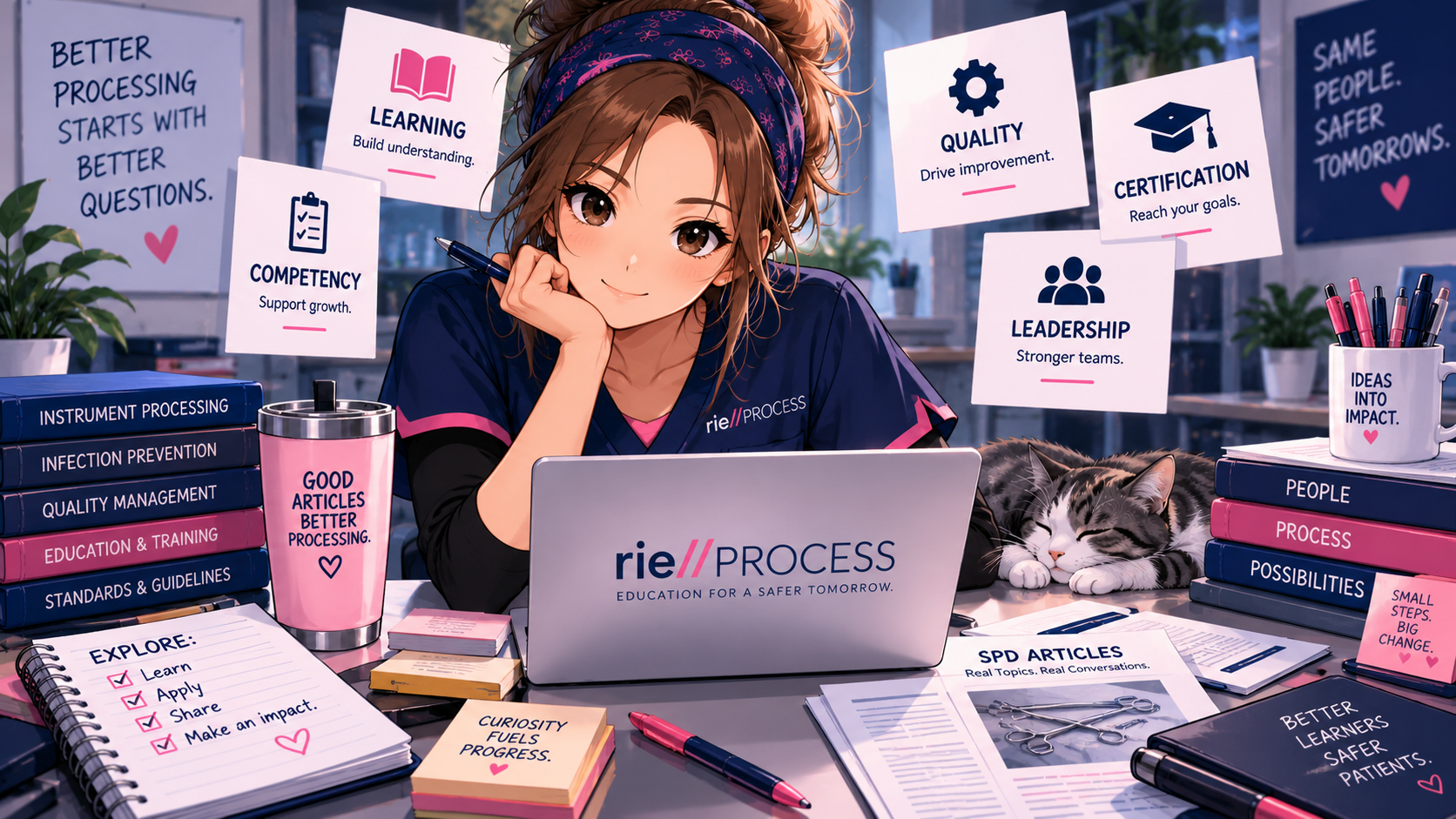
Sterile processing is full of questions that deserve more than a one-line answer.
Explore practical articles about education, competency, quality, certification, and the systems behind safer processing.
EXPLORE THE ARTICLES ↓
Practical Thinking for the people who learn, teach, and improve SPD.
The Longer Version
Some Ideas Need more Room.
Articles give use space to explore the why behind the work - not just what should happen, but how people learn it, how systems support it, and what gets in the way.
Learn Better
Sterile processing concepts, certification strategy, and practical connections that make the work easier to understand.
Teach Better
Education, precepting, competency, coaching, and learner development for the people responsible for teaching SPD.
Build Better Systems
Quality, onboarding, readiness, standardization, and education systems that support reliable performance.
Featured · People + Systems
Apparently, I have a Type: Complicated Systems
What do anthropology, sewing, Healthcare Administration, and Sterile Processing have in common? Apparently, more than they should.
A look at how seemingly unrelated experiences shape the way we understand people, processes, quality, and the complicated systems that make Sterile Processing work - and why the people entering SPD may bring more useful experience with them than we realize.
From rie//PROCESS
Explore the Latest
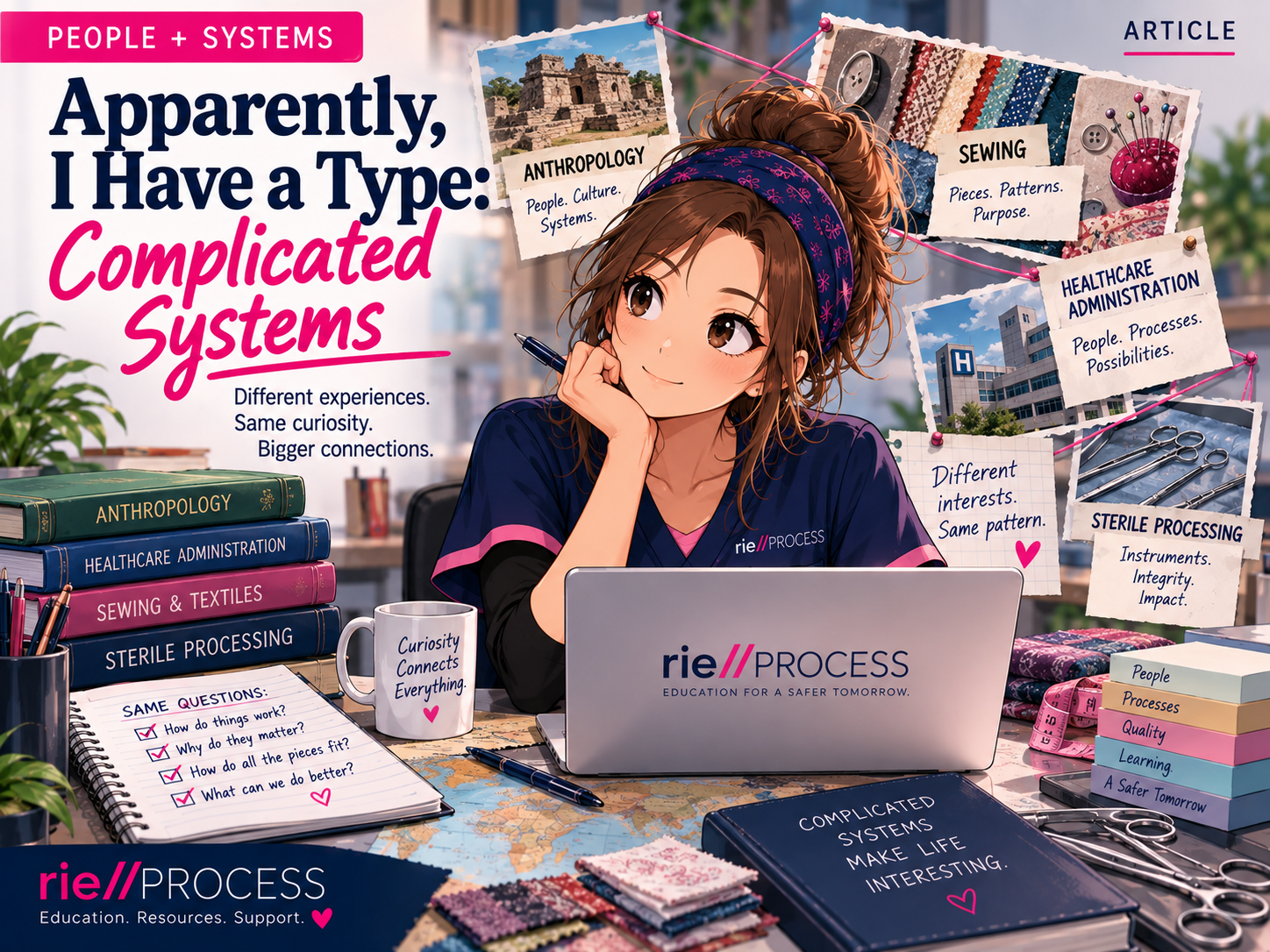
What anthropology, sewing, and Sterile Processing taught me about people, processes, invisible craftsmanship - and seeing how all the pieces fit together.
PEOPLE + SYSTEMS
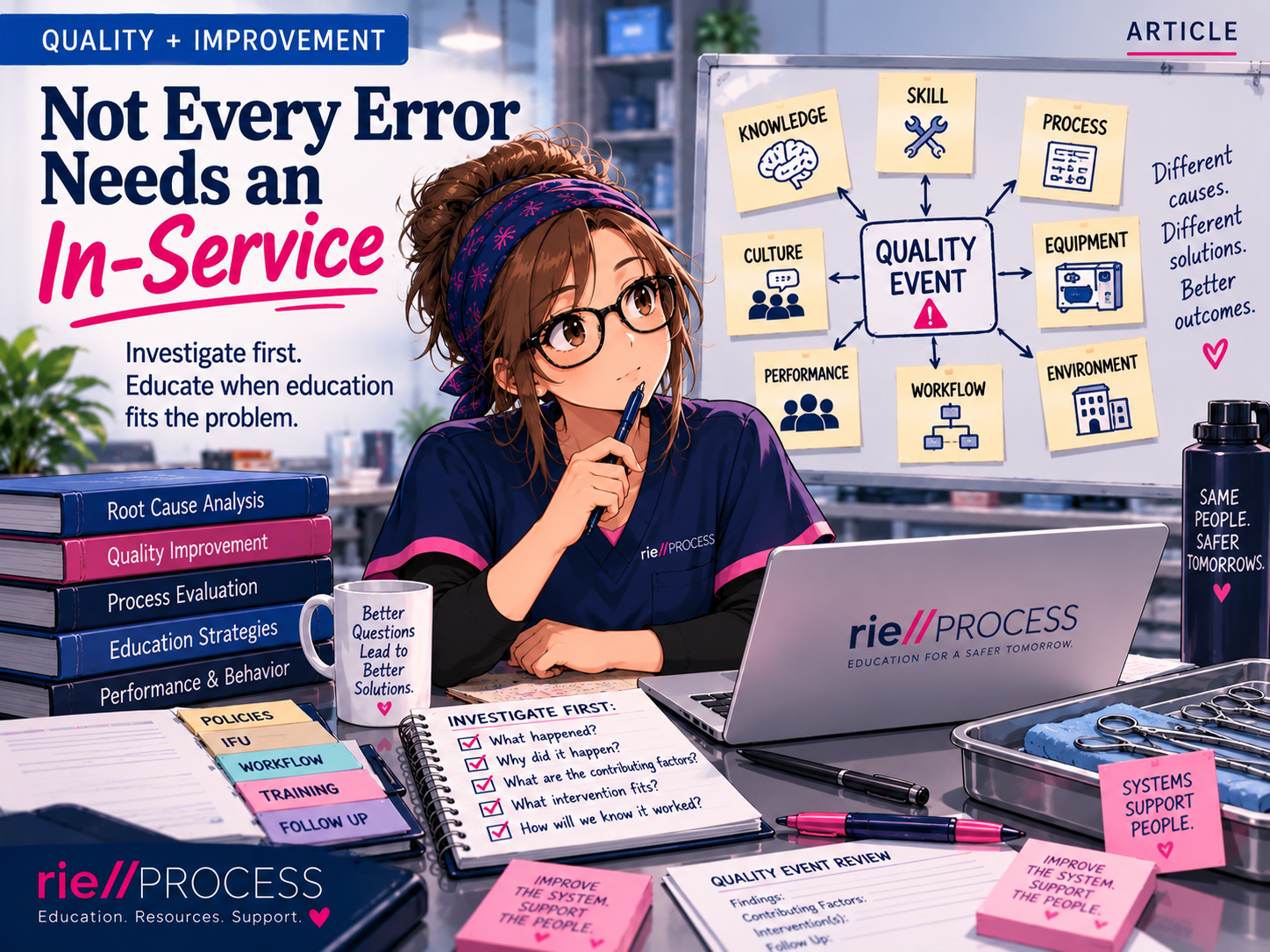
When something goes wrong, education is an intervention - not an automatic response. Start by understanding the problem, then choose the response that actually fits.
QUALITY + IMPROVEMENT
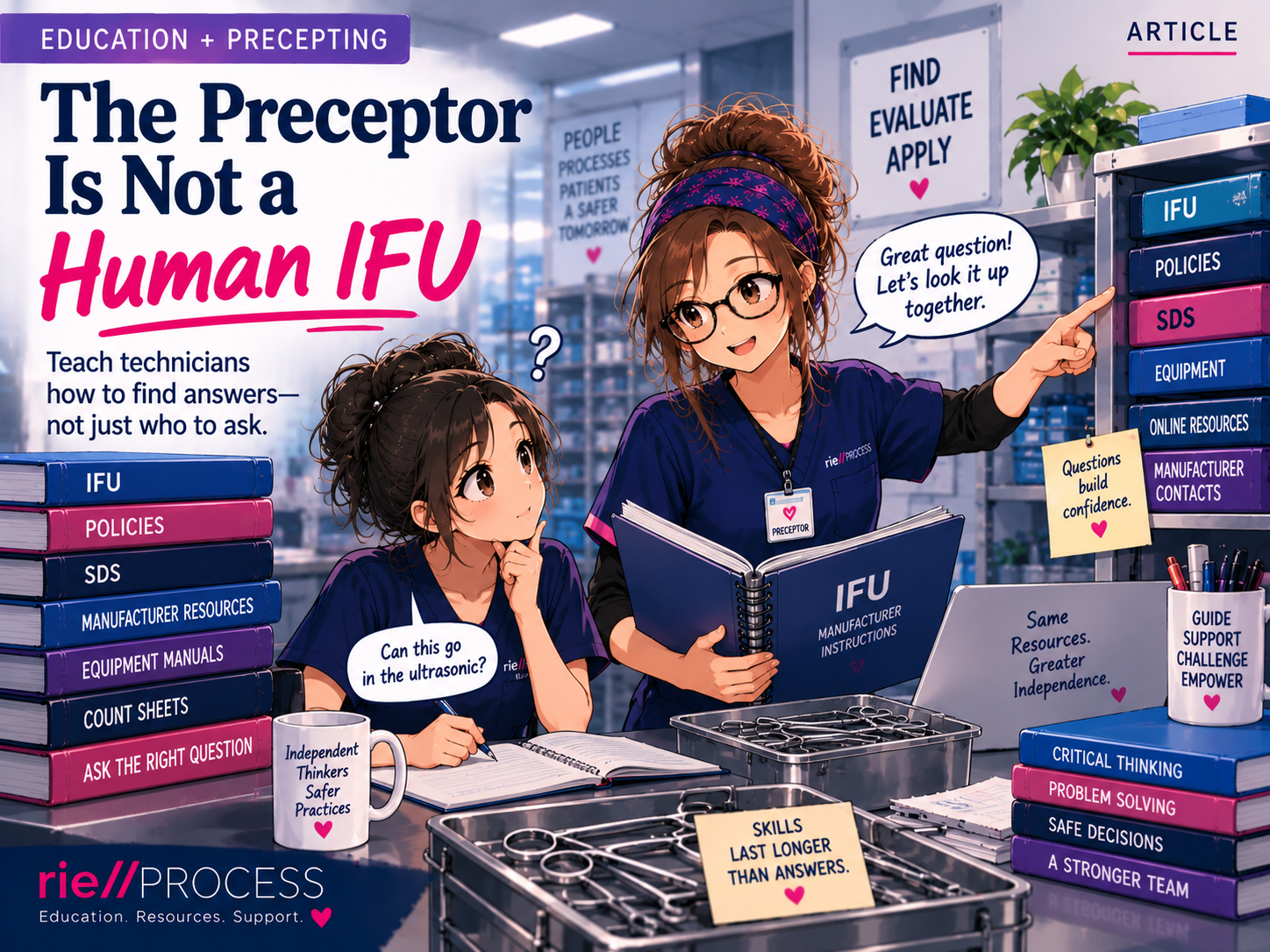
Good preceptors don’t just give technicians answers. They teach them how to find reliable information, reason through uncertainty, and gradually work without someone standing beside them.
EDUCATION + PRECEPTING
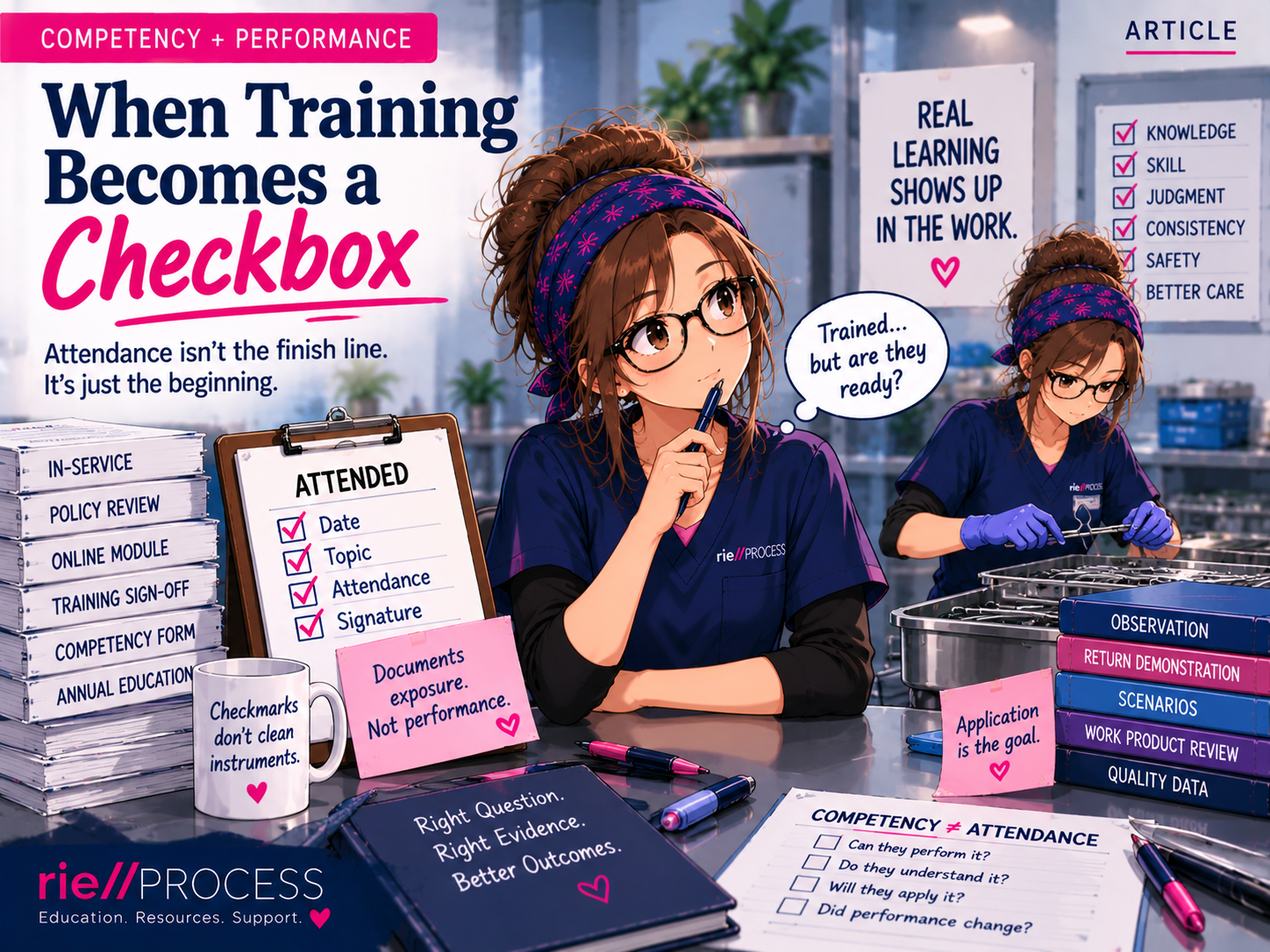
Attendance can prove education happened. It can’t prove learning changed performance. Start with what you’re trying to know - and choose evidence that can actually answer the question.
COMPETENCY + PERFORMANCE
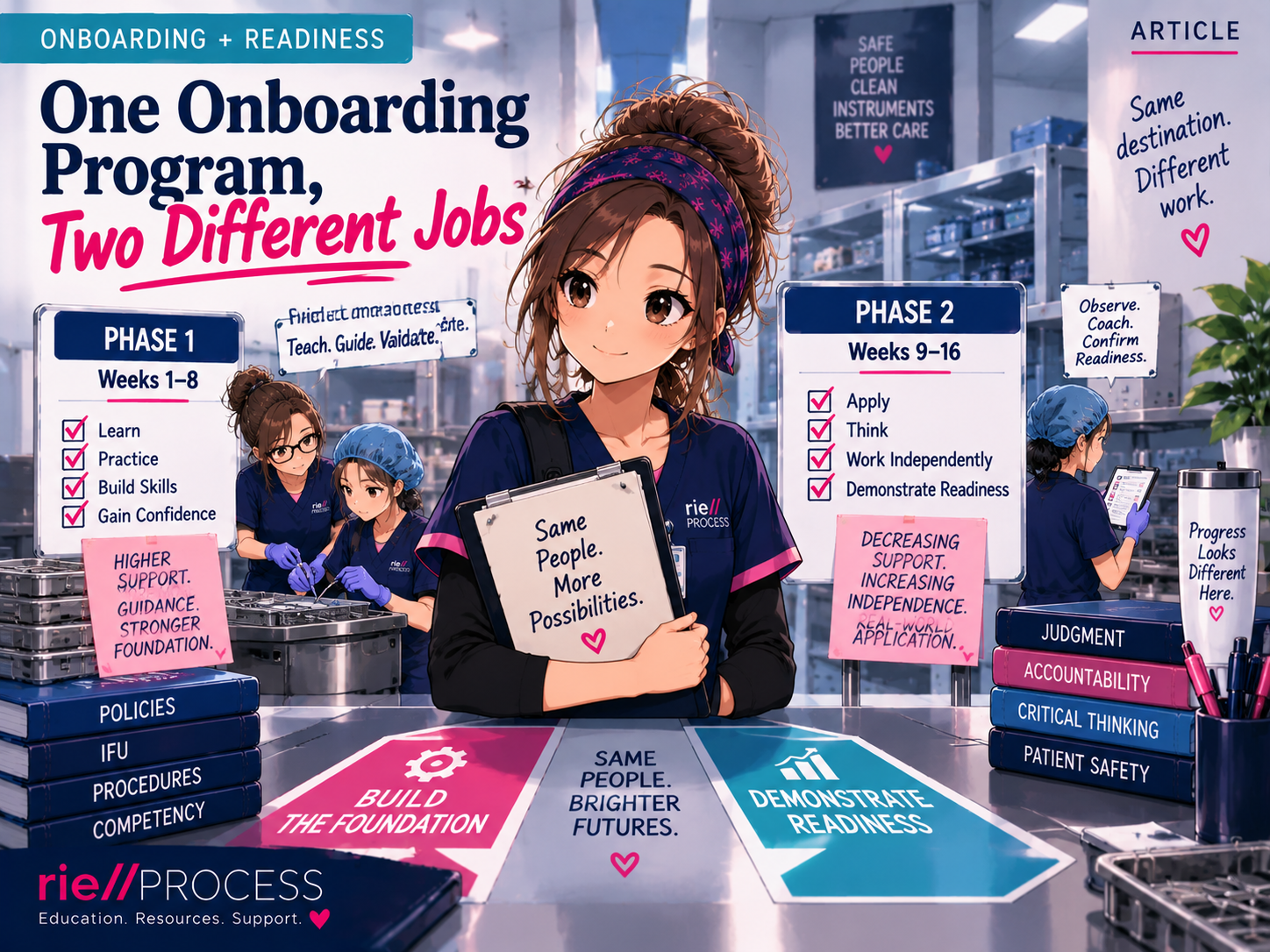
What changed when I stopped treating onboarding as one long training period - and designed one phase to build competency and another to demonstrate readiness.
ONBOARDING + READINESS
Not Sure Where to Start?
Find the Conversation that fits You.
I’M Learning SPD
Explore SPD Practice + Certification & Learning.
I’M Teaching SPD
Explore Education & Precepting + Competency & Readiness.
I’m Building or Improving a Program
Explore Quality & Systems + Competency & Readiness.
Keep Exploring
Different Question. Different Format.
Need the Quick Version?
Tiny Tech Tips
Small lessons. Big process impact.
Need Something for Your Team?
The 5-Minute Huddle
One concept. One discussion. One takeaway.
Want to Explore SPD Topics?
Learn SPD
Build understanding across the instrument journey and beyond.
Keep thinking. Keep Questioning.
Better processing starts with understanding why.
Explore more free sterile processing education from rie//PROCESS.