Learn SPD
Practical sterile processing education designed to help you understand concepts, connect the pieces, and make better decisions - whether you’re learning SPD for the first time or preparing for certification.
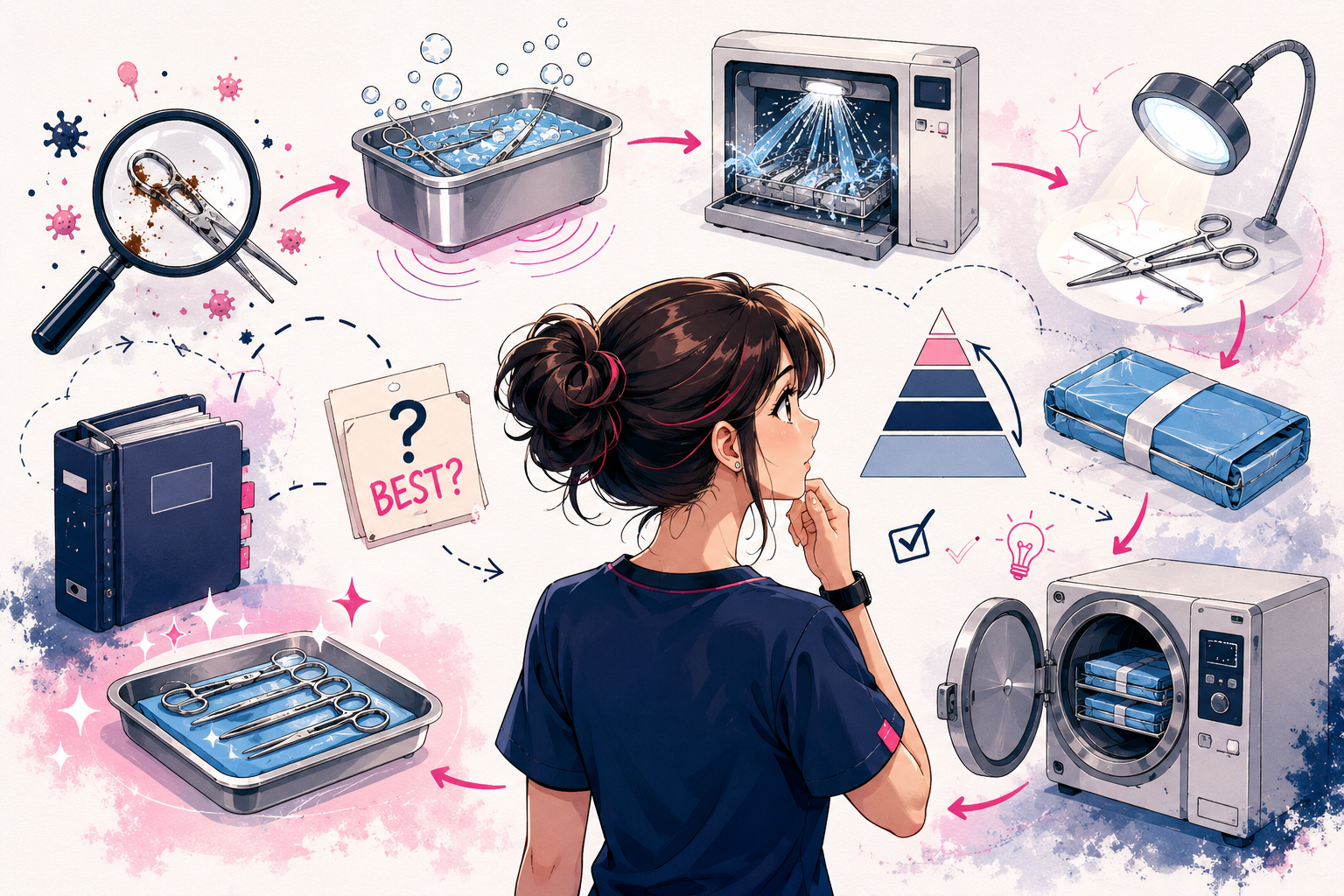
Understand the Process.
Not just the answer.
Explore SPD
Start With the Process.
Sterile processing is a system. Each step depends on what happened before - and affects what happens next.
Explore the instrument journey one stage at a time, or jump directly to the topic you’re trying to understand.
01
Decontamination
Understand contamination, workflow, point-of-use treatment, transport, manual cleaning, and the foundations of safe decontamination.
02
Mechanical Cleaning
Explore ultrasonic cleaning, washer-disinfectors, cavitation, impingement, loading, lumen connections, and cleaning verification.
03
Inspection + Assembly
Learn what happens after cleaning - from inspection and function testing to identifying defects and preparing complete instrument sets.
04
Packaging
Understand packaging systems, package integrity, preparation requirements, and how packaging supports sterilization and sterile presentation.
05
Sterilization
Explore sterilization methods, cycle selection, monitoring, process verification, documentation, and release decisions.
06
Storage + distribution
Follow processed items through cooling, handling, storage, transport, case-cart preparation, and delivery for patient care.
Think Like a Code Breaker
Knowing the content is only half the job.
Certification questions - and real sterile processing decisions - often require more than remembering a fact.
You have to recognize what the question is actually asking, identify the safest response, and choose between answers that may all sound reasonable.
These tools help you practice that kind of thinking.
01
First / Best / Next
Figure out what the question really wants.
Learn how words like FIRST, BEST, NEXT, and MOST IMPORTANT change what makes an answer correct - and how to choose the strongest response when several options seem reasonable.
02
Safety Hierarchy
When several answers could work, follow the risk.
Use a simple decision hierarchy to compare competing answers and prioritize the response that most directly protects the patient, the process, and the integrity of the device.
03
Common Exam Traps
Sometimes the problem isn’t what you know. It’s how the question is built.
Learn how to recognize distractors, absolute language, technically-correct-but-not-best answers, reversed logic, and other patterns that can make certification questions harder than they need to be.
The Goal Isn’t to Outsmart the question.
It’s to understand what the question is testing.
Quick Learning. Real Conversations.
Got Five Minutes?
Let’s Use Them.
Not every learning moment needs a lecture.
5-Minute Huddles are short, focused conversations built around one sterile processing concept, question, or practice point - designed to get people thinking, talking, and connecting the lesson to the work.
Featured Huddle
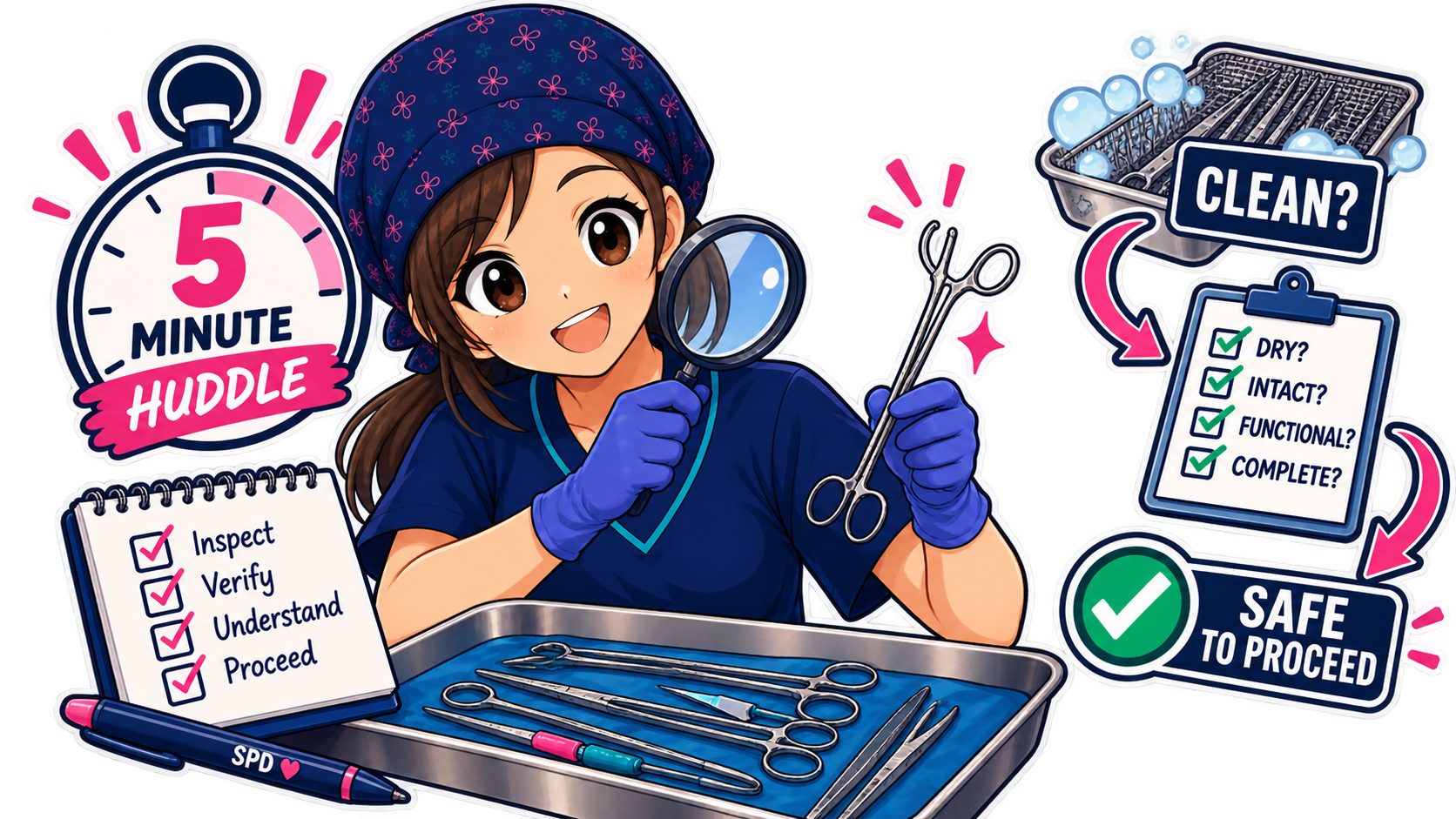
5-Minute Huddle 001
Cleaning is essential - but “clean” doesn’t automatically mean an instrument is ready for use.
This huddle explores what happens next and why inspection remains a critical part of preparing a safe, functional device.
The Instrument Is Clean.
Now What?
Use it solo. Share it with your team. Start a conversation.
Small Tip. Bigger Why.
Tiny Tech Tips.
Quick sterile processing reminders for the things that are easy to overlook, easy to confuse, or important enough to be worth hearing again.
One concept. One takeaway. Minimal educational suffering.
Start Here
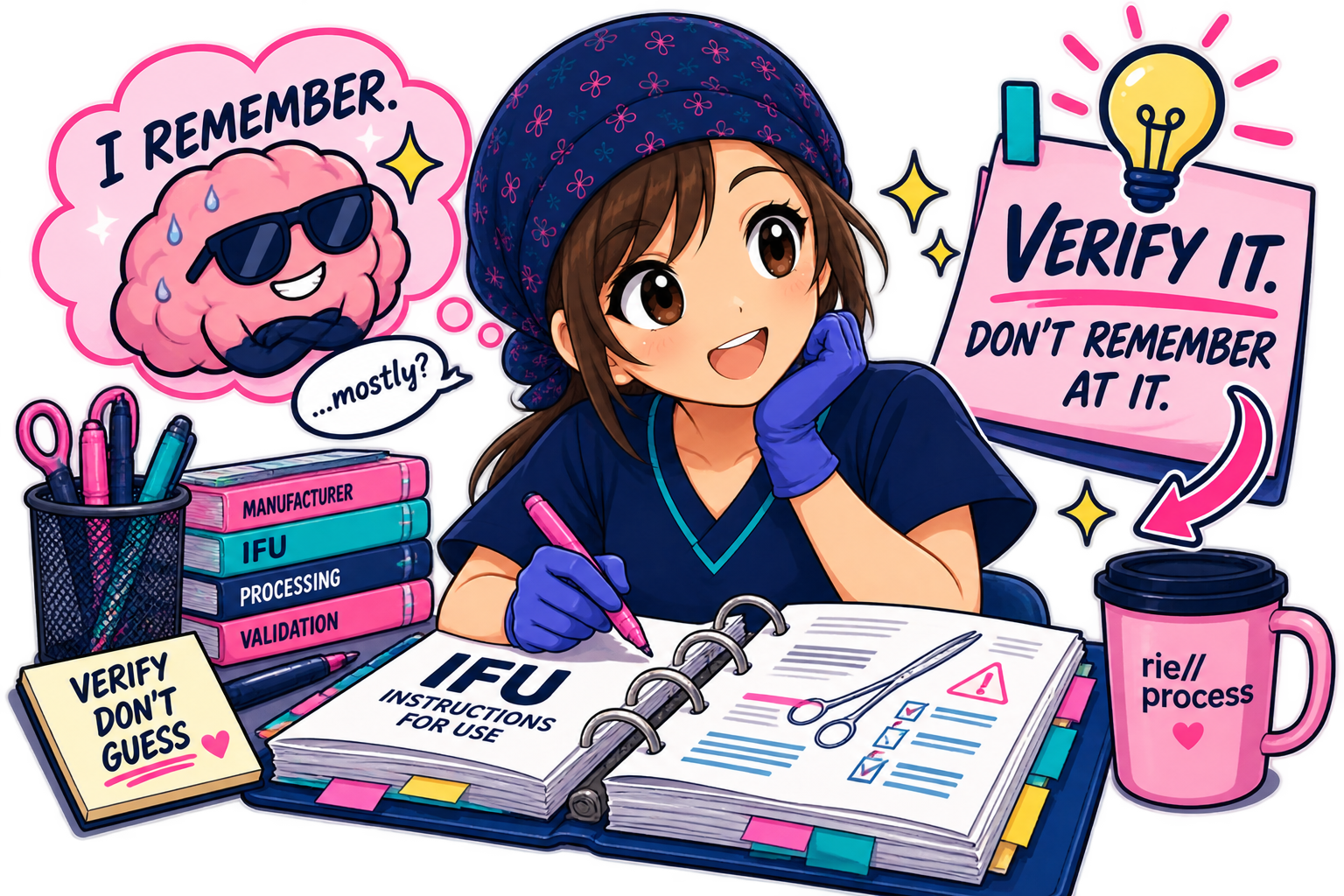
Memory Is Not An IFU
When processing requirements need to be verified, go to the current manufacturer’s instructions - not memory or “how we’ve always done it.”
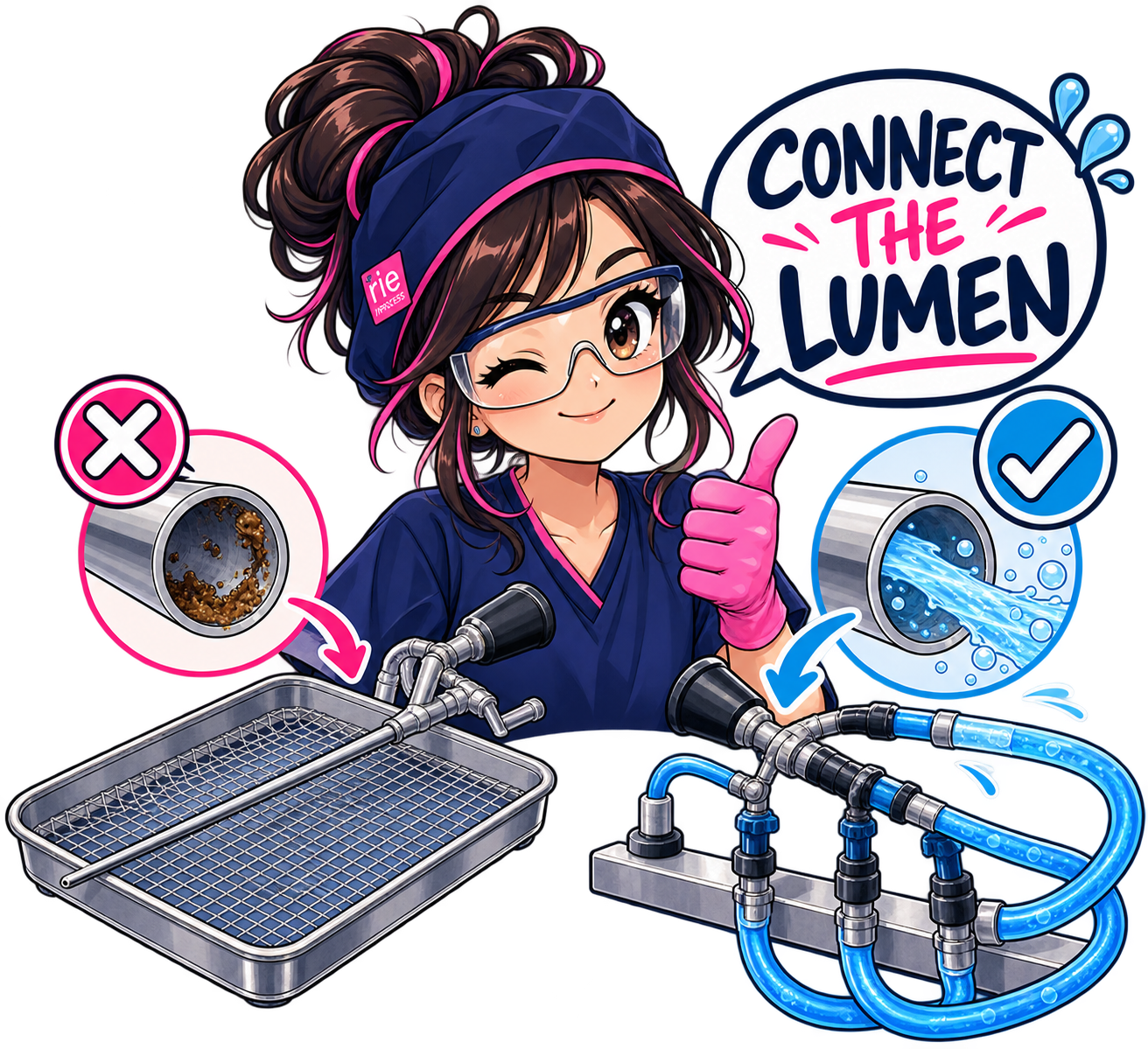
Connect the Lumen
Putting a cannulated device on the washer rack isn’t the same as providing flow through its internal channel.
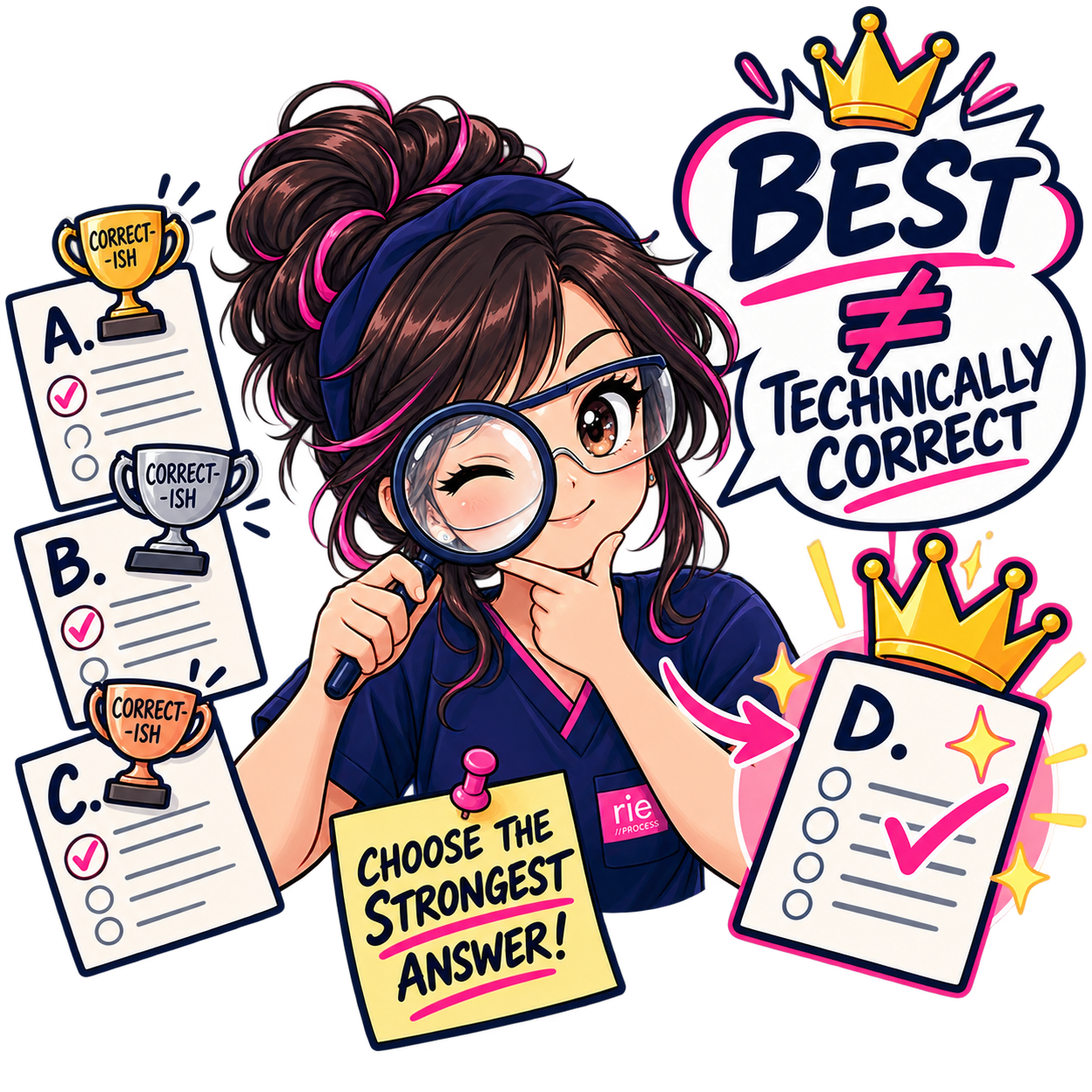
Best ≠ Technically Correct
Several answers may sound reasonable. BEST asks you to identify the one that most completely and safely addresses the situation.
Articles
Go Deeper Than the Quick Take
Explore practical perspectives on sterile processing, quality, education, competency, and the systems behind the work.

Don’t Just Memorize More.
Learn How to Use What You Know.
Preparing for Certification?
Certification requires knowledge - but knowing the material is only part of being ready for the exam.
rie//PROCESS certification prep is designed to help you understand core sterile processing concepts, recognize what questions are actually asking, and apply what you know when more than one answer sounds reasonable.
01
Know the Content
Strengthen your understanding of the processes, principles, terminology, and concepts you’ll need to recognize on the exam.
Build the foundation.
02
Read the Question
Find the clue before choosing the answer.
Learn to recognize words like FIRST, BEST, NEXT, MOST, LEAST, and EXCEPT - and understand how they change what the question is asking you to do.
03
Make the Decision
Practice choosing the strongest answer.
Use safety, sequence, process integrity, and the information in the question to compare plausible options and make a defensible choice.
Certification prep should help you think more clearly - not just memorize a bigger pile of facts.
Want to keep learning for free?
Explore rie//PROCESS question-analysis tools and SPD learning resources.
Want MORE STRUCTURED PRACTICE?
Browse certification-prep workbooks, activities, study tools, and other resources designed for deeper practice.
Keep Learning
You’ve Got Options.
Sterile processing is easier to understand when you can learn it in different ways. Keep exploring with quick tips, team-ready discussions, deeper articles, or certification strategy.
Tiny Tech Tips
Quick reminders and practical SPD concepts you can learn in about a minute.
Articles
Go deeper into sterile processing education, quality, competency, and the systems behind the work.
The 5-Minute Huddle
Short, ready-to-use discussions that connect SPD concepts to everyday practice.
Studying for certification?
Put your knowledge into practice with question strategy and Code Breaker tools designed to help you think through the exam - not just memorize facts.