CODE BREAKER | DECISION STRATEGY
The SAFETY HIERARCHY
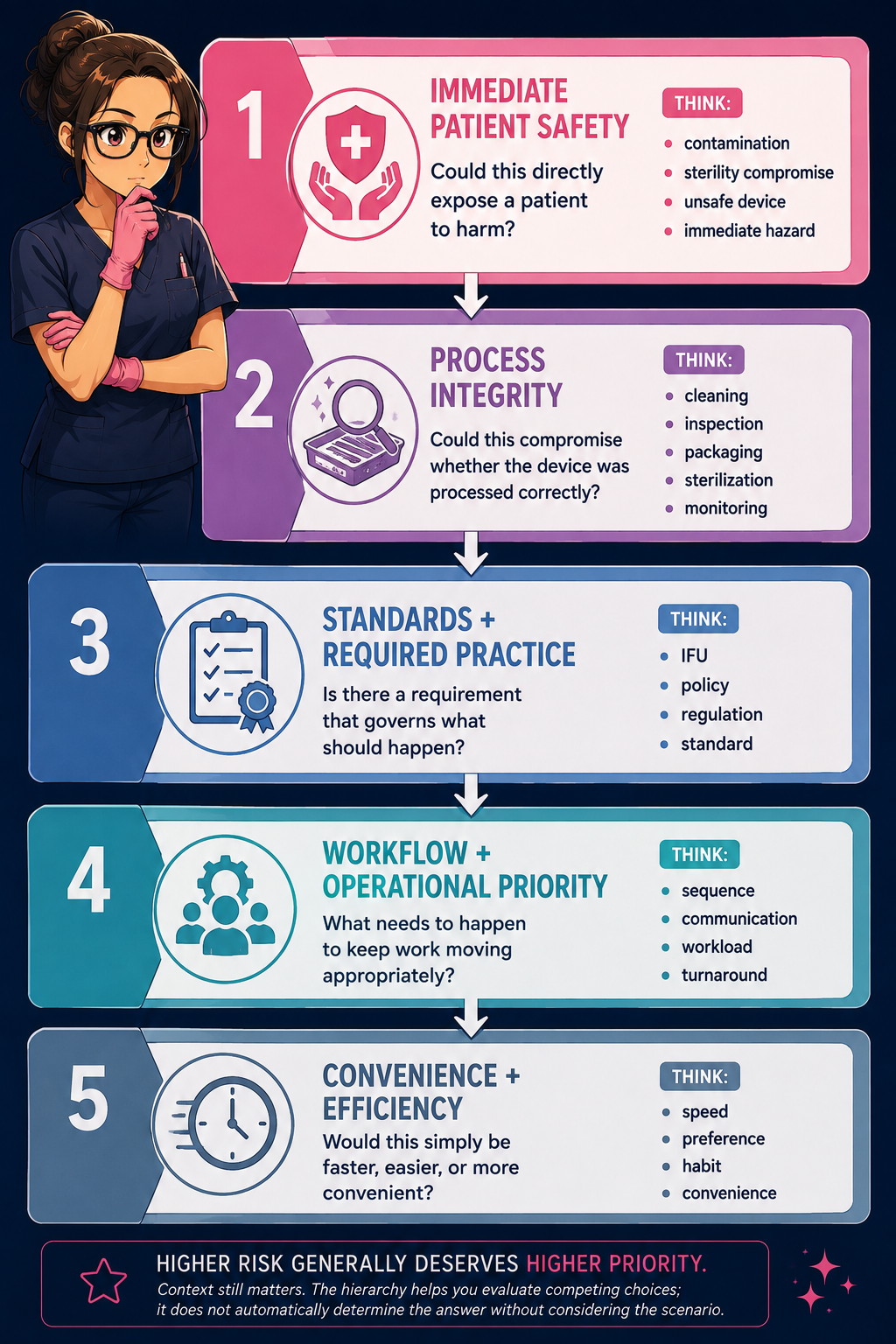
When more than one answer looks right, start with what protects the patient.
Certification questions often give you several actions that could reasonably occur. The challenge is deciding which one deserves priority.
The Safety Hierarchy gives you a way to compare those choices by asking one question:
What creates the greatest risk if it isn’t addressed?

PRIORITY CHANGES THE ANSWER
Not Every Problem Carries the Same Risk.
In sterile processing, many things matter.
Documentation matters.
Efficiency matters.
Workflow matters.
Productivity matters.
But when those concerns compete with an issue that could compromise safe patient care or the integrity of the process, they don’t necessarily carry equal weight.
Prioritize the risk before you prioritize the task.
The Safety Hierarchy is not a substitute for knowing sterile processing principles. It’s a tool for organizing what you know when several answer choices seem plausible.
FOLLOW THE RISK
What needs your attention first?
Code Breaker Warning
“Safety” Isn’t a Magic Word.
Don’t choose an answer simply because it:
sounds cautious
mentions patient safety
involves reporting something
stops the process
or feels more serious than the others
Instead, ask:
What risk actually exists?
How immediate is it?
Which choice most directly controls that risk?
The safest answer isn’t the most dramatic answer.
It’s the one that appropriately addresses the risk.
BREAK THE CODE
WHICH PROBLEM COMES FIRST?
A technician assembling a surgical set notices that one instrument has a cracked box lock. The tray is marked as a priority turnover. What is the BEST action?
A. Complete the tray so it can be sterilized on time
B. Remove the defective instrument from service and follow the process for replacement
C. Place the instrument in the tray and notify the operating room
D. Finish assembling the tray and document the defect afterward
-
Answer: B - Remove the defective instrument from service and follow the process for replacement.
The priority turnover status creates an operational concern.
The damaged instrument creates a patient safety and device integrity concern.
When those priorities compete, getting the tray processed quickly does not justify allowing a defective device to continue toward patient care.
RISK → DEFECTIVE DEVICE
COMPETING PRESSURE → TURNAROUND TIME
HIGHER PRIORITY → PATIENT SAFETY
BEST RESPONSE → CONTROL THE RISKURGENT DOES NOT AUTOMATICALLY MEAN HIGHEST PRIORITY.
Keep This One
When Two Answers Both Look Right…
Identify the risk
What could go wrong?
↓
Identify who or what is affected
Patient? Device? Process? Workflow?
↓
Compare the consequences
Which issue carries the greater potential for harm?
↓
Control the highest priority risk
Which answer most appropriately addresses it?
RISK → PRIORITY → ACTION
Put the Tools Together
The Clue Tells You the Question. The Risk Helps You Choose.
FIRST
Which risk needs to be addressed before the others?
BEST
Which response most completely and safely addresses the highest priority concern?
NEXT
Given what happened, which remaining risk or action comes next?
READ the Clue → Identify the Risk → Choose the Action
Keep Going
Better Answers Start With Better Decisions.
First / Best / Next
Use question words to identify exactly what the question is asking.
Common Exam Traps
Learn why reasonable-looking answers aren’t always the strongest answers.
Want More Practice?
Work through question-analysis strategies, answer choices, and certification-style decision making.
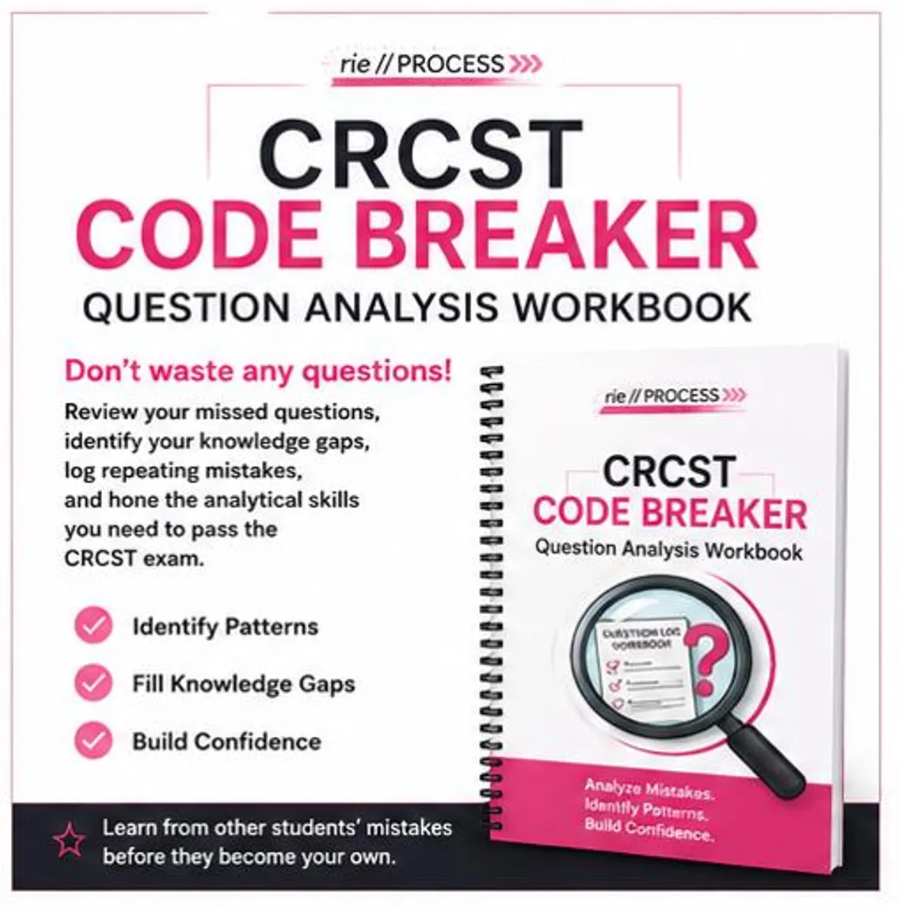
A guided CRCST study workbook that helps candidates analyze missed questions, identify patterns, and turn practice test mistakes into targeted study opportunities.
CERTIFICATION PREP