Code Breaker | Question Strategy
First. Best. NExt.
Three small words that can change the entire question.
Certification question's don’t only test what you know. They test whether you can recognize priority, sequence, and the strongest response.
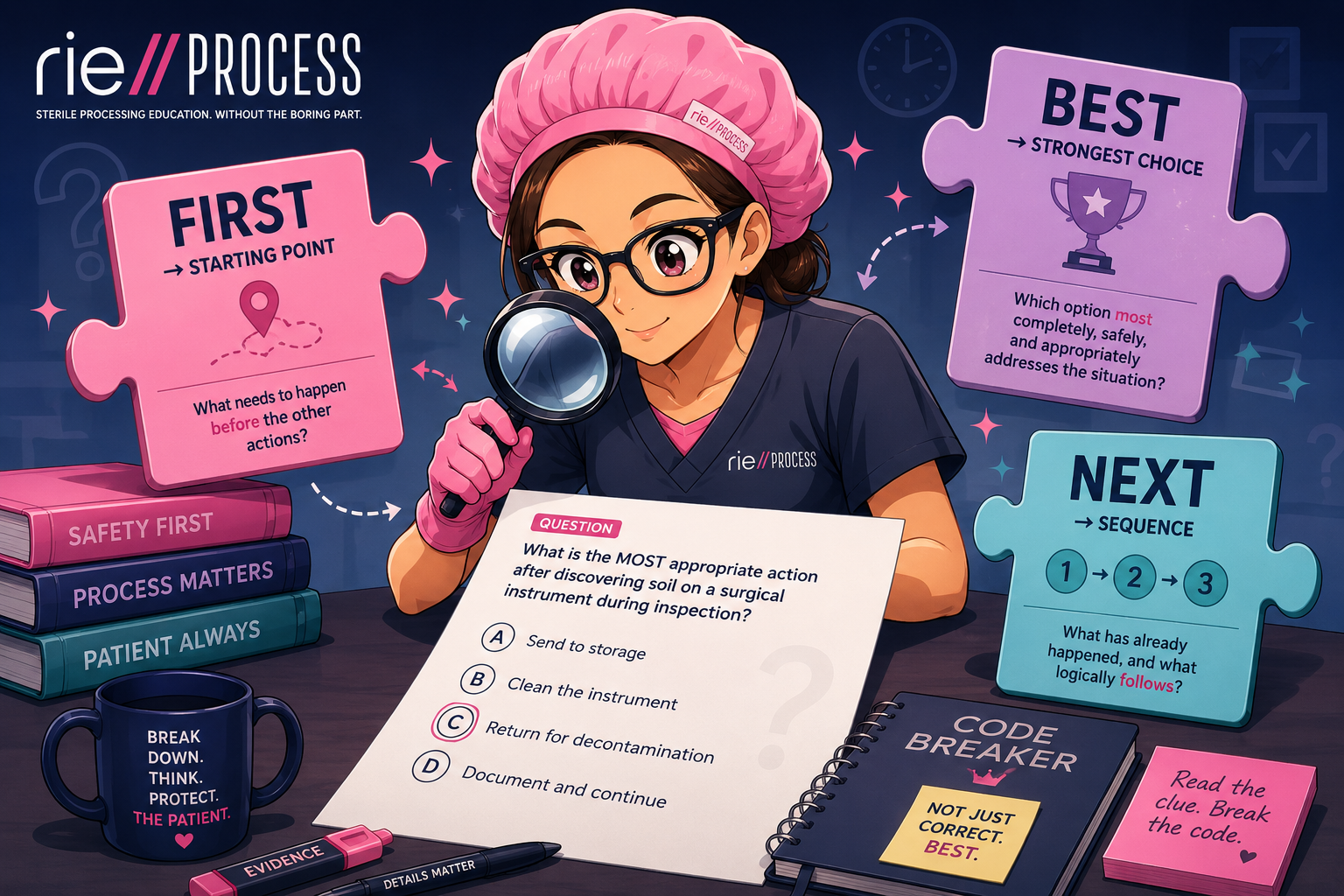
FIRST, BEST, and NEXT are clues.
Learn to use them.
Break down the question ↓
READ THE CLUE
The question is telling you what it wants.
Several answer choices on a certification question may sound reasonable.
That doesn’t mean they answer the question being asked.
Words like FIRST, BEST, and NEXT tell you how to evaluate the options.
FIRST
Where should I start?
Look for the action that should occur before the others.
Think:
initial action · prerequisite · immediate priority
BEST
Which response is strongest?
More than one option may be technically reasonable.
Look for the answer that most completely, safely, and appropriately addresses the situation.
NEXT
What happens from here?
The question has already placed you somewhere in the process.
Identify what has occurred, then determine the next appropriate action in sequence.
Don’t just ask, “Is this answer correct?”
Ask, “Does this answer the question?”
CODE BREAKER RULE
Correct ≠ Best.
Imagine four answer choices.
A. Reasonable
B. Technically possible
C. Addresses part of the problem
D. Most completely and safely addresses the situation 👑
A BEST question isn’t asking:
Which answer could work?
It’s asking:
Which answer is strongest given the information provided?
Good ≠ BEST. Choose the Strongest Answer.
Sequence Matters
Where are You In the Process?
START → ACTION 1 → ACTION 2 → ACTION 3 → OUTCOME
FIRST asks you to find the beginning.
If the scenario presents a problem but no response has occurred yet, FIRST usually asks you to identify the appropriate starting action.
NEXT asks you to continue the sequence.
If the scenario tells you an action has already occurred, don’t restart the process.
Ask: What should happen after that?
NEXT HAS A PAST.
TRY IT
Break the Code.
A technician discovers visible soil on an instrument during inspection in the preparation area. What should the technician do FIRST?
A. Clean the instrument at the inspection station
B. Return the instrument for proper decontamination
C. Assemble the remaining instruments in the set
D. Document the instrument as missing
-
Answer: B - Return the instrument for proper decontamination.
The clue is FIRST.
Visible soil means the device has not met the conditions necessary to continue processing. The safest initial action is to remove it from the clean workflow and return it for appropriate decontamination.
Notice we did not ask:
“Which choices sound like things an SPD technician might do?”
We asked:
“What must happen first?”
CLUE → FIRST
RISK → INADEQUATELY CLEANED
PRIORITY → REMOVE FROM CLEAN WORKFLOW
KEEP THIS ONE
FIRST/BEST/NEXT QUICK REFERENCE
If the question says…
Ask yourself…
FIRST
What needs to happen before the other actions?
Which option most completely and safely addresses the situation?
BEST
NEXT
What has already happened, and what logically follows?
THEN CHECK YOUR ANSWER:
Does it address the actual question?
Does it respect the correct sequence?
Does it protect the patient and the process?
Keep Breaking the Code
Question words are only one part of the evidence.
Safety Hierarchy
When several answers seem possible, learn how safety and risk can help establish priority.
Common Exam Traps
Recognize the patterns that make reasonable-looking answers so tempting.
Want More Practice?
Go deeper with guided question-analysis strategies and practice.
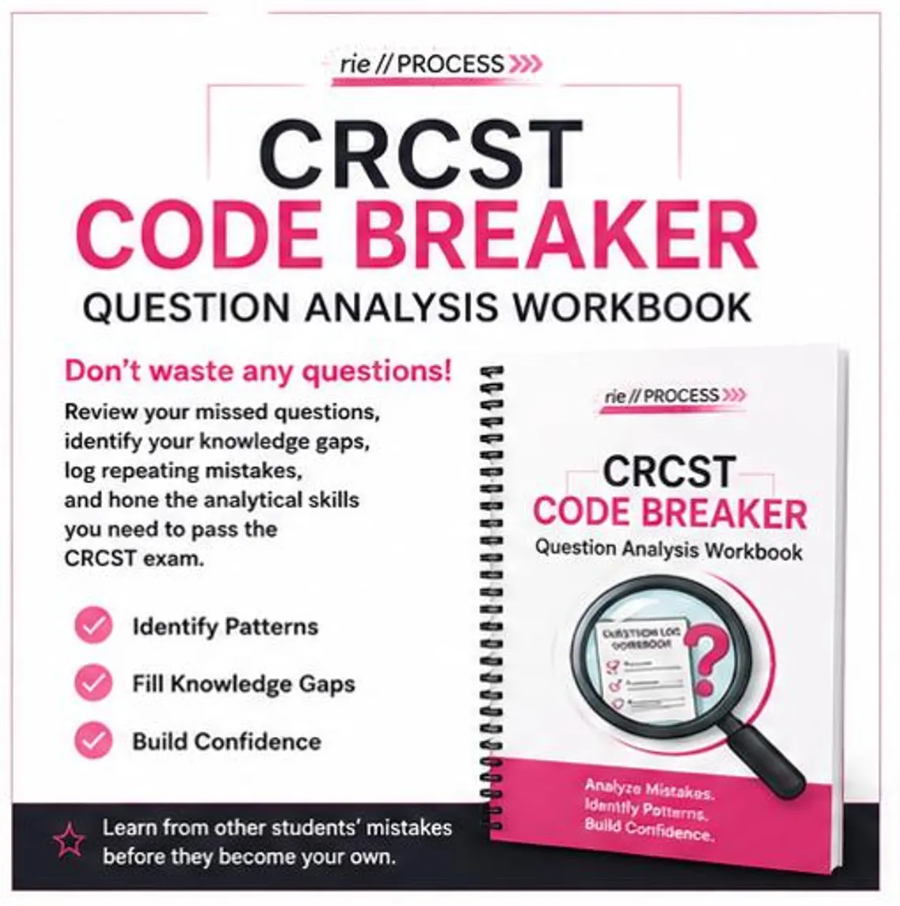
A guided CRCST study workbook that helps candidates analyze missed questions, identify patterns, and turn practice test mistakes into targeted study opportunities.
CERTIFICATION PREP