Learn SPD · Packaging
Packaging Has Two Jobs.
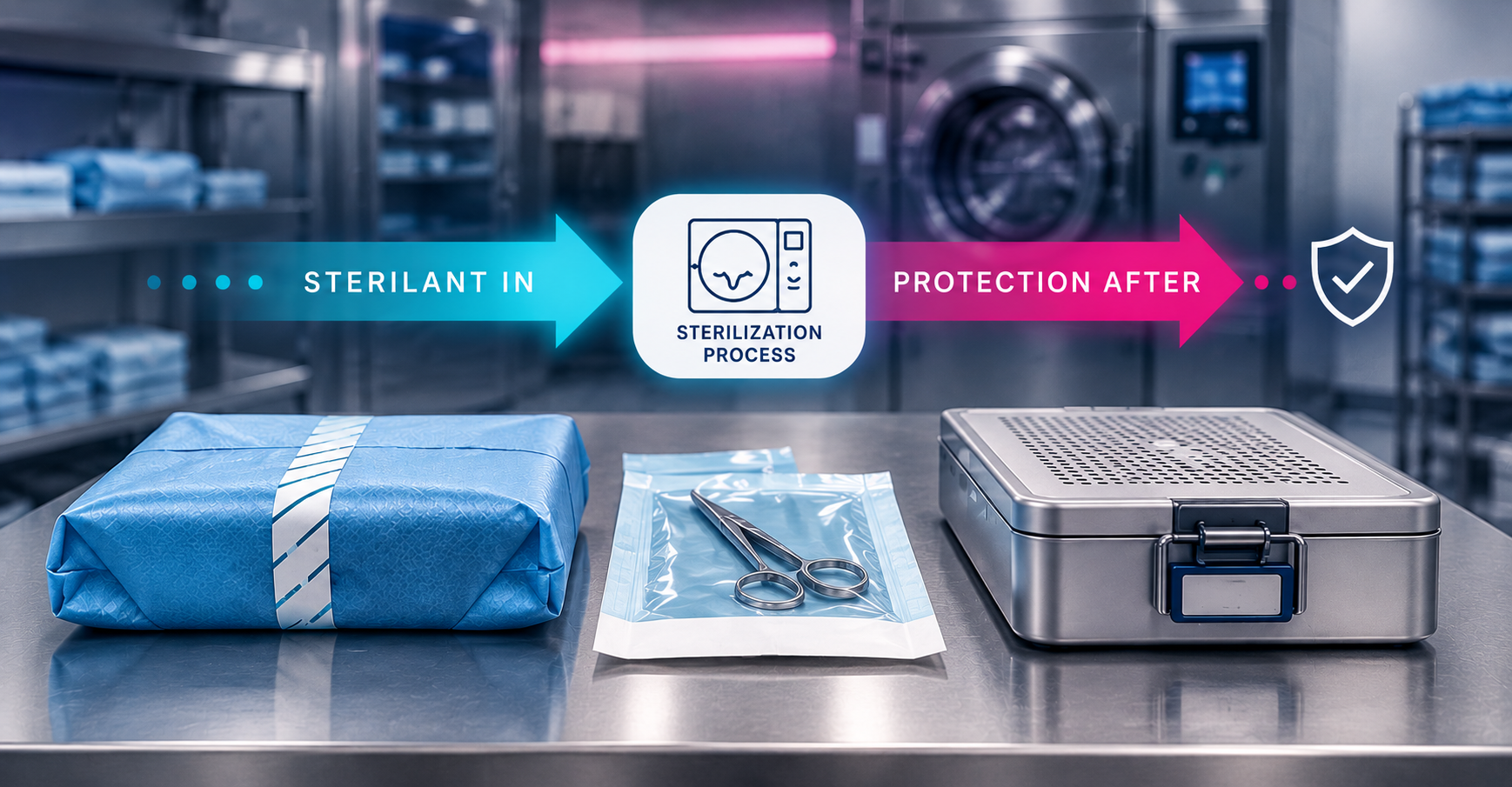
Allow the sterilization process to reach the device.
Protect the device after processing.
A package isn’t just something wrapped around an instrument.
The packaging system must be appropriate for the device and sterilization process, allow effective sterilant contact, maintain package integrity, and provide a barrier that protects the contents until use.
The purpose of packaging
The package is part of the process.
Before sterilization, packaging must allow the conditions required for the sterilization process to reach the device.
After sterilization, it must help protect the contents from contamination until the package is opened for use.
Before Processing
Allow sterilant contact.
During processing
Withstand the selected sterilization process.
After processing
Maintain integrity and protect the contents.
ACCESS → PROCESS → PROTECT
Packaging selection
Not every package works for every device or process.
Common sterile barrier systems include:
-
Flexible material used to enclose instrument sets and other compatible items
-
Flexible packaging commonly used for appropriately sized individual or small groups of compatible items.
-
Reusable systems designed to hold compatible devices during sterilization and protect them afterward.
Packaging selection should be based on the device, packaging system instructions, sterilization method, and applicable facility procedures.
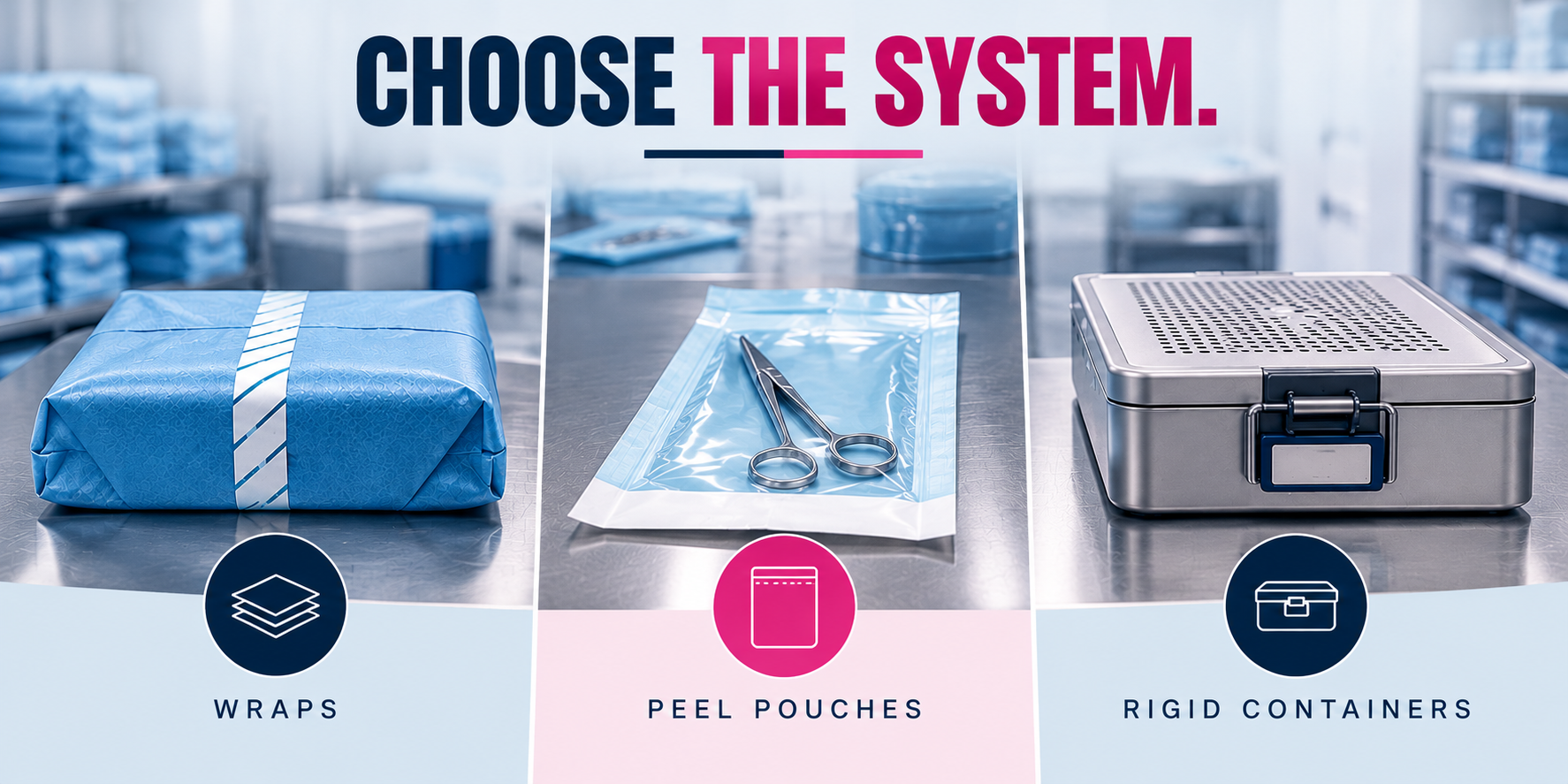
Compatibility comes before convenience.
Device preparation
The package can’t fix what happened before it.
Before an item is packaged, required inspection, functional testing, assembly, and preparation should already be complete.
The device should be:
Clean
No unacceptable soil or residue remains.
Dry
Moisture has been addressed as required.
INSPECTED
Condition and integrity have been evaluated.
FUNCTIONAL
Required functional checks have been completed.
Correctly PREPARED
The device is assembled, positioned, and prepared according to applicable instructions.
Clean → Dry → Inspect → Prepare → Package
Related Learning:
Package Fit
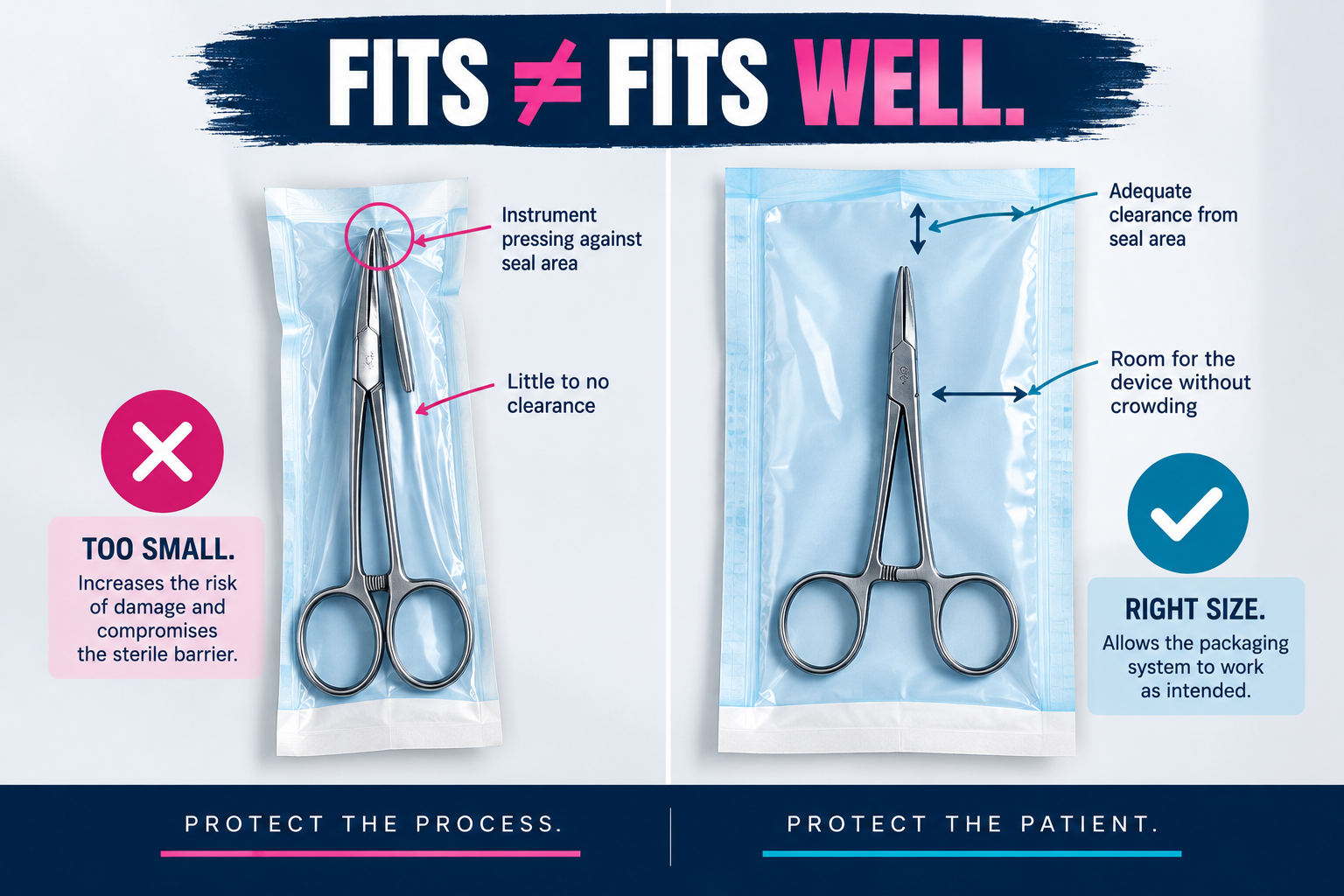
A packaging system should appropriately accommodate the device without unnecessary crowding, strain, or pressure on the sterile barrier.
Watch for:
instruments pressing against seals or packaging material
sharp or heavy items that may damage the package
overcrowded pouches
packages that are too small for the contents
configurations that interfere with proper positioning or processing
Don’t Make the Package Fit the Contents.
The smallest package you can physically squeeze an item into isn’t automatically the right package.
Fit Matters.
Peel Pouch Basics
Small Package. Important Details.
-
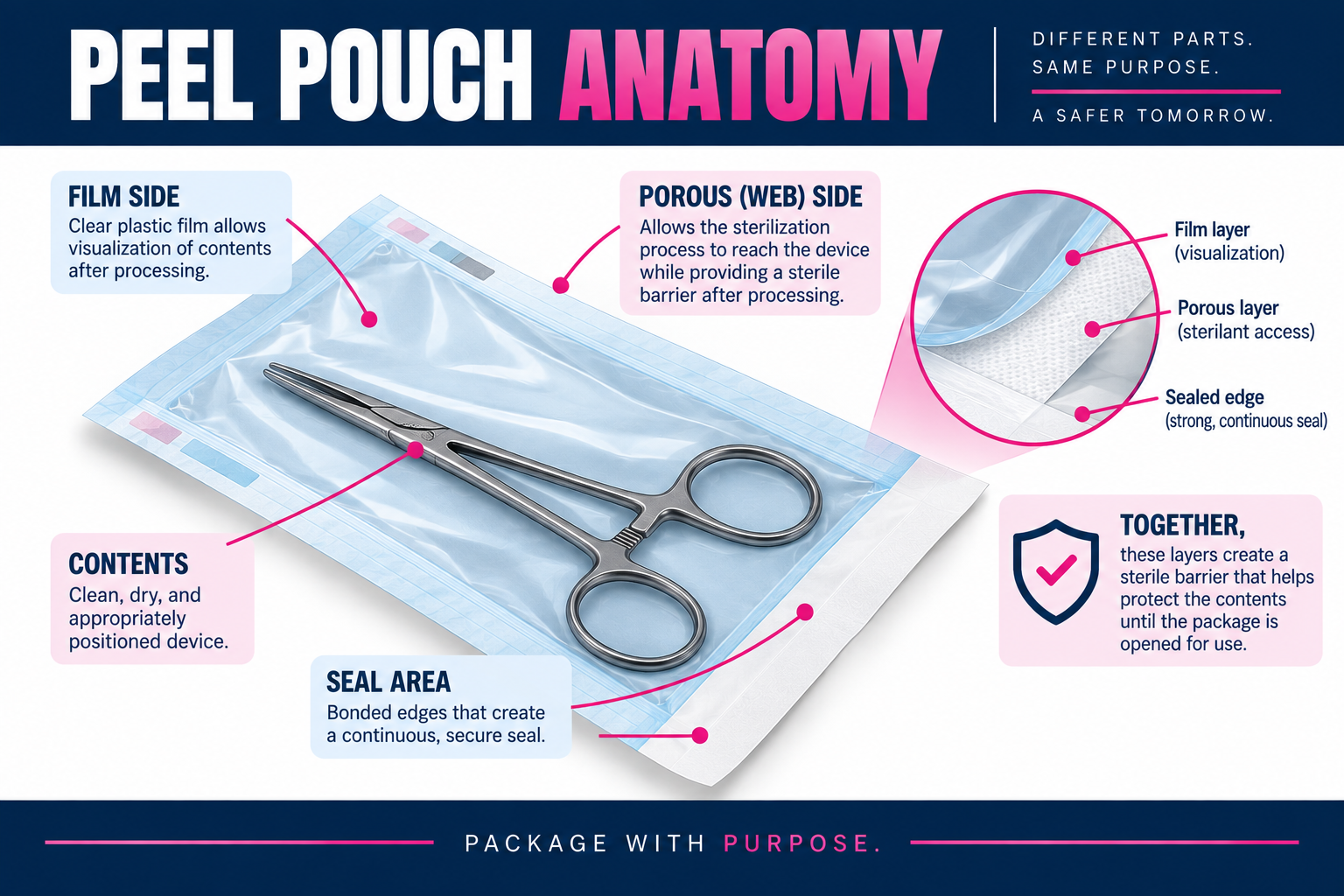
The pouch must appropriately accommodate the item.
-
The device should be positioned according to applicable instructions and facility procedure.
-
The required seal must be complete and intact.
-
The contents should not puncture, stretch, or compromise the packaging.
-
The pouch must be compatible with the device and selected sterilization process.
Peel pouches combine materials designed to create a sterile barrier while allowing the selected sterilization process to occur.
Correct preparation includes attention to:
Don’t Crowd the Pouch.
Sterilization Wrap
The wrap has to survive the journey.
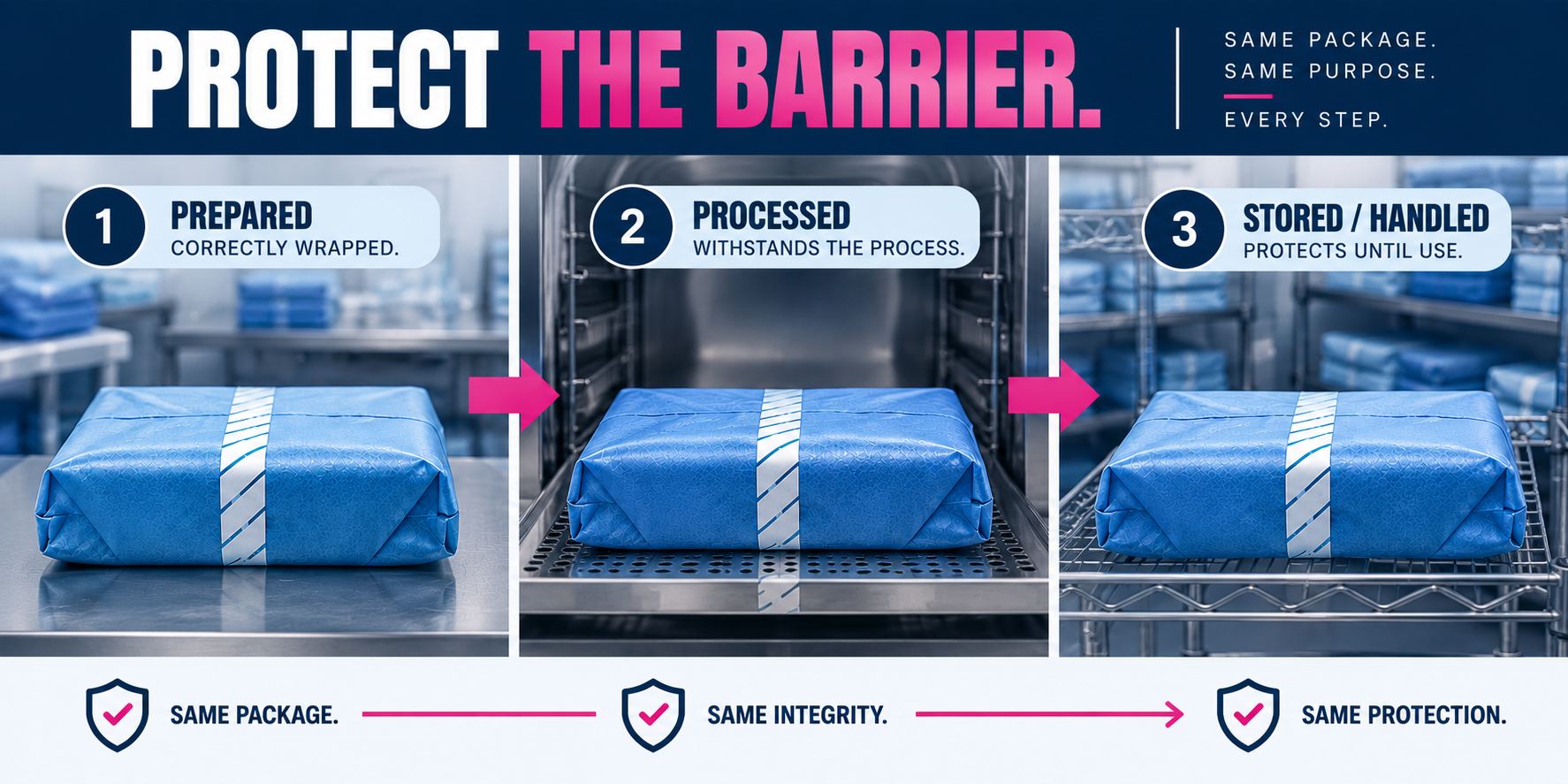
Wrapped sets must be prepared so the packaging system can perform throughout processing, handling, storage, transport, and presentation.
Consider:
-
The set should be prepared to reduce unnecessary stress or damage to the packaging.
-
Use the appropriate method and packaging system instructions.
-
Secure the package using approved methods without compromising the packaging material.
-
A properly wrapped tray can still be damaged after sterilization.
Packaging Quality Doesn’t End When the Wrapping Ends.
Rigid Sterilization containers
Reusable doesn’t mean automatic.
Rigid containers are reusable sterile barrier systems with components that must be correctly assembled, inspected, maintained, and used according to their instructions.
Depending on the system, inspection may include:
container surfaces
lids and mating surfaces
locking mechanisms
filters or valves
retention components
gaskets or seals
tamper-evident features
other manufacturer-specified components
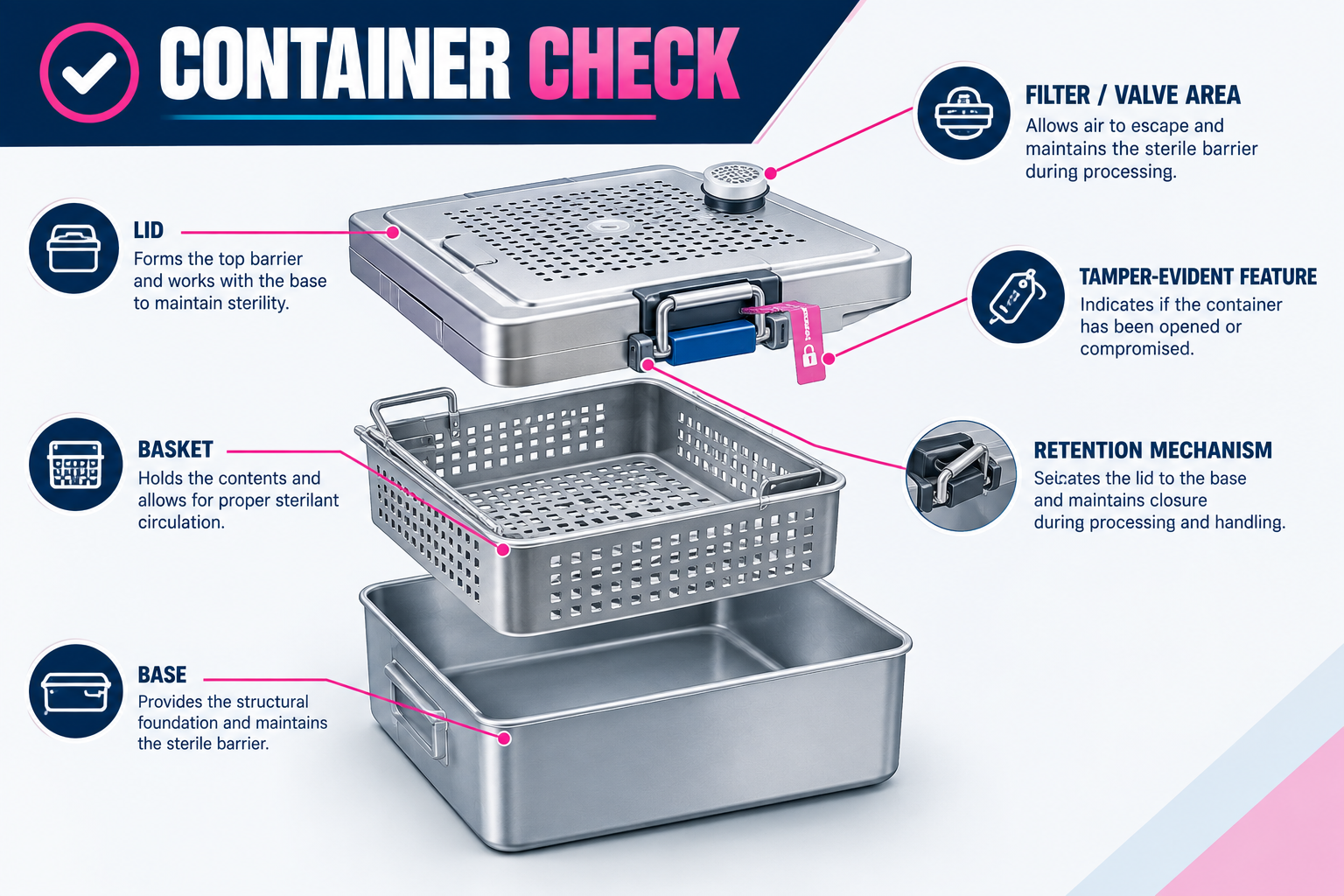
The Container is a Device, Too.
Use the current manufacturer’s instructions for the specific container system.
The Closure Matters
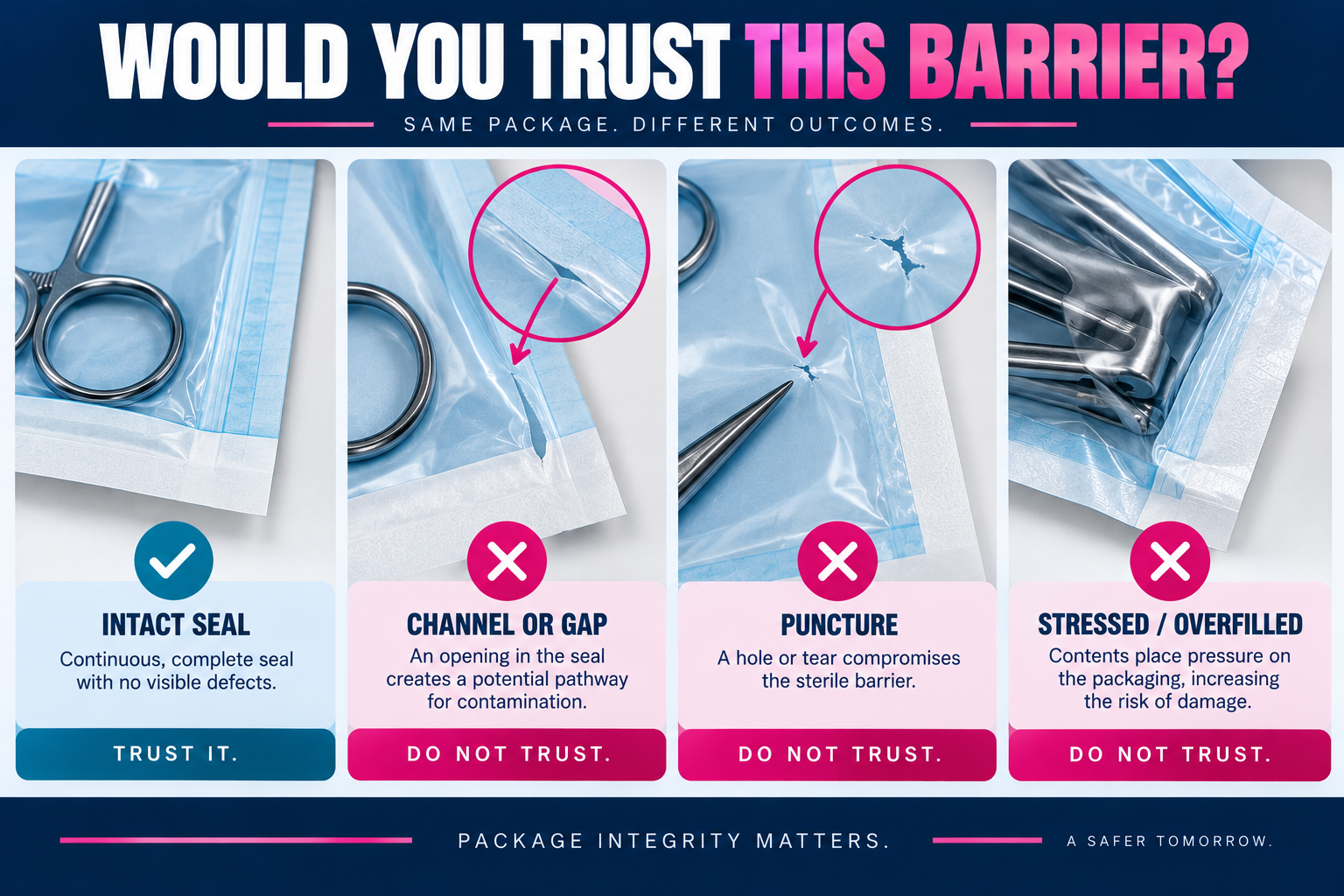
A Package Is Only As Reliable As Its Barrier.
Whether a package is sealed, wrapped, or mechanically closed, the completed system must maintain the intended sterile barrier.
Look for conditions such as:
-
The required seal is not continuous or complete.
-
An opening creates a potential pathway through the seal.
-
Packaging material has been physically damaged.
-
The contents of handling have placed excessive pressure on the package.
-
Something about the package makes its ability to protect the contents uncertain.
When Package integrity is in question, don’t guess.
Identification + Traceability
Label the package. Protect the package.
Packaging must contain the identification and traceability information required by the facility and process.
But adding information should not damage or compromise the sterile barrier.
Follow applicable requirements for:
what information is required
where information is placed
approved labeling methods
traceability documentation
package or load identification
Documentation supports traceability. It shouldn’t damage the package to do it.
When something isn’t Right
Stop Before The Problem Moves Forward.
You notice:
THE POUCH IS TOO SMALL.
THE SEAL IS INCOMPLETE.
THE WRAP IS DAMAGED.
THE CONTAINER COMPONENT IS QUESTIONABLE.
THE DEVICE MAY NOT BE COMPATIBLE WITH THE PACKAGING SYSTEM.
YOU AREN’T SURE THE PACKAGE MEETS THE REQUIREMENTS.
Don’t send the uncertainty downstream.
STOP. VERIFY. CORRECT THE PROBLEM.
Consult the applicable manufacturer’s instructions, facility procedures, and other required resources before continuing.
Packaging is a quality checkpoing - not a decorating step before sterilization.
Reality Check
“But It Will Still Get Sterilized.”
An instrument is placed into a pouch that is clearly too small. The device fits inside, but it places pressure against the packaging and seal area.
Someone points out:
“The sterilizer will still sterilize it.”
That misses half the job.
The question isn’t only whether the sterilization process can occur.
The package also has to maintain its integrity and protect the contents afterward.
Sterilization isn’t the end of the package’s job.
Code Breaker
What is the question really asking?
When a certification question involves packaging, identify the underlying problem.
-
Can this packaging system be used with the device and sterilization method?
-
Can the required sterilization conditions reach the device?
-
Can the package maintain the sterile barrier?
-
Could the contents damage the packaging?
-
Do you need to consult the applicable instructions or procedure?
When several answers sound reasonable, prioritize the choice that protects the process and sterile barrier.
Take This With You
Don’t Ask Only: “Does it Fit?”
Ask: “Can This Packaging System Do Its Whole Job?”
SELECT an appropriate packaging system.
PREPARE the device correctly.
PACKAGE without compromising the barrier.
VERIFY closure and integrity.
PROTECT the package through the rest of the process.
SELECT → PREPARE → PACKAGE → VERIFY → PROTECT
RELATED FREE EDUCATION
Keep the process moving.
Inspection + Assembly
Before packaging begins, determine whether the device is actually ready to move forward.
Tiny Tech Tips
Quick packaging and sterilization concepts, including pouch fit, package integrity, and process protection.
5-Minute Huddles
Bring practical process conversations back to your team.
Continue the Process
The package is ready.
Now the process has to work.
Packaging prepares the device for the selected sterilization process.
Next, we’ll look at what sterilization actually requires - and why cycle selection, loading, monitoring, and process verification matter.
Free educational content from rie//PROCESS.