LEARN SPD · DECONTAMINATION
Mechanical Cleaning
The machine does the work.
The Technician Makes it Possible.
Mechanical cleaning equipment can improve consistency, reach difficult surfaces, and provide controlled cleaning processes - but only when the device, equipment, chemistry, cycle, and load are prepared correctly.
Understanding how the equipment cleans helps you understand why the details matter.
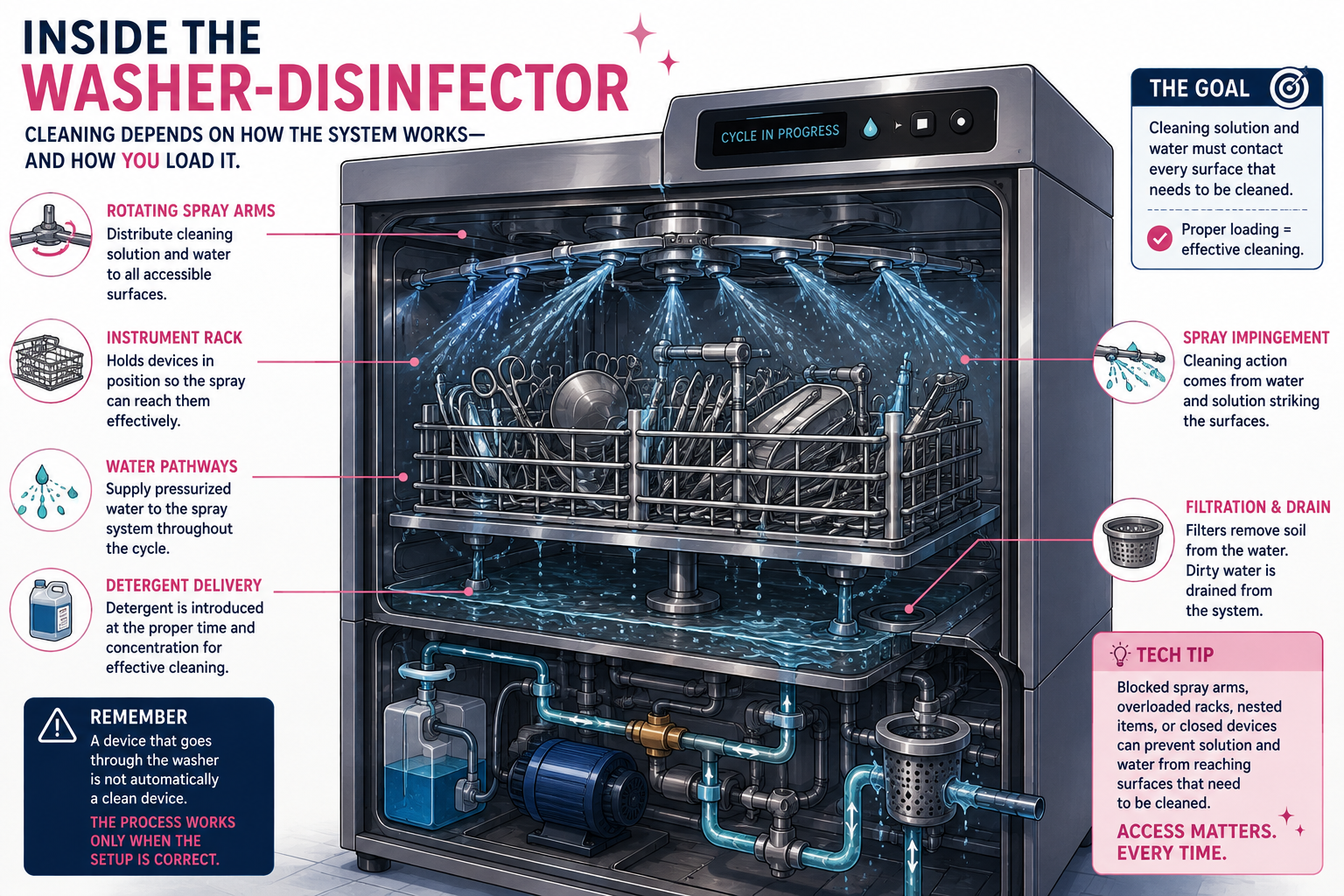
Mechanical Doesn’t Mean Automatic.
The Big Picture
Mechanical cleaning uses equipment to create controlled cleaning action.
Depending on the system, that action may involve:
Chemistry
Cleaning agents help loosen and remove soil.
TIME
The process must provide adequate exposure for cleaning to occur.
Temperature
Water and solution temperatures influence cleaning performance and chemistry.
Mechanical Action
Energy physically helps remove soil from device surfaces.
If instruments are improperly prepared, overloaded, nested, closed, disconnected, or positioned incorrectly, cleaning performance can be compromised.
The machine can only clean what the process allows it to reach.
Cavitation ≠ Impingement
How Does It Clean?
Mechanical cleaning systems don’t all create cleaning action the same way.
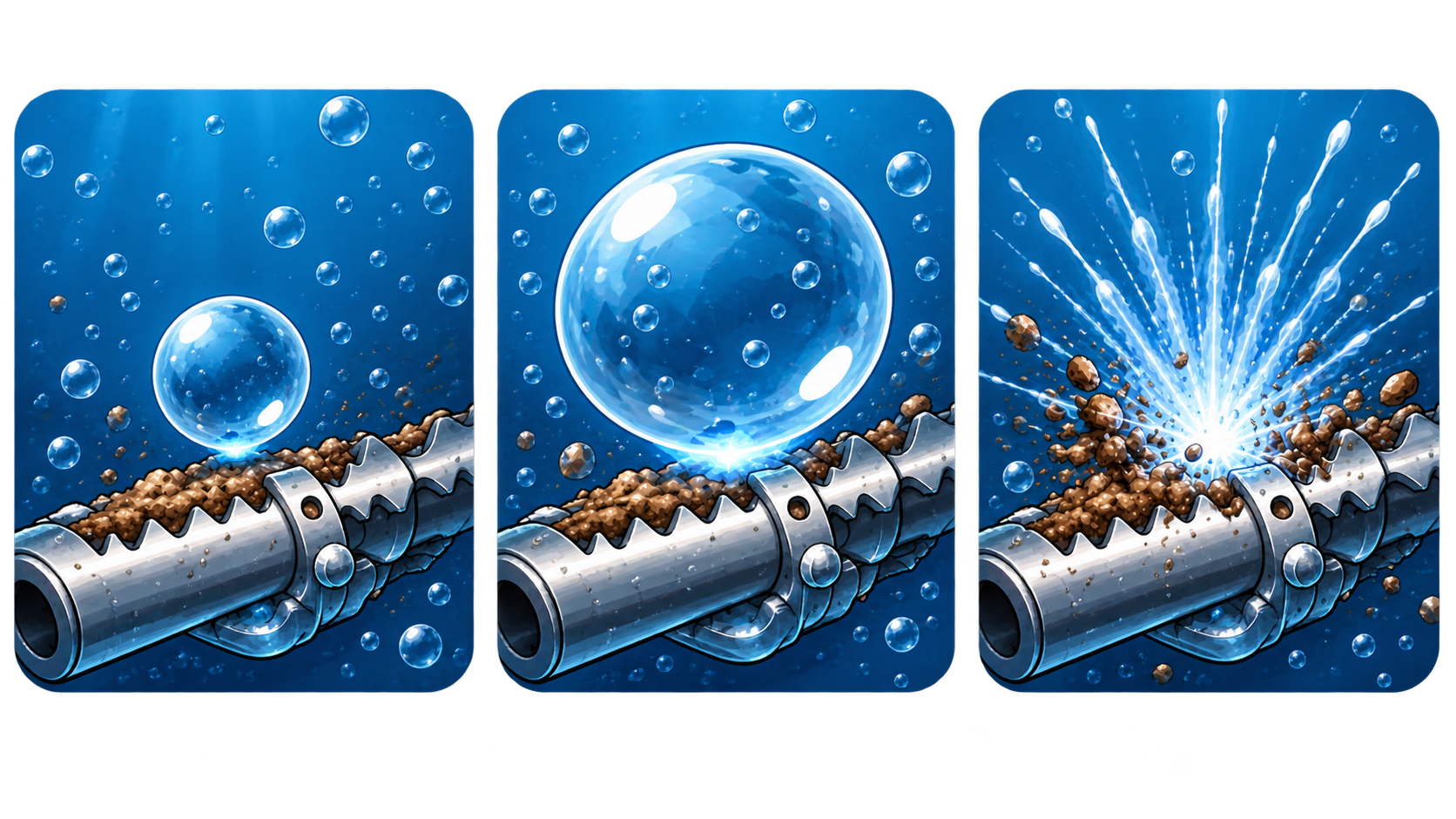
Ultrasonic Cleaner
Cavitation
Microscopic bubbles form, grow, and collapse in the cleaning solution.
The energy released during bubble collapse helps dislodge soil from accessible instrument surfaces.
THINK:
MICROSCOPIC BUBBLE ACTION
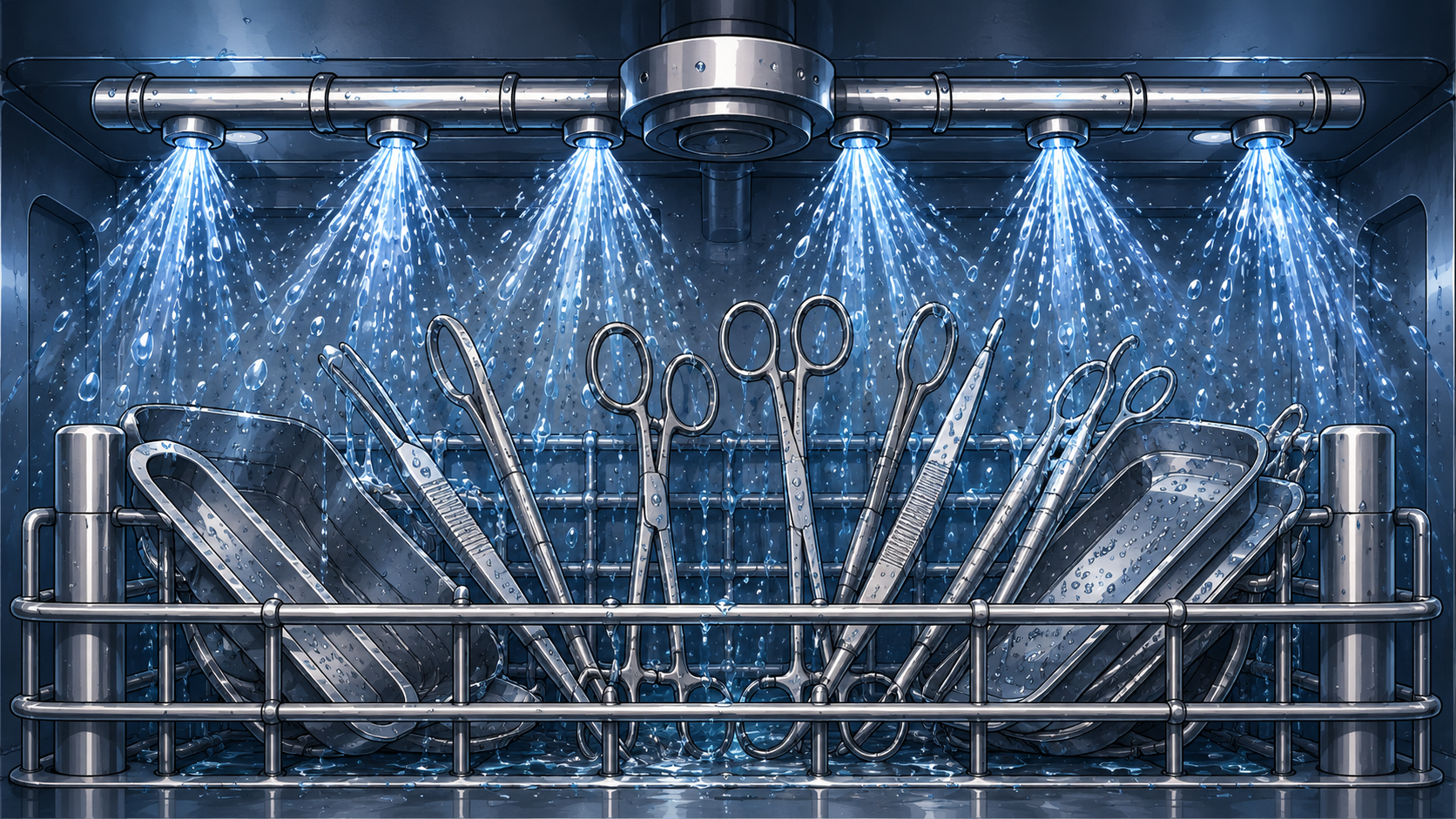
Washer-Disinfector
Impingement
Pressurized water and cleaning solution strike instrument surfaces.
Spray arms direct cleaning solution throughout the load. Effective cleaning depends on that spray reaching the surfaces that need to be cleaned.
THINK:
PRESSURIZED SPRAY ACTION
Different Action. Same Requirement.
The cleaning action has to reach the soil.
Cavitation needs access. Impingement needs access. How you prepare and position the device matters.
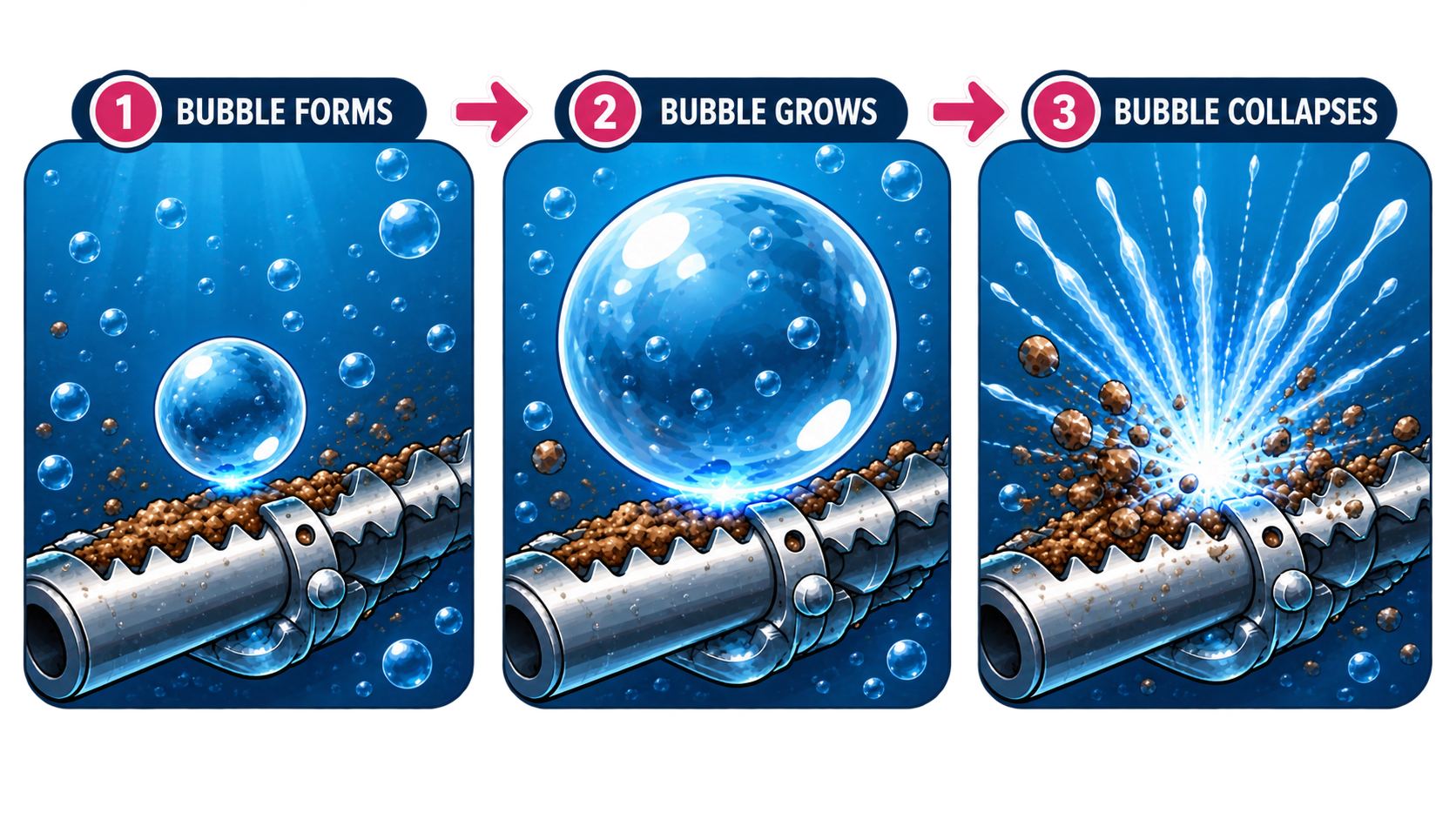
What Happens Inside an Ultrasonic Cleaner?
Look Closer
Ultrasonic energy produces rapidly forming and collapsing microscopic bubbles within the solution.
When those bubbles collapse near an instrument surface, the released energy helps loosen soil - including from areas that may be difficult to reach manually.
But:
Ultrasonic ≠ Magic.
Effective ultrasonic cleaning still depends on things like:
Correct device compatibility
Proper preparation
Correct cleaning chemistry
Appropriate solution concentration
Correct cycle parameters
Equipment performance
Following the applicable IFUs
The Ultrasonic enhances cleaning. It doesn’t erase bad process.
Spray has to get there.
Follow the water
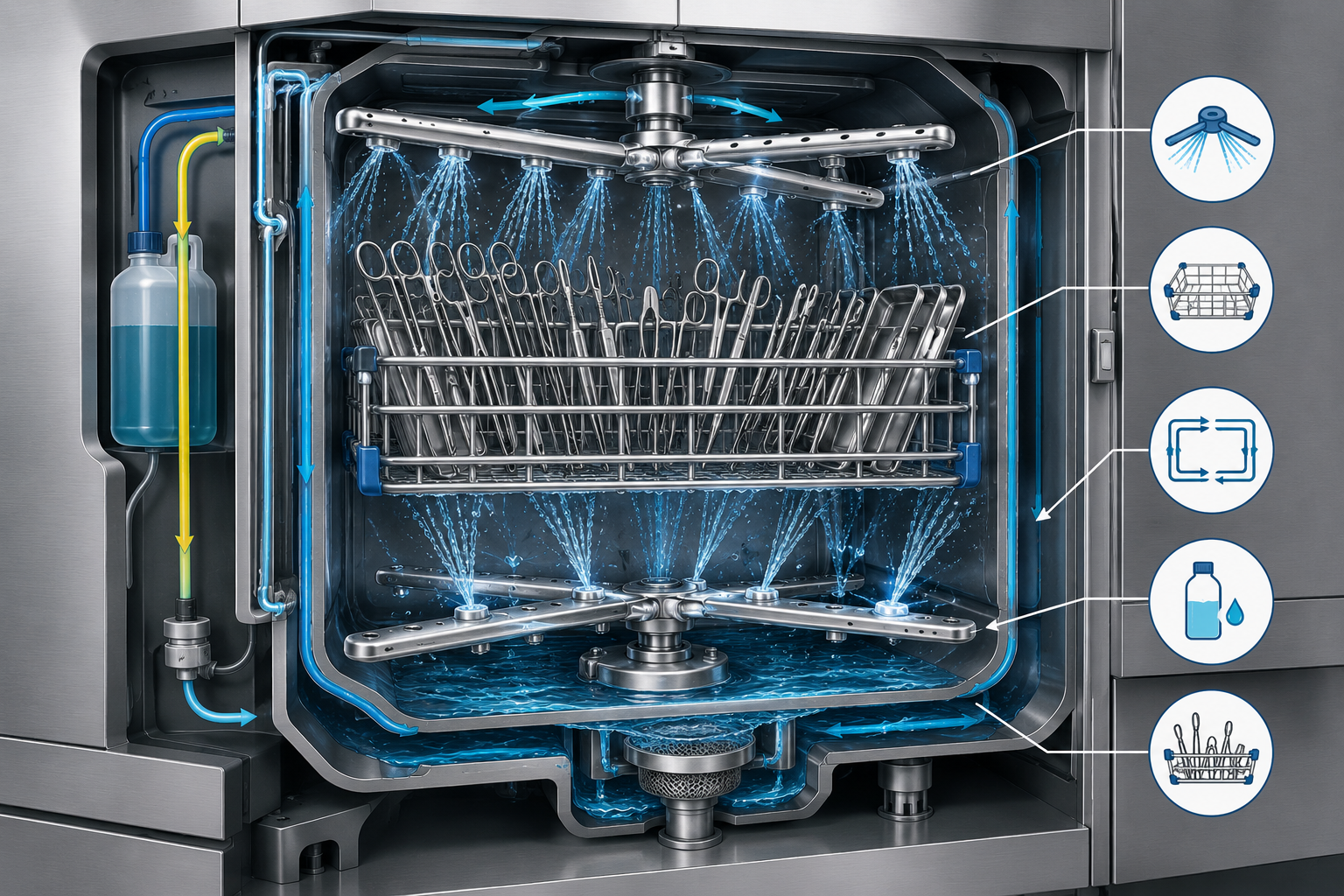
Washer-disinfectors rely on controlled cycles and spray action to clean devices.
That means loading isn’t just about fitting everything into the chamber.
If an item blocks a spray arm, shields another device, traps water, or prevents cleaning solution from contacting a surface, the equipment may not be able to perform as intended.
Load configuration affects cleaning.
Passing through the washer is not the same as being properly cleaned.
Loading is part of the cleaning process.
Set the machine up to succeed
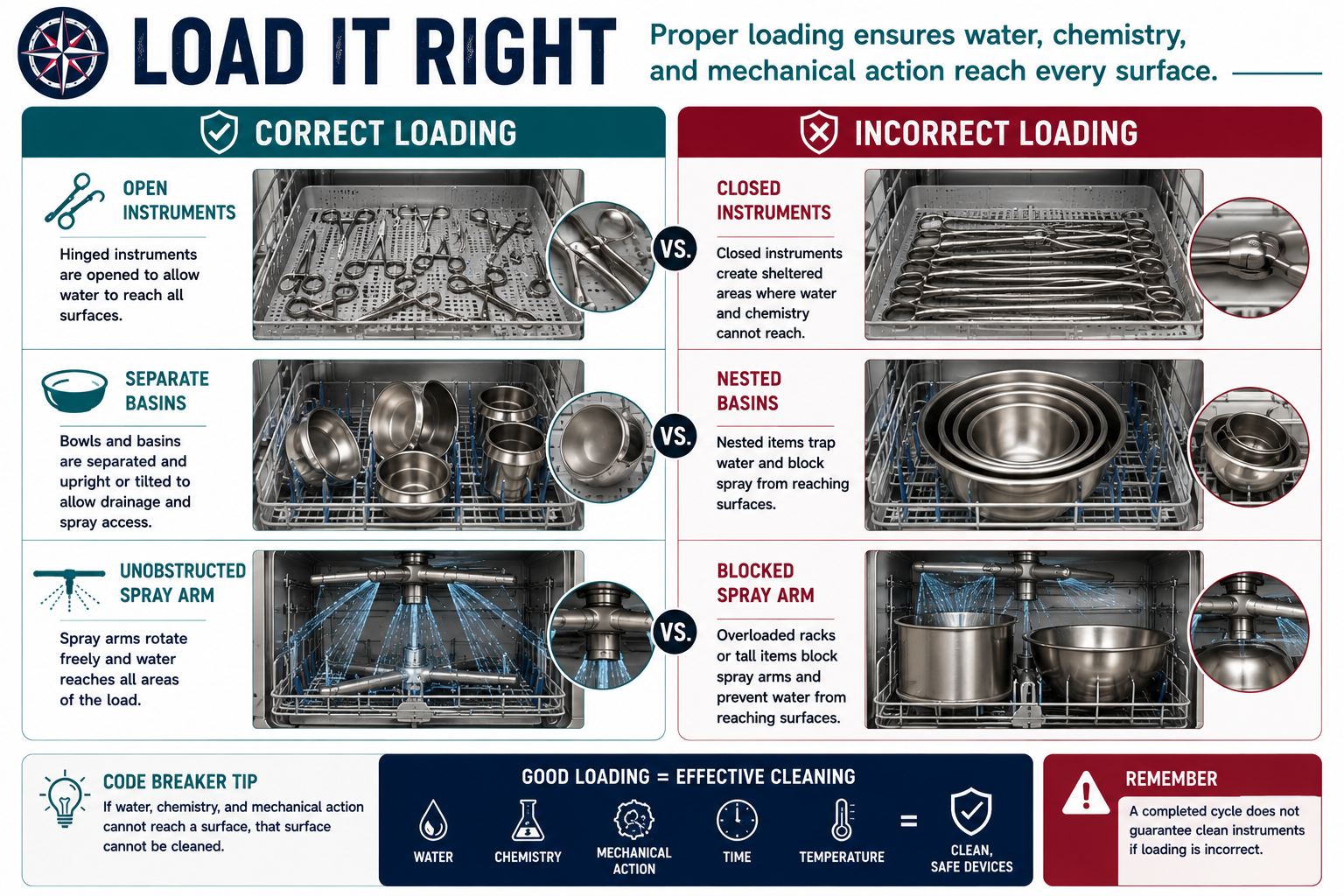
✓ Better Access
Open hinged instruments
Separated basins
Accessible surfaces
Unobstructed spray arms
Vs.
✕ Blocked Access
Closed instruments
Nested items
Shielded surfaces
Blocked spray pathways
A beautifully programmed washer can’t compensate for a load that prevents cleaning action from reaching the device.
Access Matters.
A lumen sitting on the rack isn’t necessarily being flushed.
Don’t forget the inside
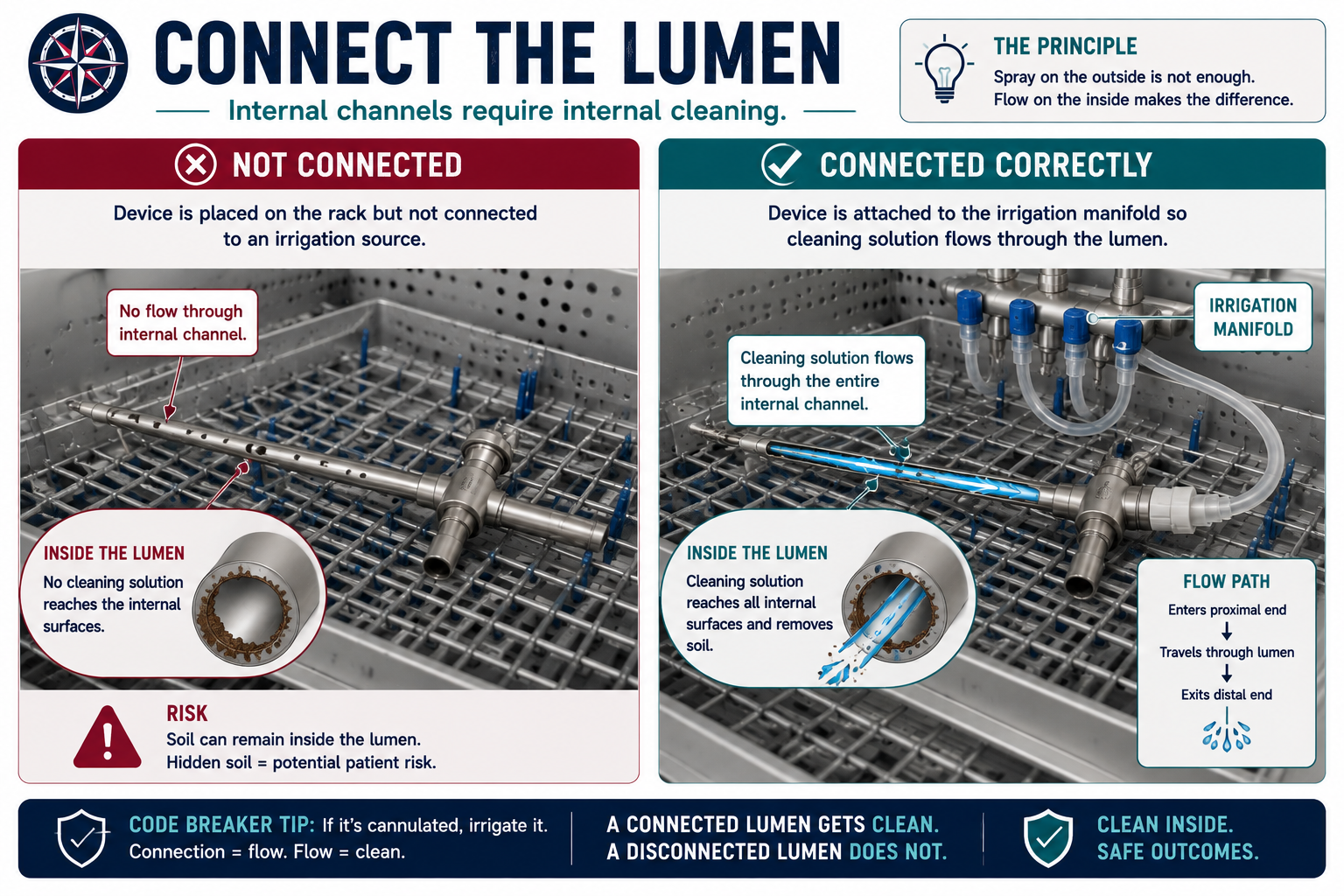
Cannulated and lumened devices create an additional challenge:
The cleaning process must reach the internal surface.
When required by the device and equipment IFUs, channels may need to be connected to the washer’s irrigation system so cleaning solution can flow through the lumen rather than merely around the outside of the device.
External spray doesn’t guarantee internal flow.
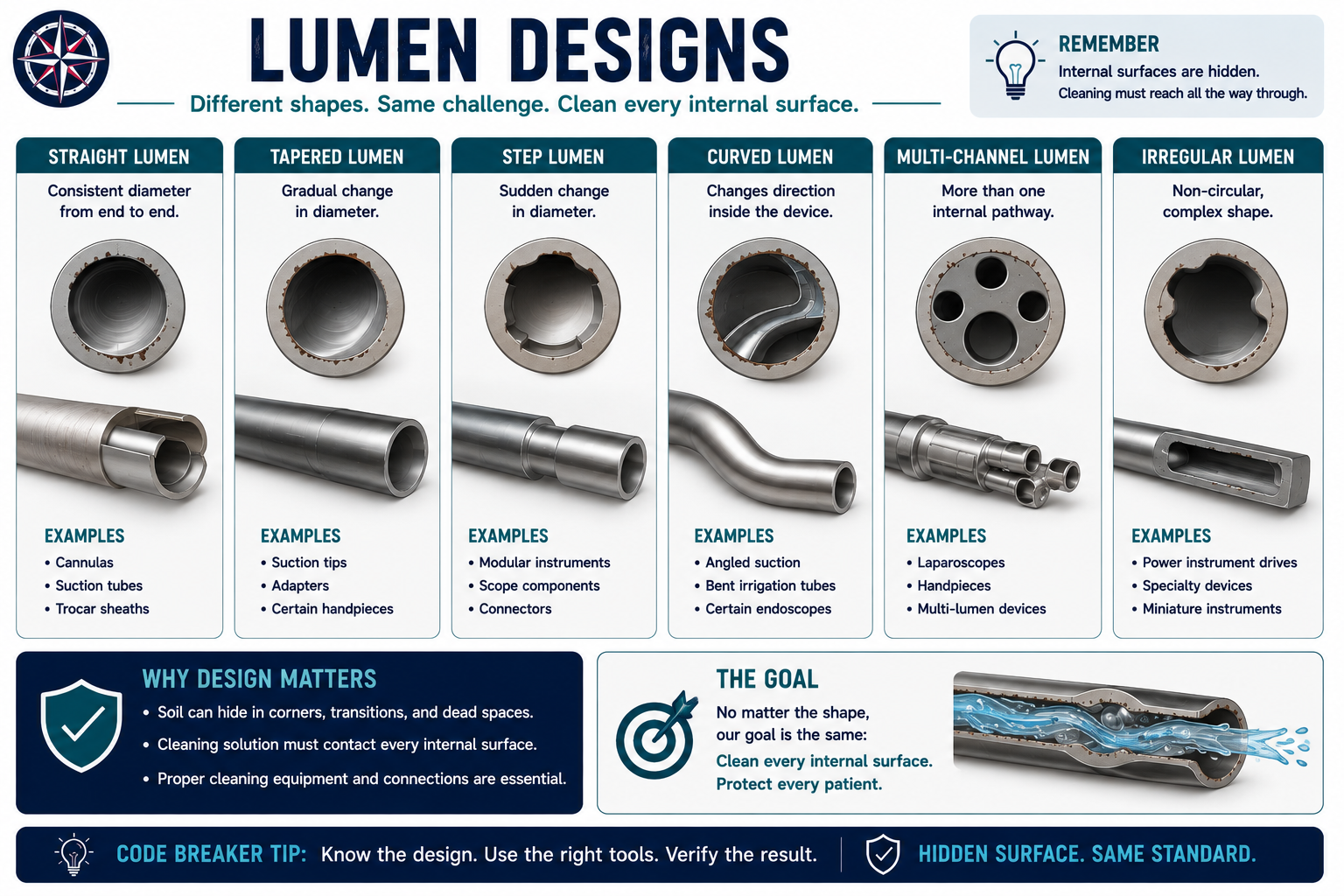
Internal design changes the cleaning challenge.
What you can’t see still matters
Internal channels can vary in:
Those differences can affect how a device must be flushed, brushed, connected, and mechanically cleaned.
Therefore:
Diameter · Length · Curves · Connections · Internal features
Don’t assume one lumen process fits every device.
Follow the current device and equipment IFUs.
The Human Part of Mechanical Cleaning
The equipment runs the cycle.
you build the conditions for success.
VERIFY
Is the device compatible with the equipment and process?
Prepare
Has it been opened, disassembled, flushed, or otherwise prepared as required?
Position
Can cleaning action reach the necessary surface?
Connect
Are channels connected when required?
Check
Is the equipment functioning and being monitored appropriately?
Mechanical cleaning isn’t “put it in the machine.”
It’s a controlled process that the technician has to set up correctly.
What’s wrong with this load?
check your thinking
Scenario:
A technician loads several hinged instruments in the closed position. Two basins are nested together, and a cannulated device requiring irrigation is lying on the rack without being connected to the manifold.
Can the washer simply compensate by running the normal cycle?
-
No.
The load contains multiple conditions that can interfere with cleaning:
Closed instruments limit surface exposure.
Nested basins can prevent spray contact.
The internal channel may not receive required flow without the appropriate connection.
The problem isn’t the cycle.
The problem is access.
PREPARE → POSITION → CONNECT → CLEAN
Keep following the process.
Continue learning
Mechanical cleaning works because the equipment, device, chemistry, and technician all work together.
Keep exploring the rie//PROCESS library to connect what happens here to the bigger picture of safe device processing.
Explore Learn SPD
Go back to the learning library and explore more free sterile processing education.
Learn Something Tiny
Want the five-minute version? Explore quick concepts, reminders, and practical takeaways in Tiny Tech Tips.