The 5-Minute Huddle | 001
The Instrument is clean.
Now what?
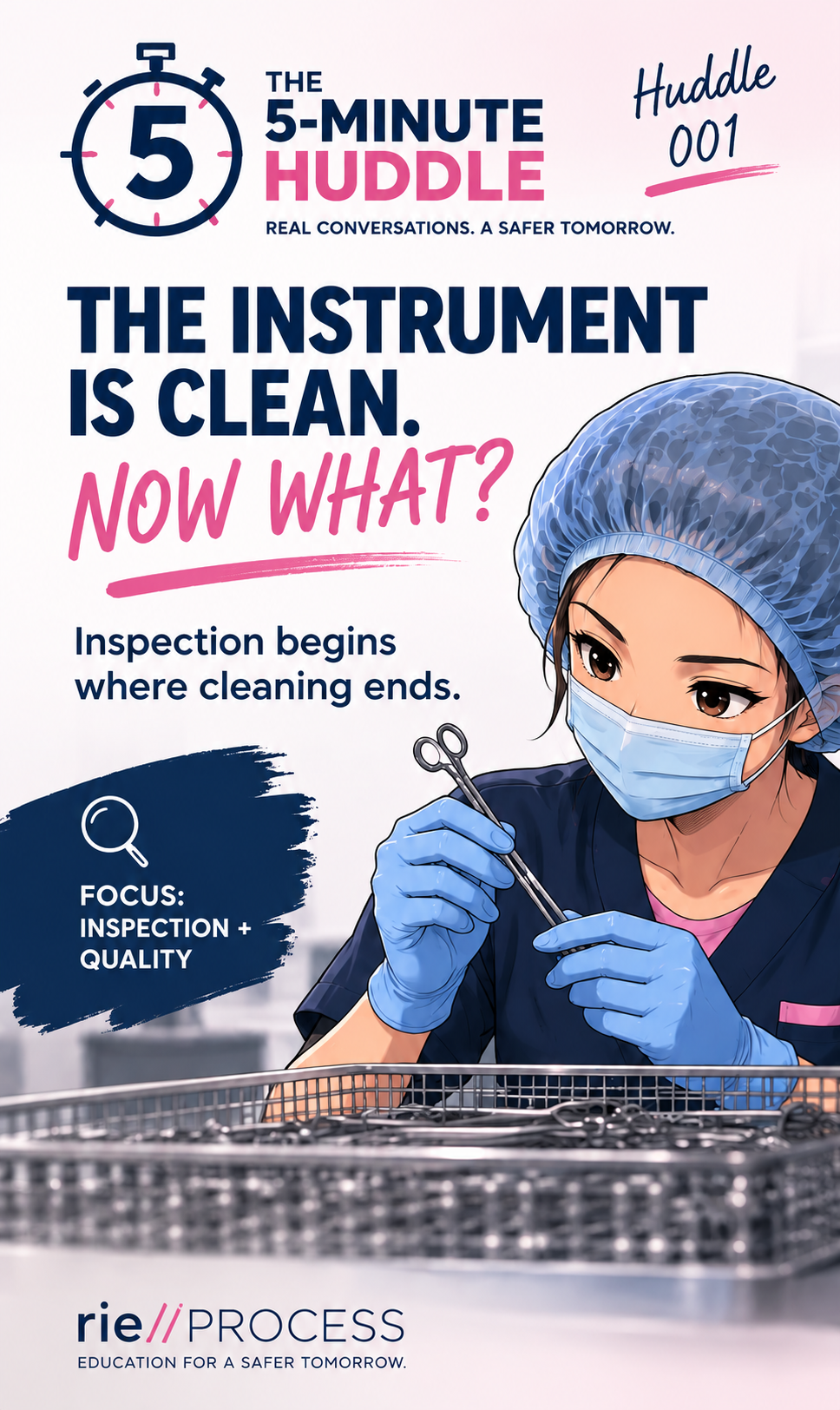
Inspection begins where cleaning ends.
Cleaning removes contamination. But a clean instrument still needs to demonstrate that it is functional, intact, and suitable for use before it continues through the process.
FOCUS: INSPECTION + QUALITY
START THE HUDDLE ↓
One Concept
Cleaning isn’t the Finish Line.
Cleaning prepares an instrument for inspection.
Once an instrument is clean, the technician has an opportunity to evaluate what contamination may have hidden:
damage · wear · corrosion · missing components · improper function
An instrument can be completely clean and still be unacceptable for patient use.
Cleaning answers: Is the soil gone?
Inspection asks: Is this device ready to keep moving?
Look closer
What Would you do?
During assembly, you inspect a freshly cleaned instrument. There is no visible soil, but when you test the instrument, it does not function as expected.
The instrument is clean.
Does it belong in the tray?
Take a minute. Ask the team.
One discussion
What does “Ready for use” actually require?
01
What are we evaluating during inspection besides cleanliness?
02
What could happen if a clean but defective instrument continues through assembly?
03
What should happen when an instrument doesn’t meet inspection expectations?
Don’t rush to give the answer. Let the team talk first.
One Takeaway
Clean doesn’t mean ready.
A clean instrument must still be inspected according to applicable manufacturer instructions and facility procedures before it continues through the process.
If the instrument does not meet established expectations for condition or function, it should not simply continue because it’s clean.
Cleaning removes soil. Inspection finds the problem.
Why it matters
The patient never sees this decision.
A defective instrument identified during inspection may never reach the operating room.
That’s exactly the point.
Finding the problem before the instrument reaches the procedure helps protect the patient and supports the clinical team relying on that device.
GOOD INSPECTION MAKES PROBLEMS DISAPPEAR BEFORE THEY BECOME CLINICAL PROBLEMS.
Take it to your team
Want the one-page version?
Use the printable 5-Minute Huddle during shift huddles, team meetings, coaching conversations, or quick education sessions.
Free educational resource. Please keep rie//PROCESS attribution intact.
The 5-Minute Huddle
Five Minutes down. Keep going.
Huddle 002
Memory is not an IFU
When processing requirements need to be verified, memory isn’t the source.