For Educators · Learner Development
Support should change as performance changes.
New technicians need instruction, demonstration, coaching, correction, and opportunities to practice.
But the goal of guided practice isn’t permanent support.
It is to help the learner develop until they can recognize what needs to happen, make appropriate decisions, and perform safely with less assistance.
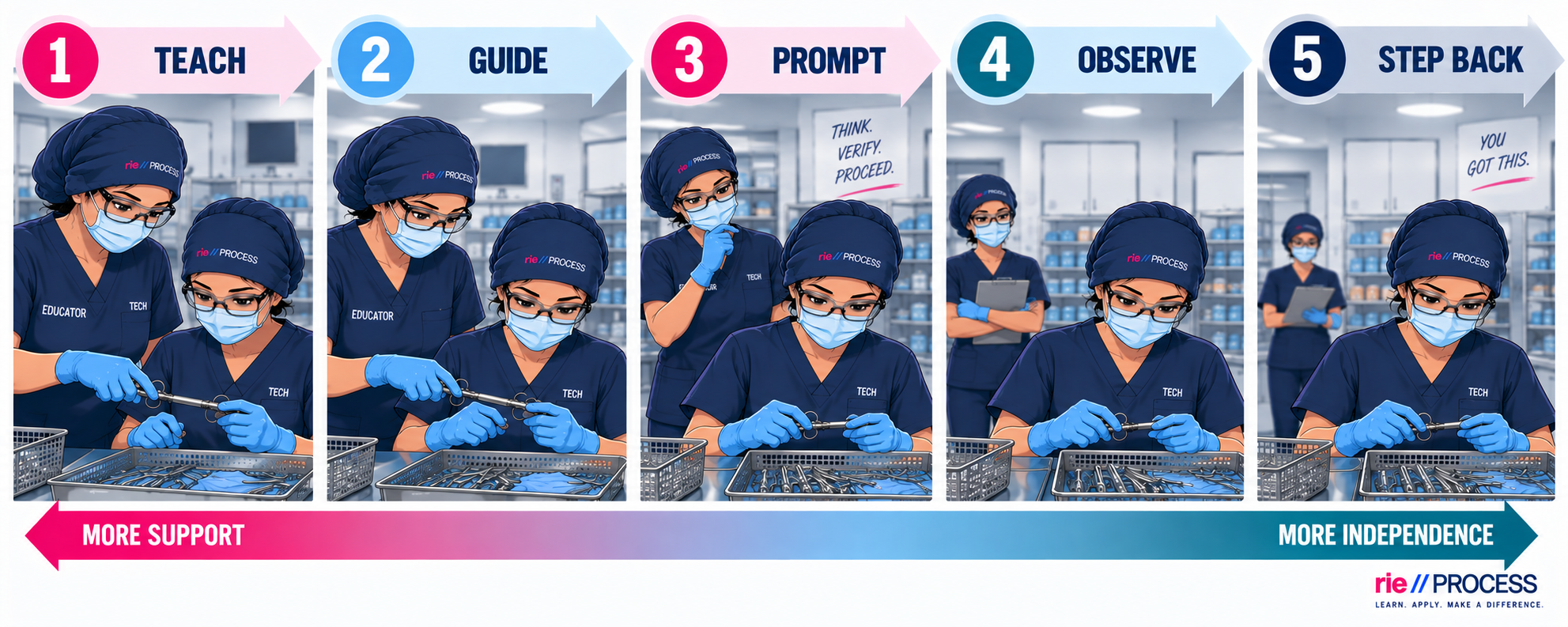
TEACH → GUIDE → PROMPT → OBSERVE → STEP BACK
The Role of Support
Help Them Do It. Then Help Them Need You Less.
Guided practice gives learners an opportunity to perform while support is still available.
During this stage, an educator or preceptor may:
DEMONSTRATE
EXPLAIN
ASK QUESTIONS
PROVIDE CUES
CORRECT TECHNIQUE
REINFORCE GOOD DECISIONS
ALLOW REPEATED PRACTICE
Support is not a weakness in the learning process.
It is part of the learning process.
The goal isn’t zero support on day one. The goal is less support over time.

Don’t remove support all at once. Fade It.
From Instruction to Independence
Teach
Introduce the process, expectations, rationale, and resources.
Educator Role
Explain and demonstrate.
Learner Role
Watch, ask, connect.
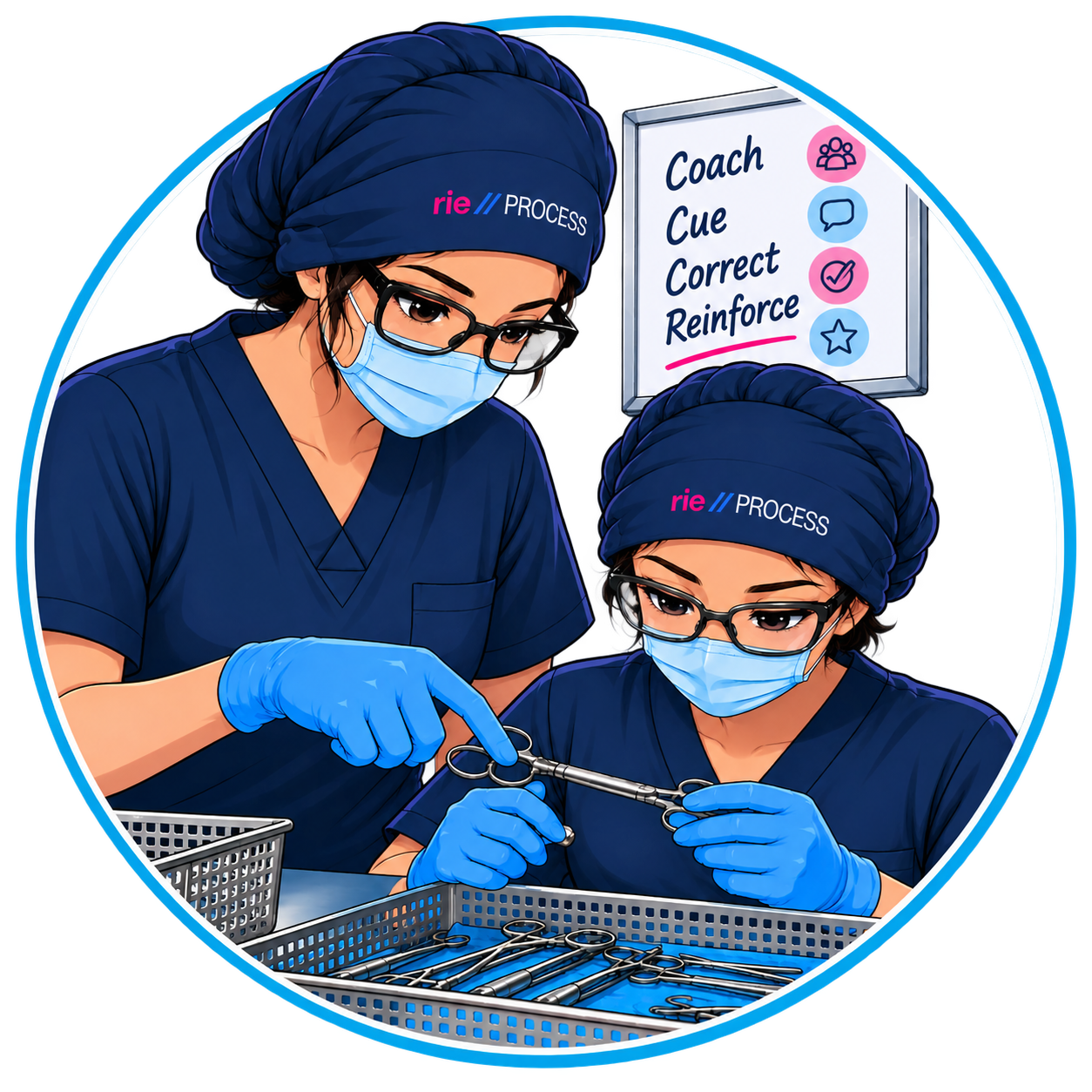
Guide
The learner begins performing while the educator actively coaches.
Educator Role
Direct, cue, correct, reinforce.
Learner Role
Perform with support.

Prompt
The learner performs more of the process while the educator uses questions or limited cues when needed.
Educator Role
Prompt thinking instead of supplying every answer.
Learner Role
Recall, reason, decide.
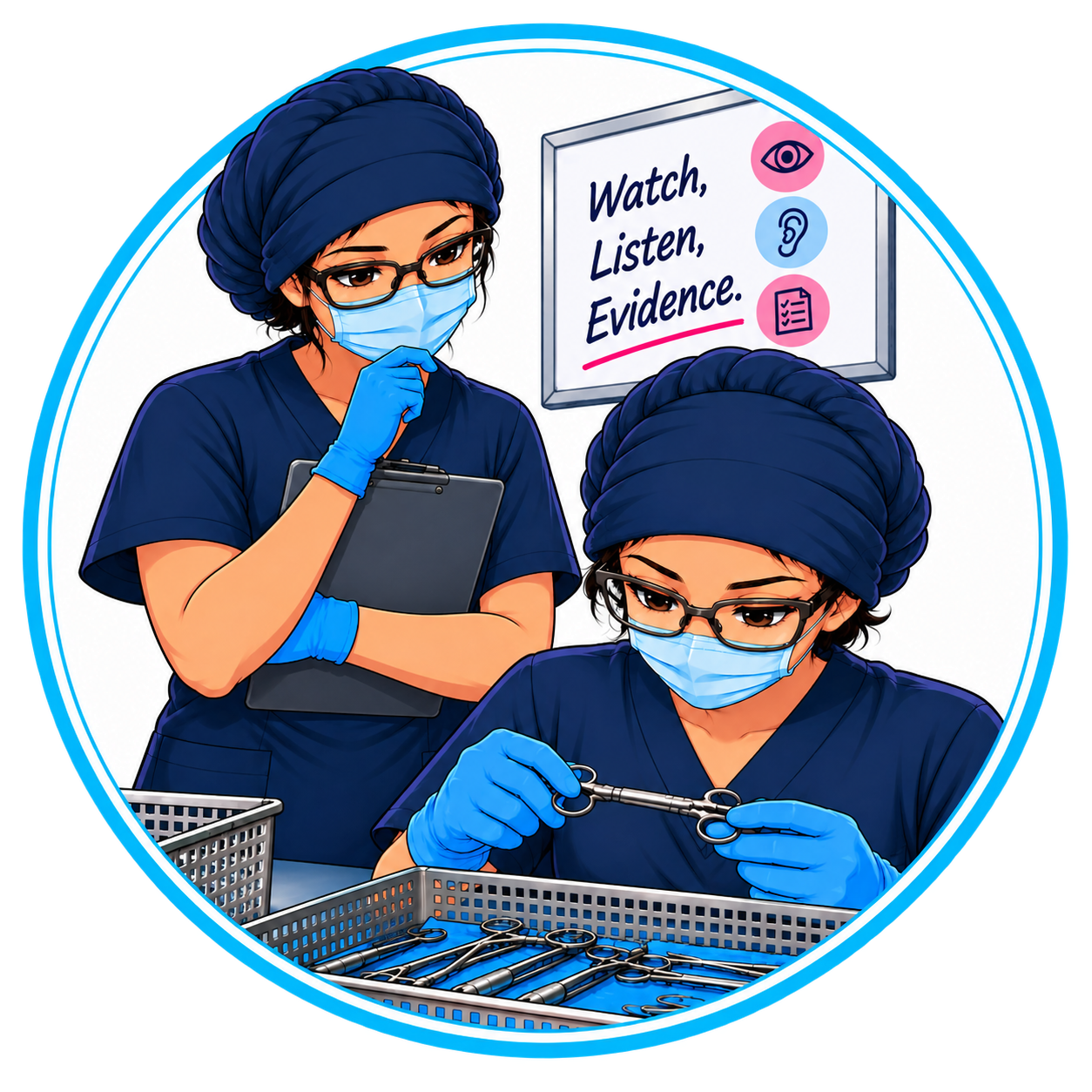
Observe
The educator reduces assistance and watches what the learner does independently.
Educator Role
Observe and collect evidence.
Learner Role
Perform and make decisions.

Step Back
The learner manages expected work with appropriate independence and knows when to seek help.
Educator Role
Remain available without directing routine performance.
Learner Role
Apply, adapt, escalate when appropriate.
Evidence matters
A learner may perform beautifully while a preceptor:
reminds them of the missing step
points out missing items
asks leading questions
catches errors
redirects decisions
confirms every choice
That can be completely appropriate during guided practice.
But it changes what the performance tells you.
“They Can Do It With Me” Isn’t the same as “They Can Do It.”
Guided performance shows learning.
Independent performance shows something different.
Before deciding someone is ready for less supervision, give them opportunities to show what happens when the support is reduced.
Related Learning:
Prompting Thinking
Before You tell them, see what they know.
As learners progress, direct instruction can gradually give way to questions.
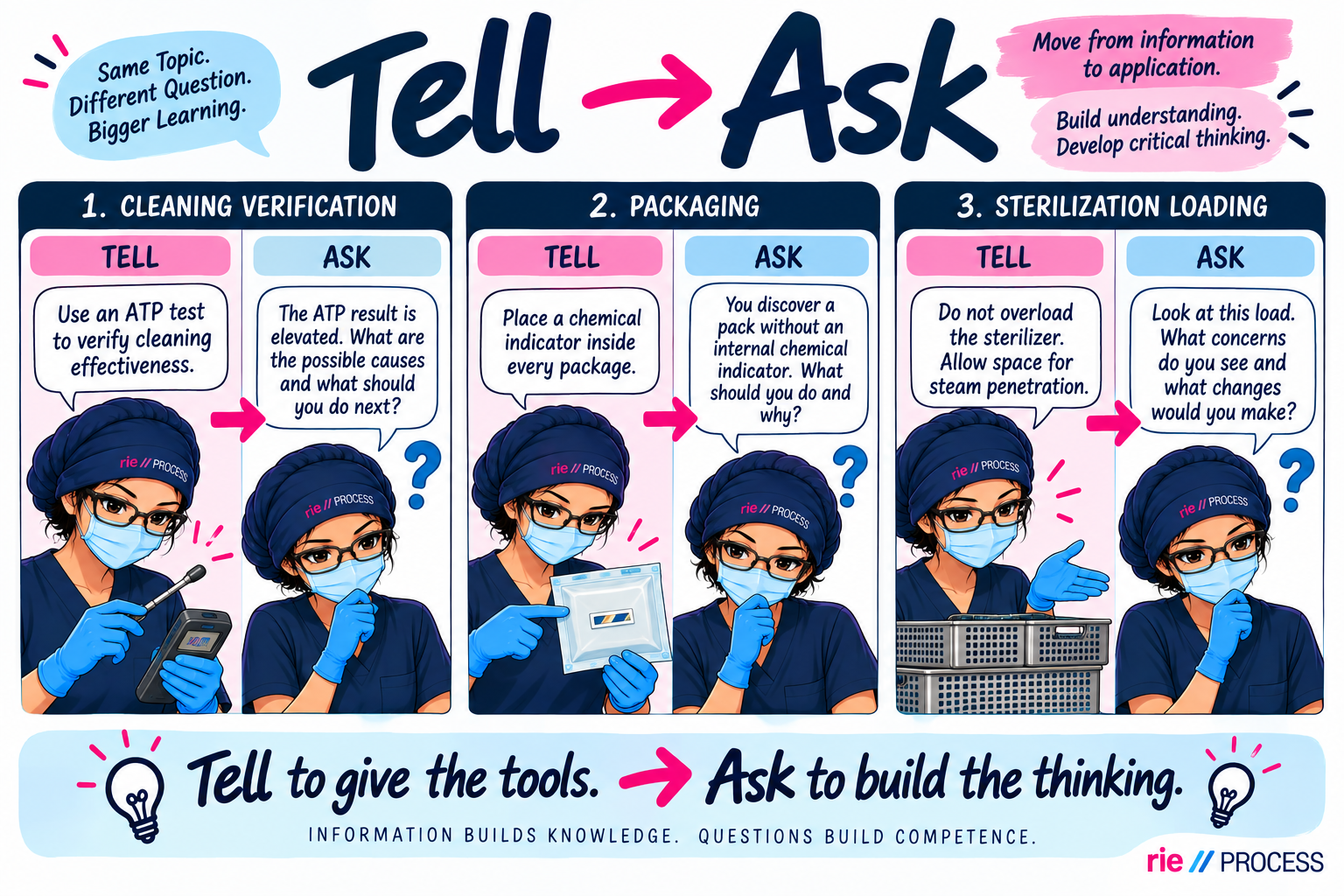
The purpose isn’t to make the learner guess.
It is to give them space to retrieve information, reason through the situation, and make the decision themselves.
Don’t answer every question the learner could answer.
Related Learning:
Give thinking some room
A little struggle can be useful.
A learner pauses.
They aren’t immediately sure what comes next.
They need a moment to remember where to find information.
They reconsider their first answer.
That does not automatically mean the educator needs to rescue them.
When the situation is safe, allowing the learner time to think can reveal:
What they remember
How they reason
Where they look for information
How they recover from uncertainty
When they recognize that they need help
Silence doesn’t always need to be filled.
Sometimes the best teaching move is simply giving the learner another few seconds.
Safety changes the rule
There is a difference between allowing someone to work through uncertainty and allowing unsafe performance to continue.
When a learner’s action could compromise:
PERSONNEL SAFETY
THE DEVICE
PROCESS INTEGRITY
STERILITY ASSURANCE
PATIENT SAFETY
the educator may need to intervene.
Don’t Let “Figure it out” Become “Let’s See How Bad This Gets.”
Thinking time is useful. Uncontrolled risk isn’t.
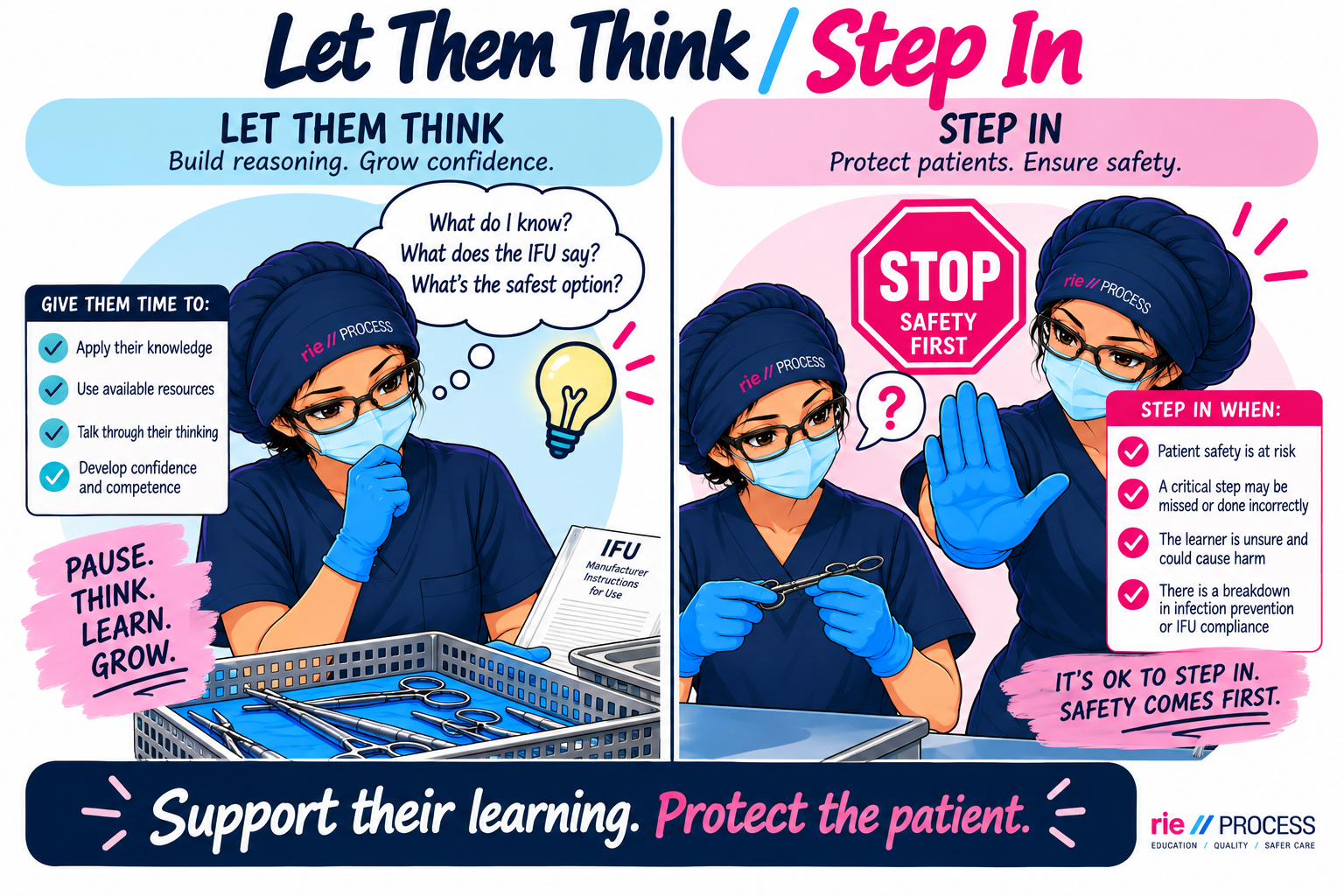
Support should match the need
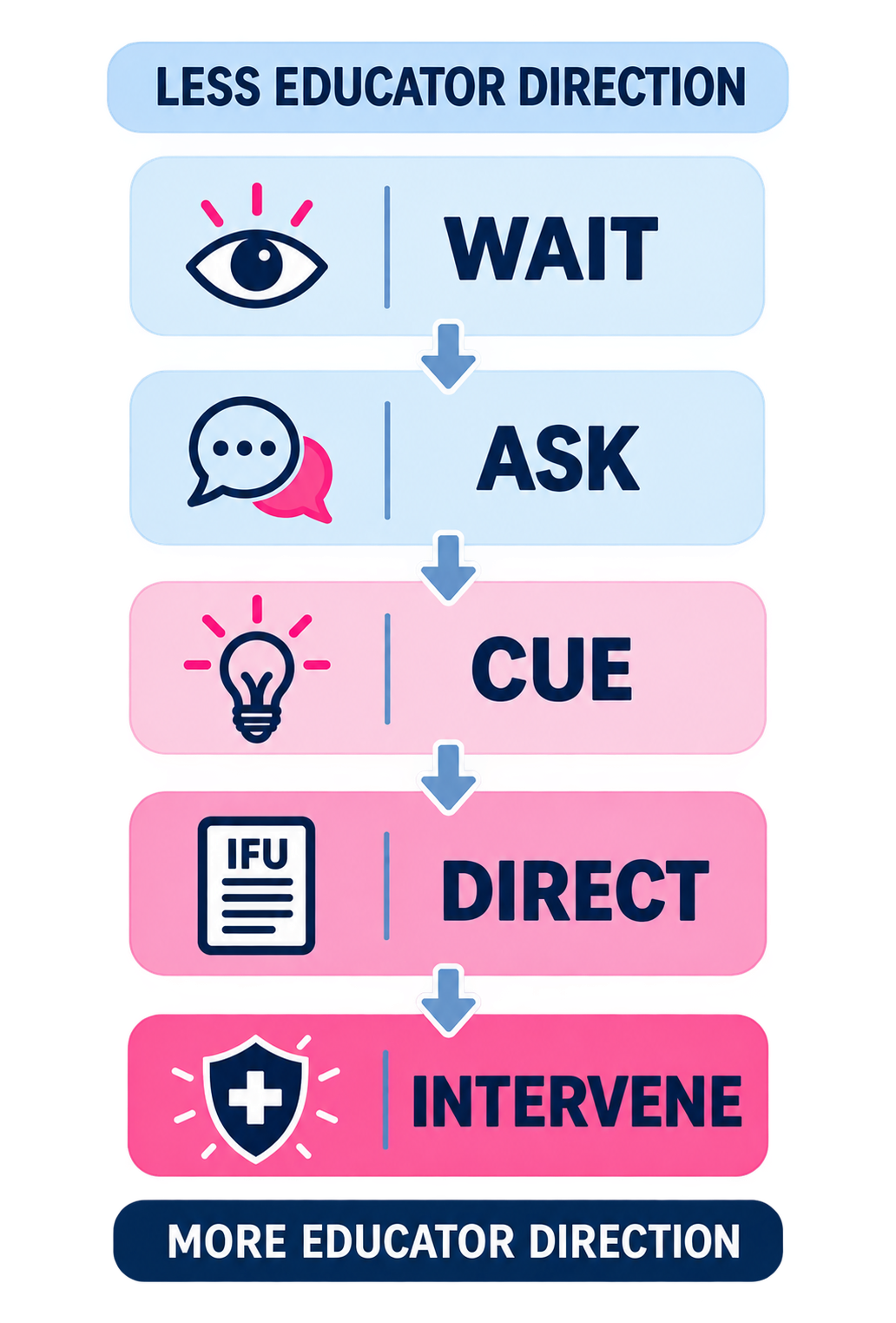
The Support Ladder
Good guided practice doesn’t mean choosing between helping and not helping. The educator can adjust the level of support based on what the learner needs in the moment.
Start with the least intrusive support that allows the learner to keep thinking. Increase support when the learner needs direction - or when safety requires it.

Wait → Ask → Cue → Direct → Intervene
01 | WAIT
Give the learner time to think, process, and use what they already know. Silence doesn’t always need to be filled.
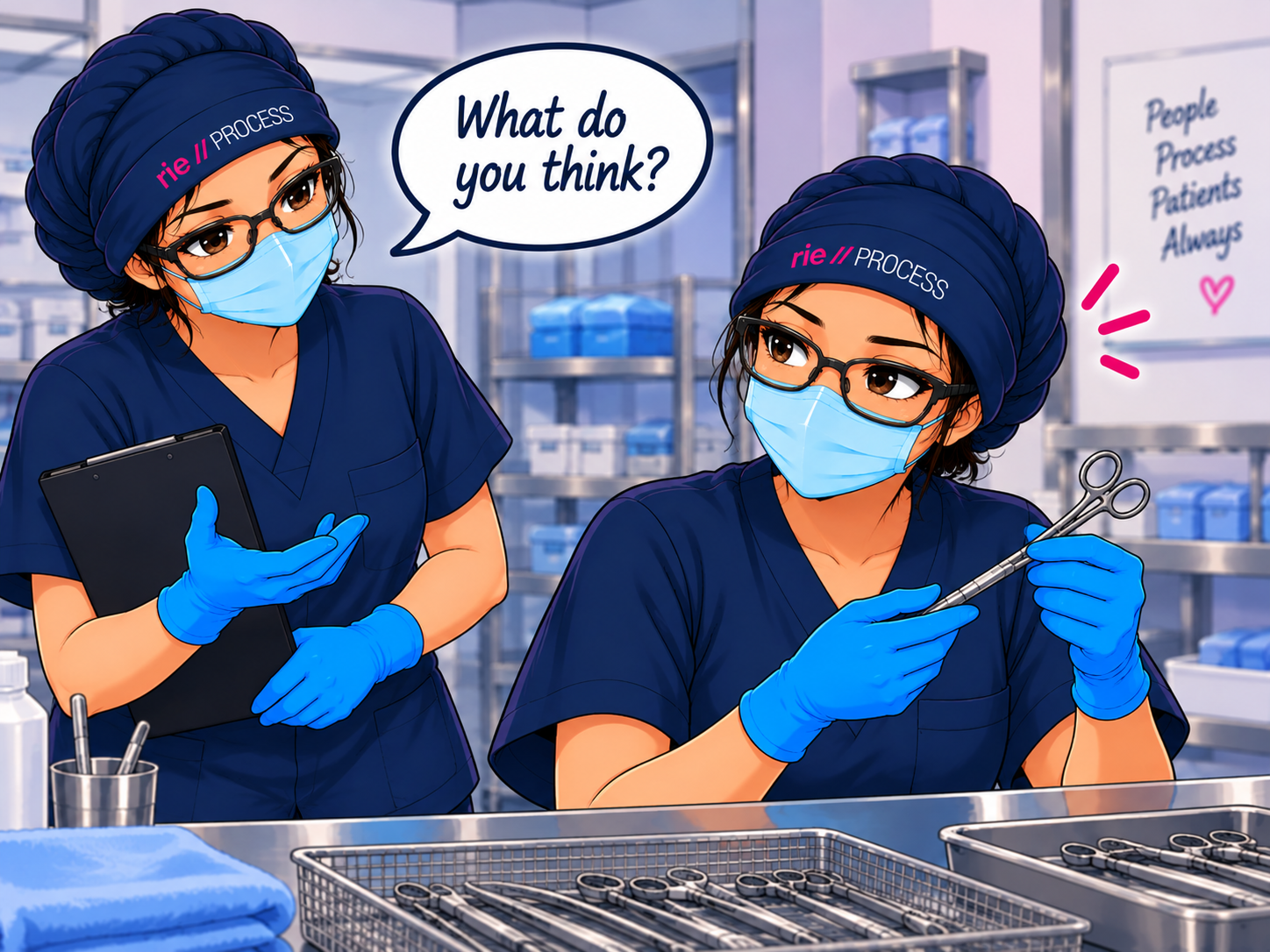
02 | ASK
Use questions to uncover the learner’s reasoning. “What do you think should happen next?”
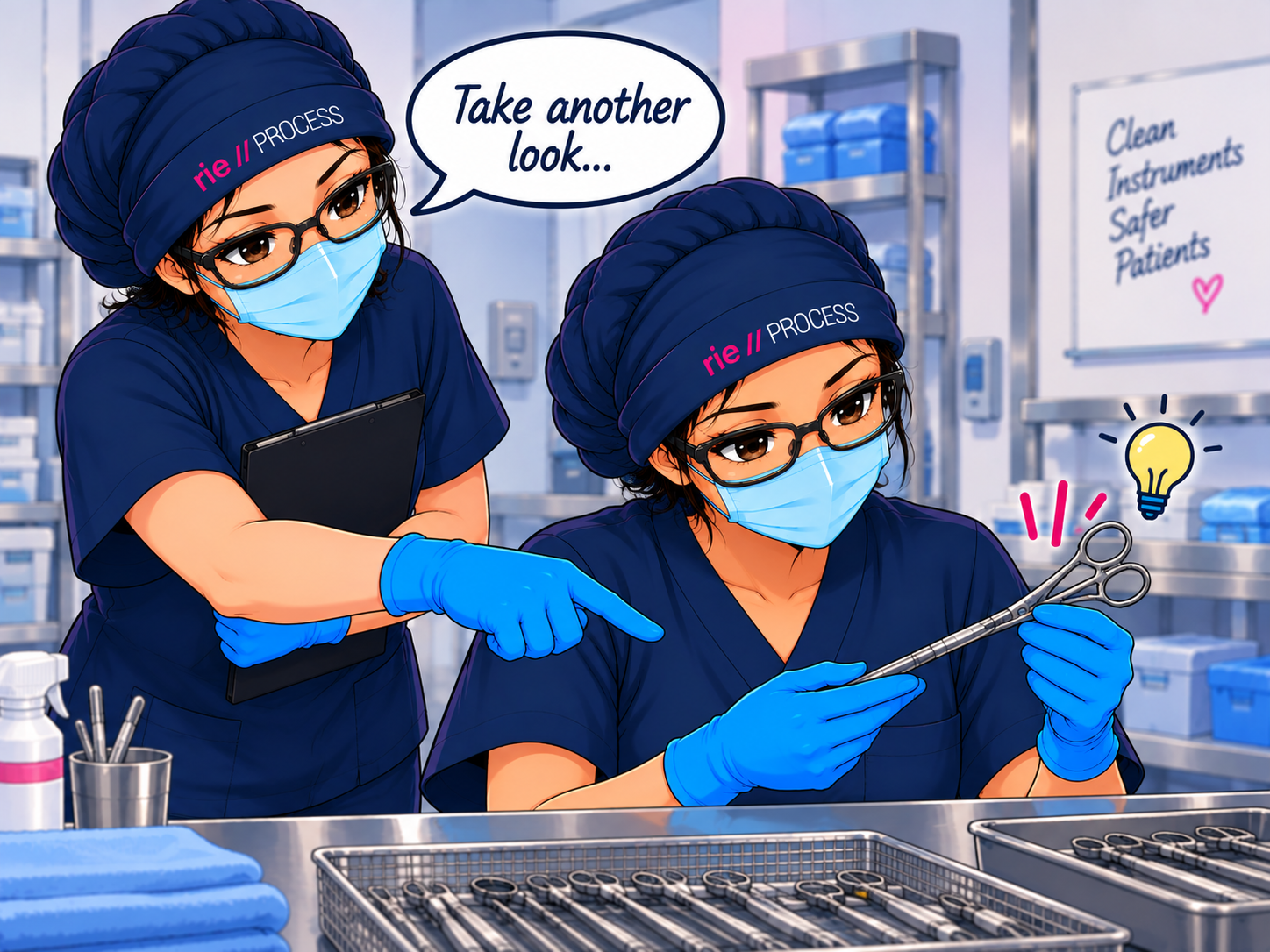
03 | CUE
Provide a small hint that redirects attention without giving away the answer. “Take another look at…”
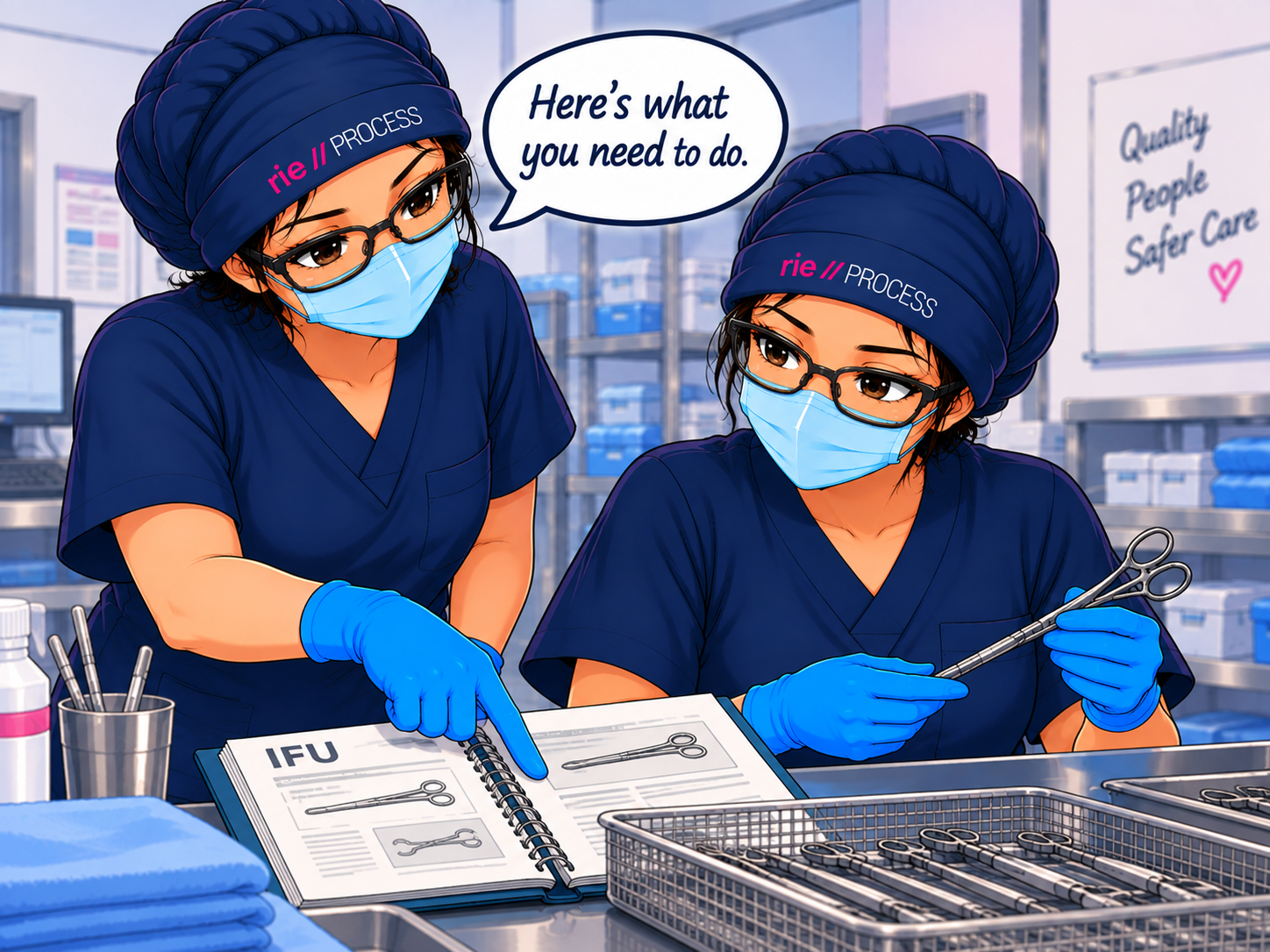
04 | DIRECT
Give clear instruction when the learner needs more support to complete the process clearly.

05 | INTERVENE
Step in immediately when continuing could compromise safety, process integrity, or the device.
The goal isn’t to use less support at all costs.
The goal is to use the right amount of support while progressively building the learner’s ability to work without it.
See the whole support ladder
Explore the complete framework with educator mindsets, example prompts, and intervention cues.