FOR EDUCATORS · COMPETENCY + READINESS
PERFORMANCE HAS TO MEAN SOMETHING.
Training happened.
A form was completed.
A technician earned a passing score.
None of those things, by themselves, tell us whether someone can perform safely and independently in the real work environment.
Competency and readiness require us to look at what the technician can actually do, under what conditions, and with how much support.
EXPLORE THE FRAMEWORK ↓
The Big Picture
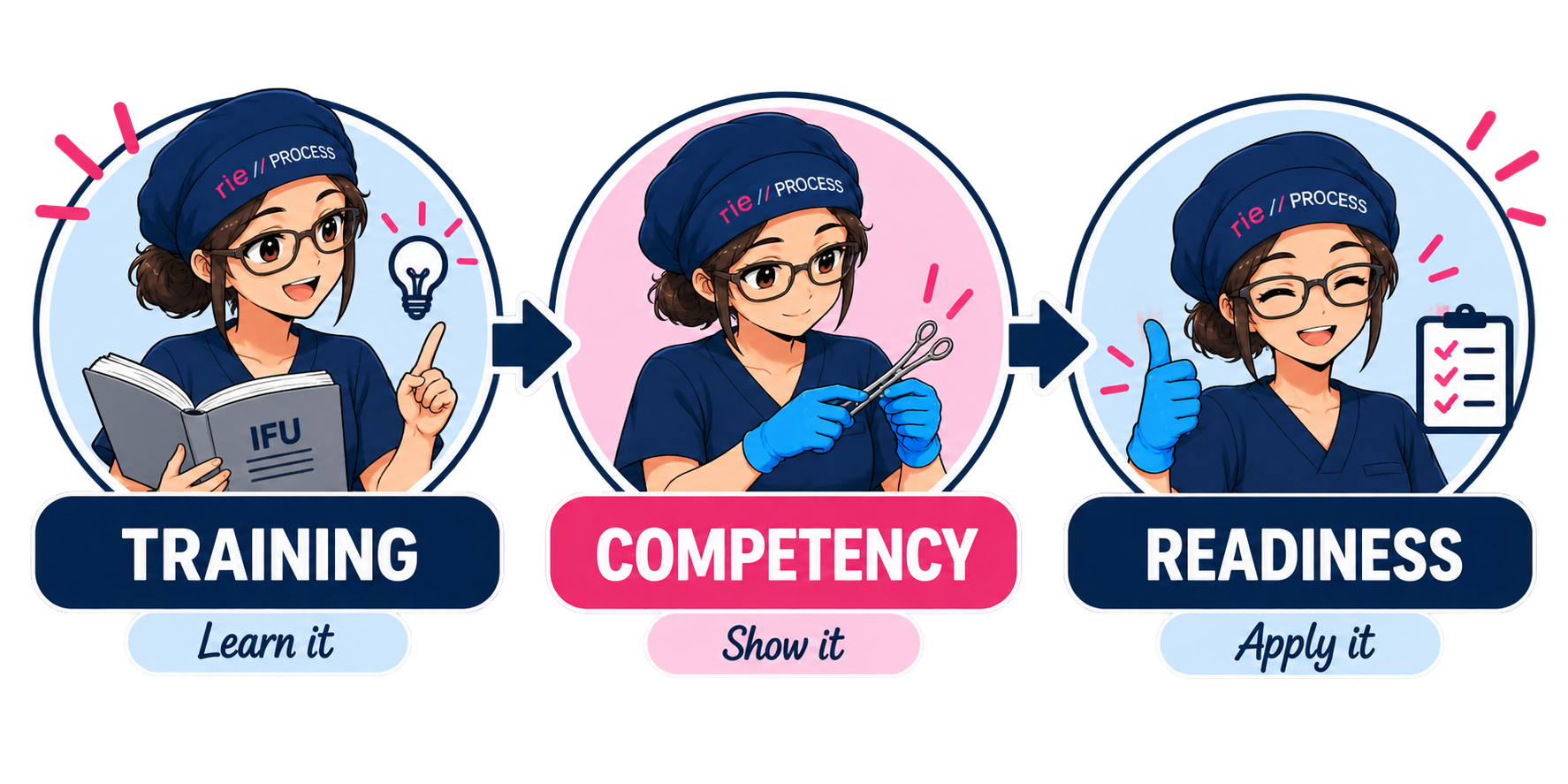
TRAINING, COMPETENCY, AND READINESS AREN'T INTERCHANGEABLE.
-
Was the person taught?
Training provides information, demonstration, instruction, and opportunities to learn.
-
Can the person perform the task correctly?
Competency requires observable evidence of performance against defined expectations.
-
Can the person apply that performance appropriately with the level of independence the role requires?
Readiness looks beyond a single successful demonstration toward consistent application, judgment, and independence.
TAUGHT ≠ DEMONSTRATED ≠ READY
COMPETENCY VS. READINESS
CAN THEY DO IT?
ARE THEY READY TO DO IT INDEPENDENTLY?
Those questions are related—but they aren't identical.
A technician may demonstrate a skill correctly while still requiring prompts, additional practice, greater consistency, or experience applying that skill in different situations.
Likewise, time in training does not automatically establish readiness.
The distinction matters because independent practice should be based on evidence—not simply elapsed time or completion of training activities.
Performance Evidence
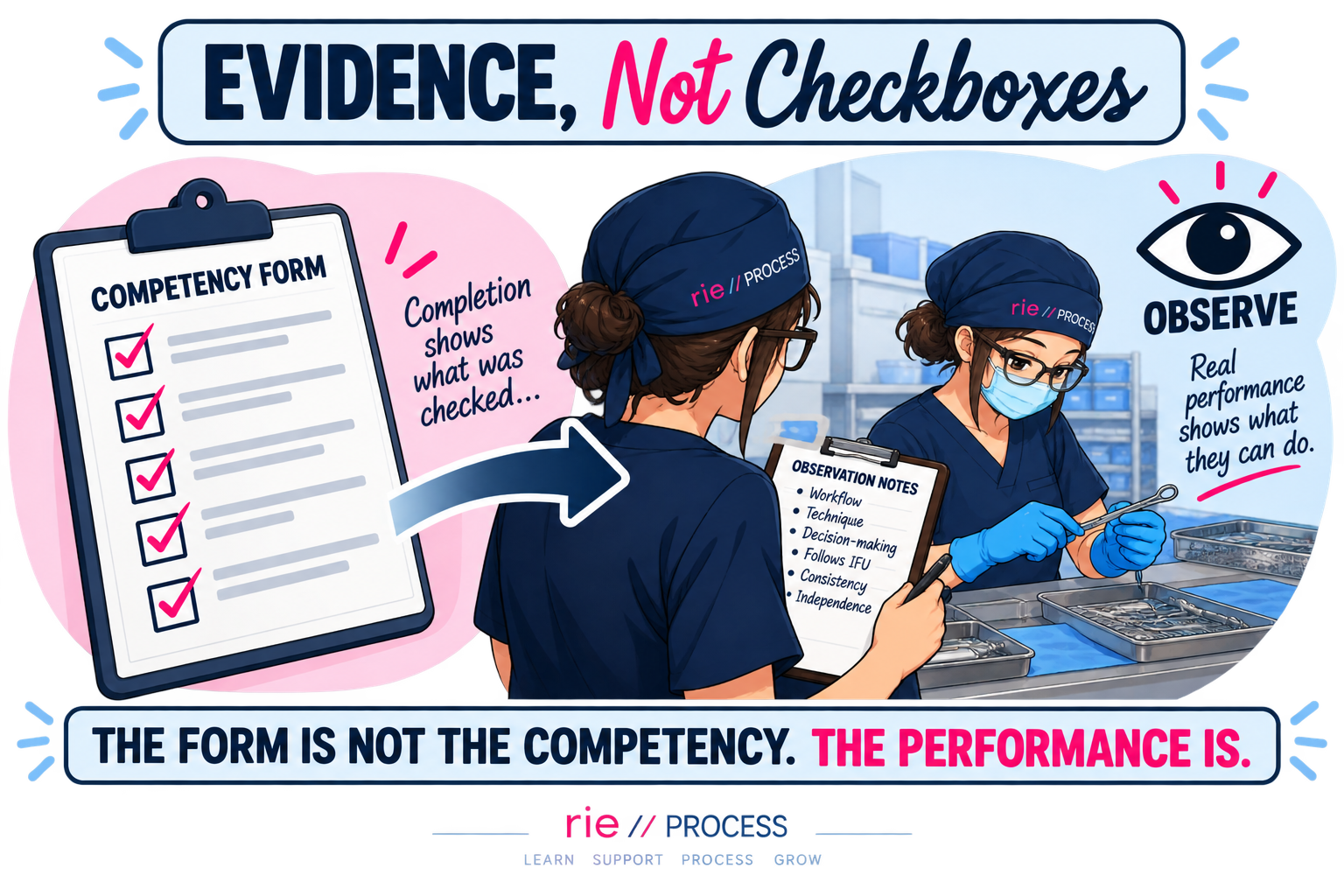
DON'T JUST DOCUMENT COMPLETION. OBSERVE PERFORMANCE.
Competency validation should give the evaluator meaningful evidence about what the technician actually does.
Useful evidence may include:
Observation
Can the technician perform the task correctly?
Decision-making
Can they recognize what matters and choose an appropriate response?
Process Adherence
Can they follow required procedures and device-specific instructions?
Consistency
Can they reproduce acceptable performance—not simply get it right once?
Independence
How much educator or preceptor support is required?
THE FORM IS NOT THE COMPETENCY. THE PERFORMANCE IS.
Safety-Critical Performance
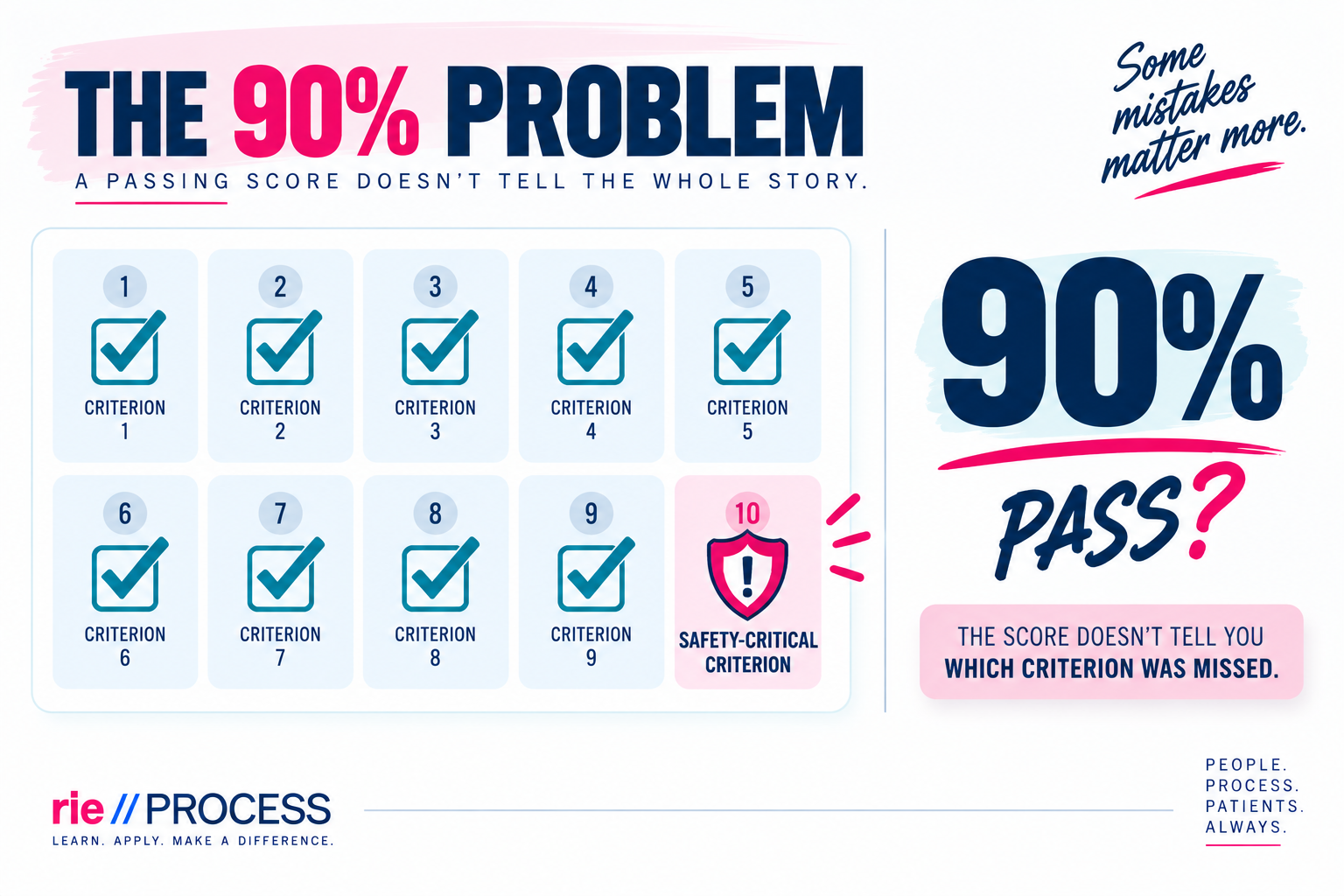
SOME PERFORMANCE CAN'T BE “ALMOST RIGHT.”
A competency may contain many criteria, but not every criterion carries the same consequence if performed incorrectly.
Safety-critical criteria identify performance where an error could compromise:
patient safety
device integrity
process effectiveness
required processing conditions
the ability to safely continue the workflow
That means an overall percentage alone may not tell the whole story.
A STRONG TOTAL SCORE SHOULD NOT HIDE A SAFETY-CRITICAL MISS.
GUIDED PRACTICE + PROGRESSION
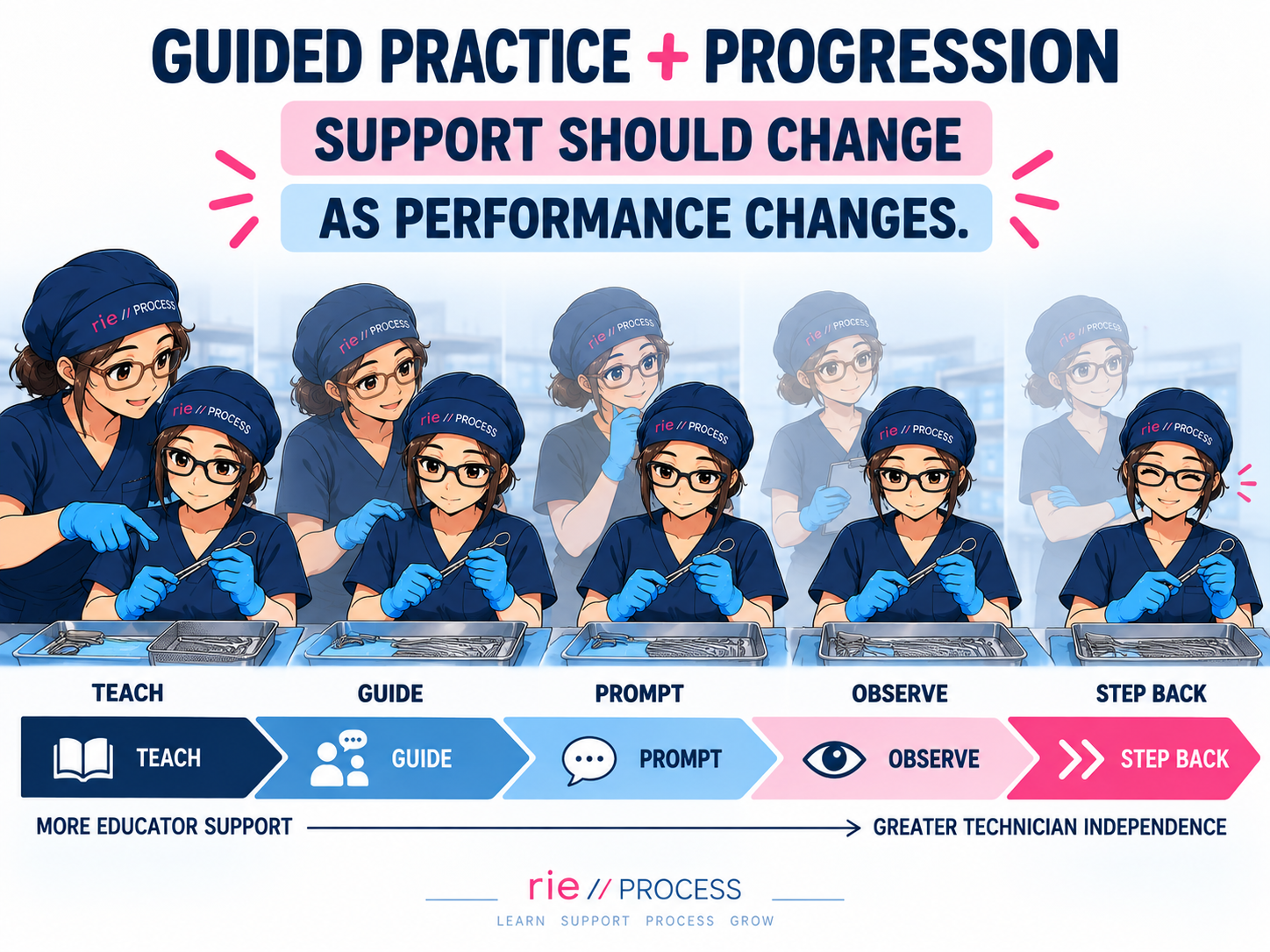
SUPPORT SHOULD CHANGE AS PERFORMANCE CHANGES.
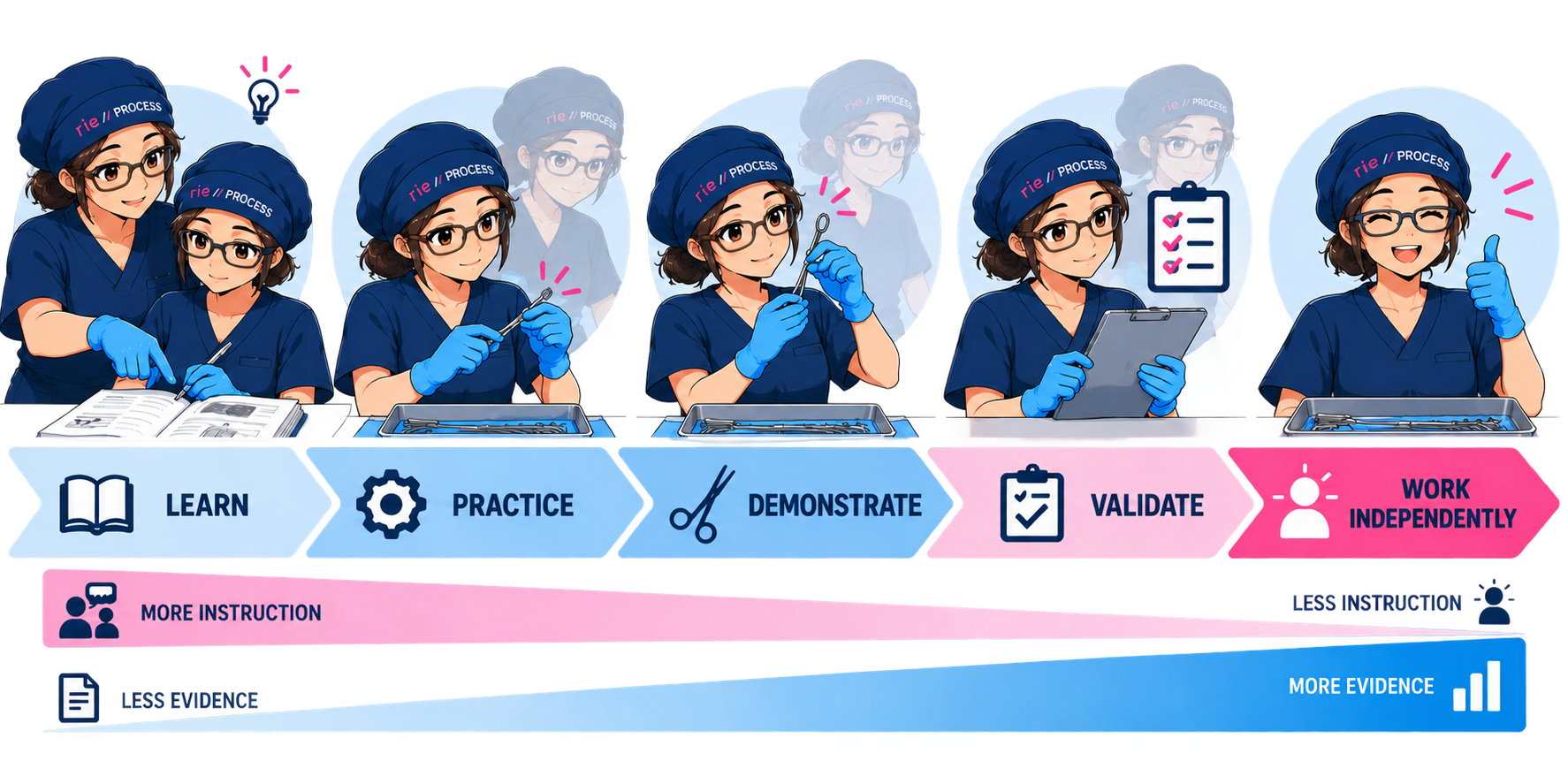
Learners shouldn't move directly from “I was shown how” to “I'm on my own.”
Guided practice creates space between those two points.
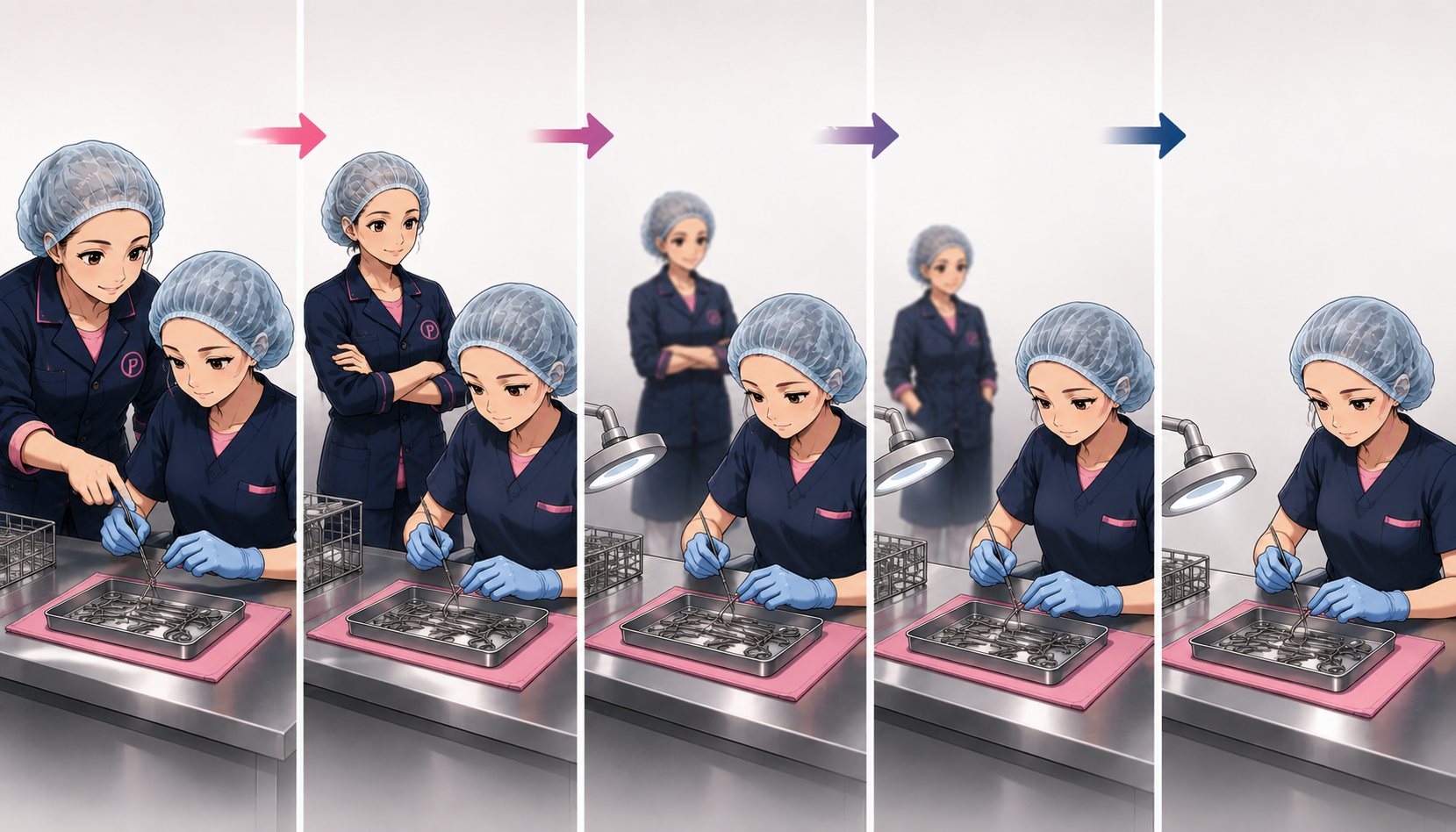
Early in learning, the educator may demonstrate, explain, correct, and direct. As performance develops, that support should progressively change.
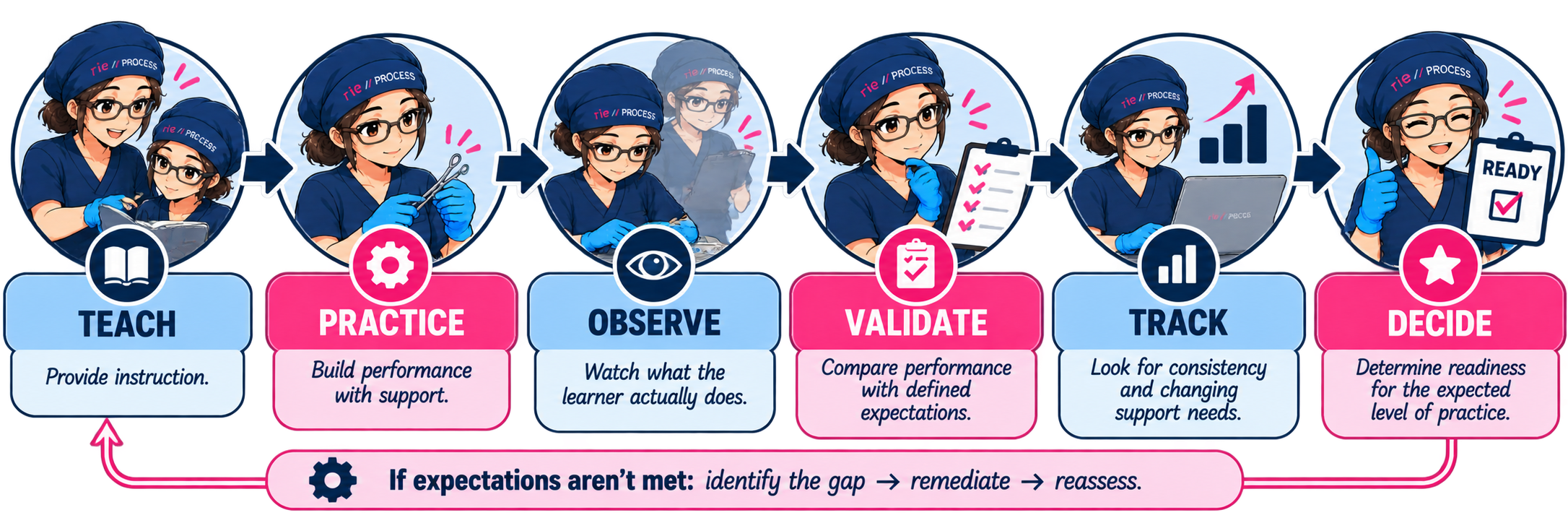
TEACH → GUIDE → PROMPT → OBSERVE → STEP BACK
The goal isn't simply to provide less help.
The goal is to determine whether the learner can perform with less help because their capability has increased.
READINESS DEVELOPS OVER TIME
ONE GOOD PERFORMANCE IS A DATA POINT.
A PATTERN TELLS YOU MORE.
Repeated observations allow educators and preceptors to see whether performance is becoming more consistent and whether support is decreasing.
A developing pattern might look like:
GUIDED → PROMPTED → INDEPENDENT
The important question isn't simply:
“Did they pass?”
It's:
“What does their performance across time tell us about what they can do without support?”
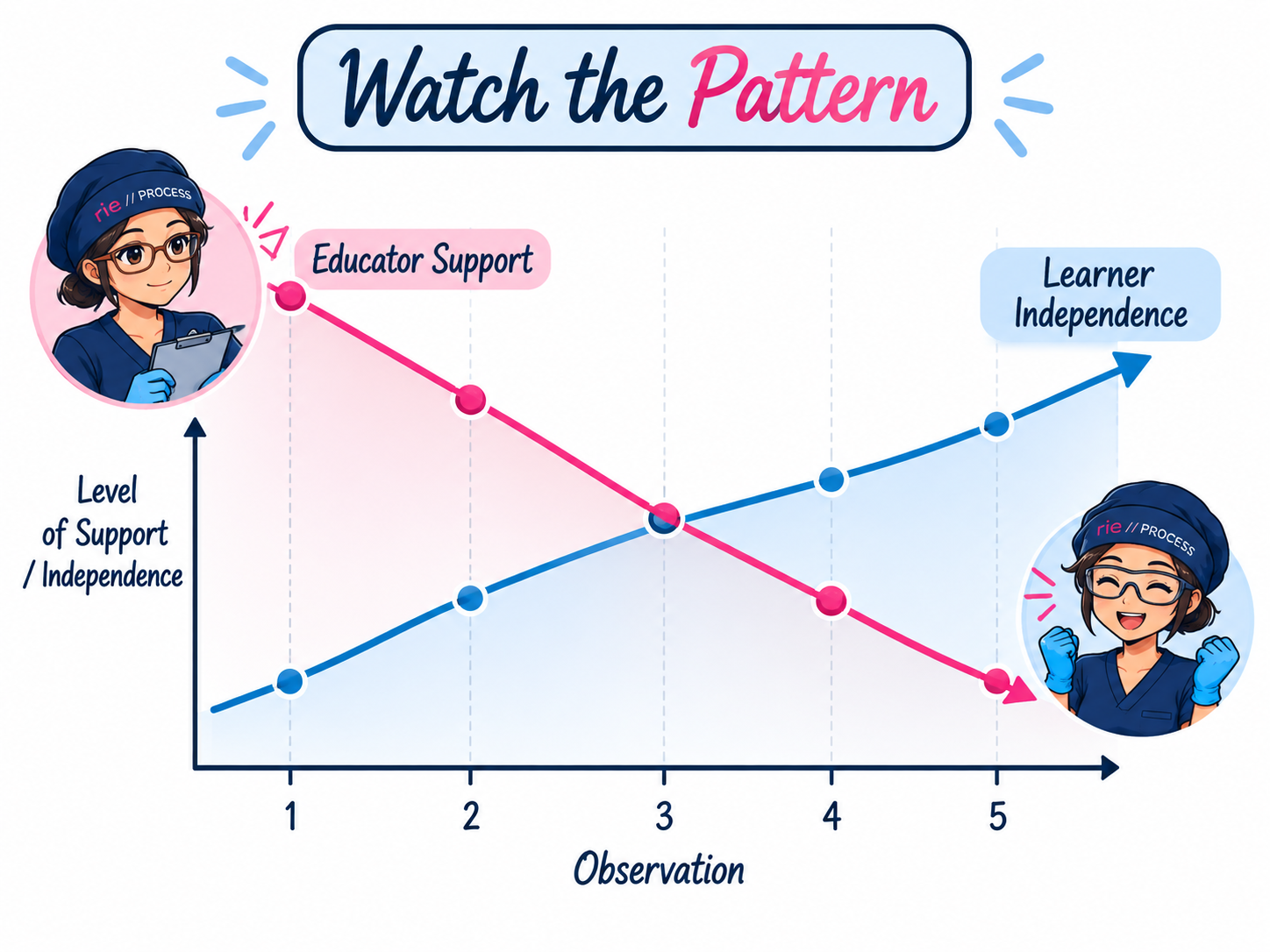
As learner independence increases, educator support should generally decrease.
REMEDIATION + REVALIDATION
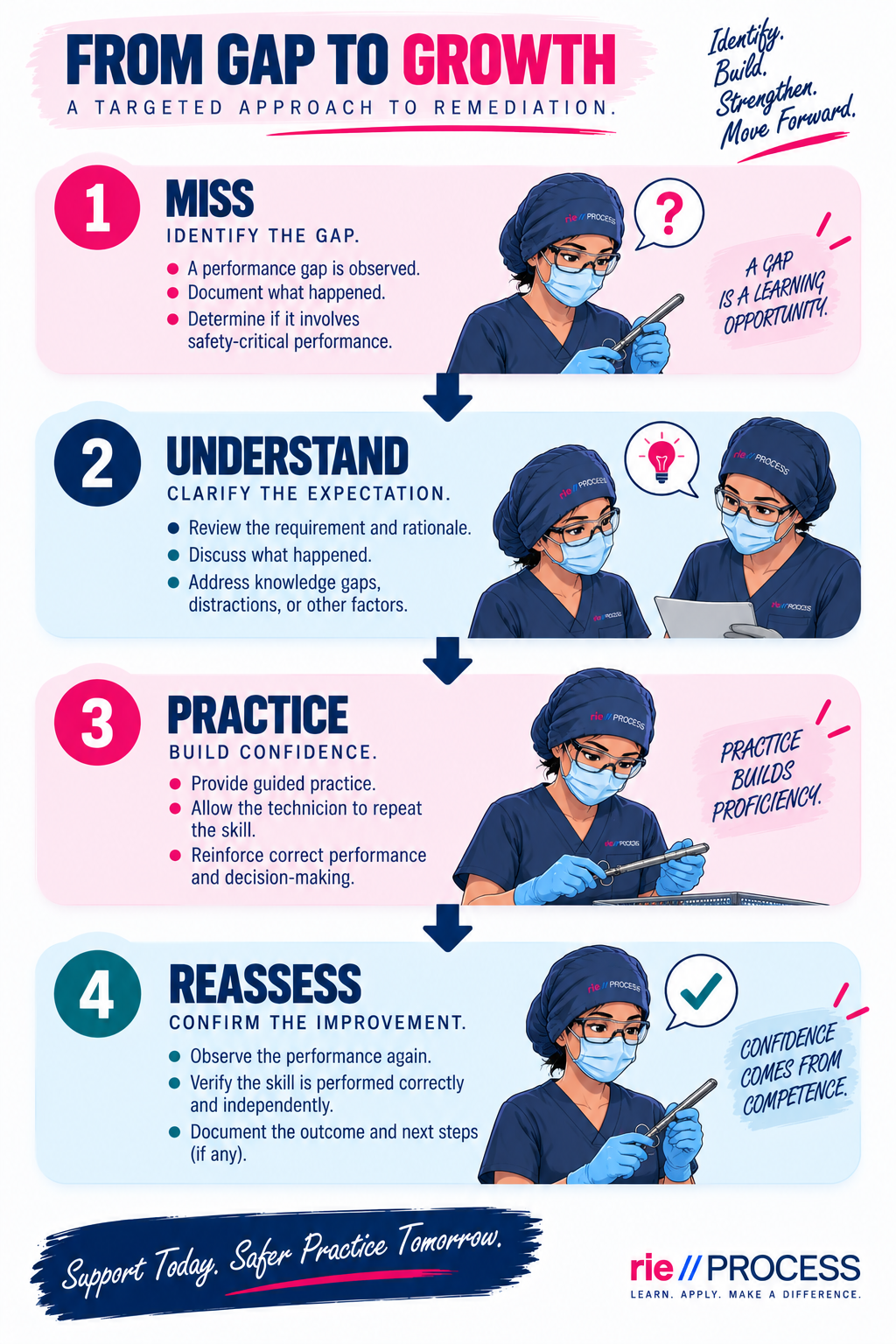
A MISSED EXPECTATION SHOULD LEAD TO THE RIGHT RESPONSE.
When performance doesn't meet expectations, the next step shouldn't automatically be:
“Retrain them on everything.”
First identify what the evidence actually shows.
Is this a:
KNOWLEDGE GAP?
They don't understand what should happen.
SKILL GAP?
They understand it but cannot yet perform it reliably.
DECISION-MAKING GAP?
They know the process but struggle to apply it appropriately.
CONSISTENCY GAP?
Performance varies across observations.
SAFETY-CRITICAL MISS?
The performance requires immediate correction before independent practice continues.
Remediation should address the specific gap, followed by an appropriate opportunity to demonstrate acceptable performance again.
Independent Practice
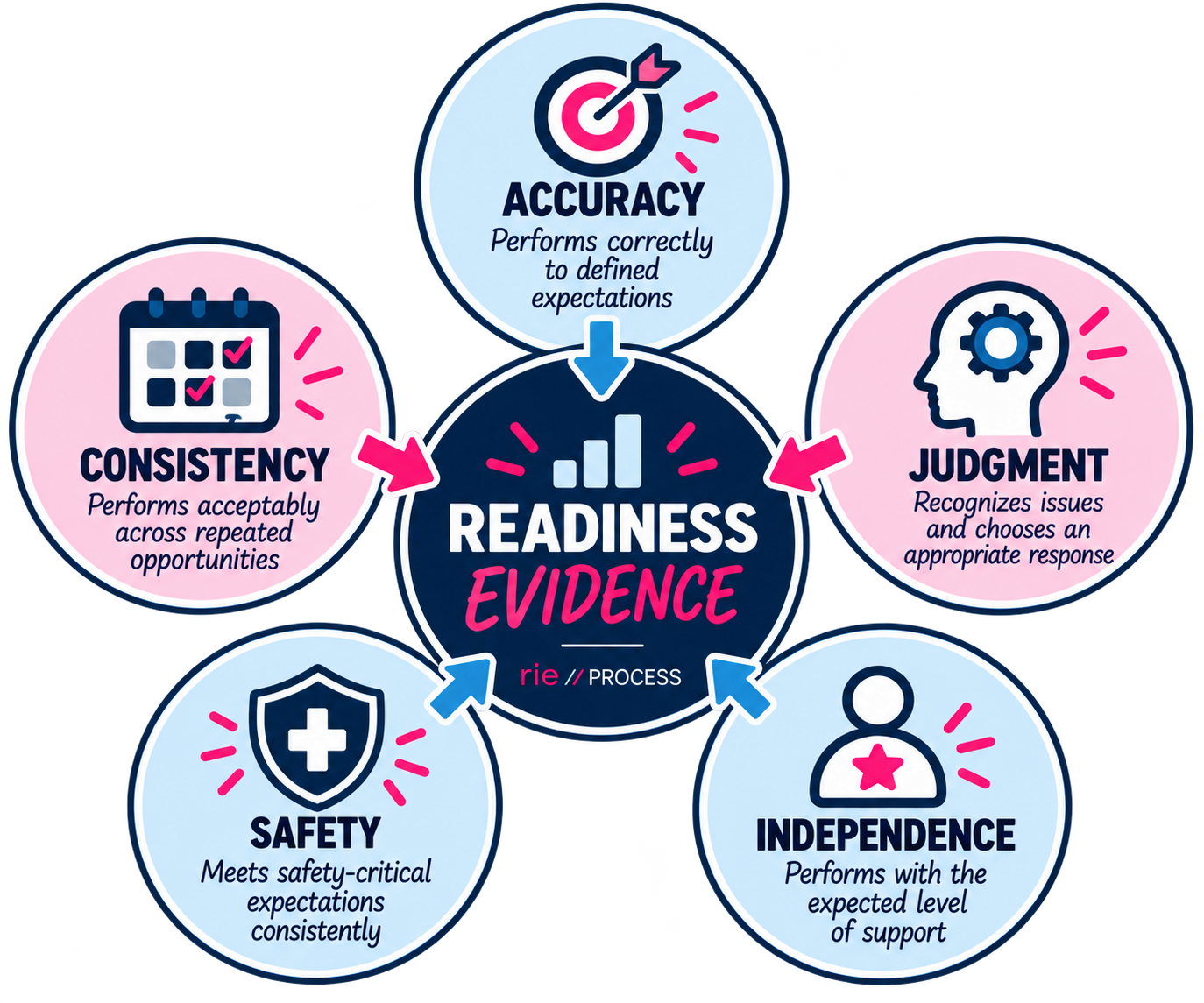
Readiness decisions should bring multiple pieces of information together rather than relying on a single score, observation, or date on the calendar.
Look for evidence of:
ACCURACY
Performance meets defined expectations.
CONSISTENCY
Acceptable performance occurs across repeated opportunities.
JUDGMENT
The technician recognizes problems and responds appropriately.
SAFETY
Safety-critical expectations are consistently met.
INDEPENDENCE
The technician can perform with the level of support expected for the role.
Then ask:
What evidence do we have that this person is ready to perform this work without the support they currently receive?
That is a much stronger readiness question than:
“Have they finished training?”
COMPLETION DOESN'T MAKE THE DECISION. EVIDENCE DOES.
Putting it Together
BUILD THE EVIDENCE. THEN MAKE THE DECISION.
Go Deeper
BUILD BETTER COMPETENCY SYSTEMS.
Competency vs. Readiness
Understand why demonstrating a skill and being ready for independent practice aren't always the same thing.
Competency validation
Build validation around observable performance and meaningful evidence.
Safety-Critical Performance
Identify criteria that should not disappear inside an overall passing score.
Guided Practice + Progression
Adjust educator support as learner performance develops.
Remediation + Validation
Respond to performance gaps with targeted remediation and meaningful reassessment.
Take This With You
DON'T ASK ONLY WHETHER TRAINING IS COMPLETE.
Ask:
What has been taught?
What has been practiced?
What has actually been observed?
What can the learner do consistently?
Where do they still need support?
What evidence supports independent practice?
MAKE READINESS AN EVIDENCE-BASED DECISION.
For Educators
Competency and readiness are only one part of building effective SPD education.